
Designing a Stunning Xeriscape Garden in Your Phoenix Backyard: A Guide to Sustainable Landscaping
Introduction
Creating a visually captivating and ecologically sustainable landscape in Phoenix requires strategic planning. Xeriscaping provides an effective solution by emphasizing water conservation, resilience to desert conditions, and low maintenance. This approach is especially relevant in Phoenix, where water scarcity and arid climate pose significant challenges to traditional landscapes.
Understanding Xeriscaping
What Is Xeriscaping?
Derived from the Greek word “xeros”, meaning dry, combined with “scape”, indicating a view or scene, Xeriscaping is a landscaping philosophy focused on reducing water use through strategic plant selection and design. This approach promotes the use of native, drought-resistant plants and water-efficient irrigation systems to create sustainable and attractive outdoor spaces.
Core Principles of Xeriscaping
- Planning and Design: Outline your landscape with water efficiency in mind, considering plant placement based on sunlight and water needs.
- Soil Improvement: Enhance soil quality with organic matter to improve water retention and drainage.
- Appropriate Plant Selection: Choose native or drought-tolerant species adapted to hot, dry conditions.
- Irrigation Efficiency: Use drip systems and moisture sensors to minimize waste.
- Mulching: Apply mulch to conserve moisture, regulate soil temperature, and prevent weeds.
- Maintenance: Regular upkeep includes pruning, pest control, and monitoring water use.
Benefits of Xeriscaping in Phoenix
1. Water Conservation
Given Phoenix’s low annual rainfall and high temperatures, water conservation is crucial. Xeriscaping can reduce outdoor water usage by up to 50-75%, safeguarding local water resources and lowering utility bills.
2. Reduced Maintenance
Native, drought-tolerant plants require less frequent watering, pruning, and fertilizing. This translates into fewer garden chores and lower ongoing expenses.
3. Cost Savings
Lower water bills combined with reduced maintenance costs make xeriscaping financially advantageous, especially over the long term.
4. Enhanced Natural Beauty
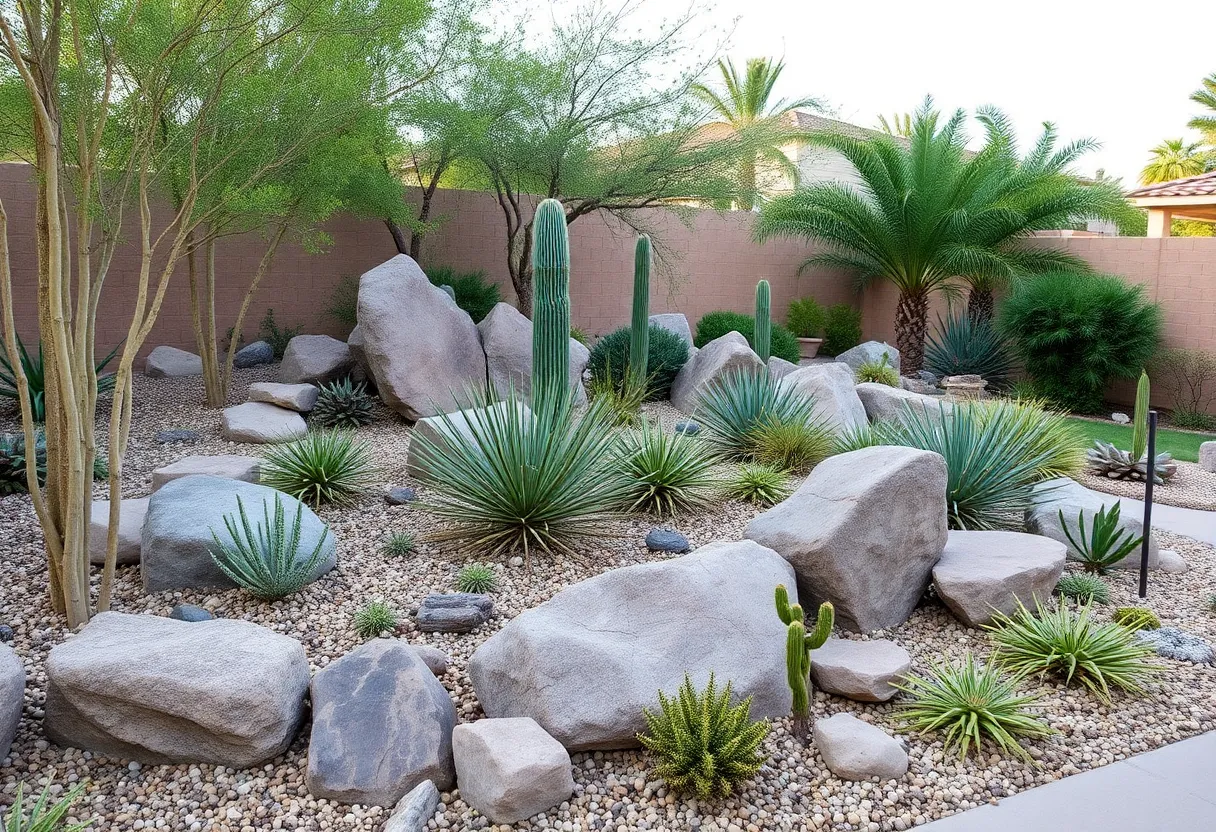
A well-designed xeriscape mimics desert landscapes, featuring rocks, native flora, and xeric-friendly features, offering a unique aesthetic aligned with the local environment.
Key Actions for Designing a Xeriscape Garden
1. Site Assessment
Before plant selection, evaluate your site:
- Soil Quality: Phoenix soils are typically alkaline and low in organic matter. Consider soil amendments like compost to improve fertility and drainage.
- Sun Exposure: Map areas with full sun, partial shade, or shade, and select plants accordingly.
- Drainage: Ensure proper water runoff to prevent root rot and soil erosion. Adjust landscape grading if needed.
2. Selecting Appropriate Plants
Opt for native Sonoran Desert species and other drought-tolerant plants:
- Succulents like agave and aloe
- Cacti, such as saguaro and prickly pear
- Yucca plants
- Desert marigold and penstemon
- Ornamental grasses like bunch grasses and native filAREE
Plant in groups with similar water and sunlight needs to maximize efficiency and health.
3. Implementing Efficient Irrigation
Use drip irrigation systems that deliver water directly to roots. Incorporate moisture sensors to avoid overwatering and adapt watering schedules seasonally. Consider rainwater harvesting to supplement irrigation naturally.
4. Hardscaping and Landscaping Elements
Add visually appealing and functional features, including:
- Paths and Walkways: Use decomposed granite, flagstone, or concrete pavers for durability and minimal water impact.
- Mulch: Organic mulches like bark or gravel help retain soil moisture, suppress weeds, and add aesthetic value.
- Rocks and Boulders: Incorporate native stones to mimic desert terrain and create focal points.
5. Planning for Year-Round Interest
Choose plants with different blooming times to ensure continuous visual appeal. Integrate wildlife-friendly plants that attract pollinators such as hummingbirds and bees, promoting local biodiversity and ecological health.
6. Sustainable Practices
Maintain the health of your xeriscape by:
- Applying organic compost to enrich soils
- Mulching to reduce evaporation and control weeds
- Reducing lawn areas to conserve water and minimize upkeep
Common Mistakes to Avoid in Xeriscaping
- Overwatering: Drought-tolerant plants still need occasional watering, especially during establishment or extreme heat.
- Non-native or Invasive Species: Introducing aggressive non-native plants can threaten local ecosystems.
- Neglecting Maintenance: Although low-maintenance, xeriscapes require periodic inspections for pests, diseases, and plant health.
Practical Resources and Local Inspiration
While this guide does not endorse specific sources, developing a xeriscape in Phoenix benefits from observing local demonstration gardens and consulting regions’ best practices. These gardens showcase native flora, sustainable design, and water-conserving features, providing valuable visual and practical references for your project.
Conclusion
Designing a stunning xeriscape garden transforms your Phoenix backyard into a resilient, eco-friendly paradise. By leveraging native plants, efficient irrigation, and sustainable hardscaping, you achieve a landscape that is beautiful, functional, and attuned to the desert environment. This approach not only conserves precious water resources but also reduces ongoing maintenance and costs, supporting a more sustainable lifestyle.
FAQs
| Question | Answer |
|---|---|
| What plants are ideal for xeriscaping in Phoenix? | Native Sonoran Desert plants such as agave, yucca, desert marigold, prickly pear cactus, and ornamental grasses are optimal choices for drought tolerance and aesthetics. |
| How much water can xeriscaping save compared to traditional landscaping? | It can reduce outdoor water use by up to 75%, significantly conserving vital water resources in arid regions like Phoenix. |
| Is xeriscaping suitable for low-maintenance gardening? | Yes, once established, xeriscaped gardens require minimal watering, pruning, and fertilizing, making them highly low-maintenance. |
| What irrigation methods are best for xeriscaping? | Drip irrigation combined with soil moisture sensors offers the most efficient water delivery with minimal waste. |
| Can xeriscaping be aesthetically appealing? | Absolutely. With careful plant selection and design, xeriscapes can be vibrant, interesting, and visually stunning landscapes. |
Schema for FAQ (JSON-LD)
Key Features Chart of Xeriscape Landscape Design
| Feature | Description | Benefit |
|---|---|---|
| Native Plants | Plants adapted to local climate and soil conditions | High resilience, low water needs, minimal maintenance |
| Efficient Irrigation | Drip systems, moisture sensors, rain harvesting | Maximum water use efficiency, less waste |
| Hardscaping Elements | Stone pathways, mulch, rocks | Visual interest, soil moisture retention, low upkeep |
| Seasonal Interest | Diverse plant bloom cycles and wildlife attraction |
Year-round beauty, biodiversity enhancement |
| Sustainable Practices | Soil amendment, mulching, reduced lawn areas | Environmentally friendly, cost-effective long-term |