

News Summary
The University of Arizona (UArizona) is enhancing its semiconductor capabilities with a $35.5 million investment to expand its Micro/Nano Fabrication Center. This initiative, funded by the Arizona Commerce Authority, aims to strengthen manufacturing and research in advanced technologies, addressing workforce demands while positioning Arizona as a leader in the semiconductor industry. The expansion underscores a commitment to academic excellence, innovation, and collaboration among universities and industry partners in response to national supply chain challenges.
Phoenix, AZ — The University of Arizona (UArizona) is significantly bolstering its role in the nation’s critical semiconductor industry with a substantial $35.5 million investment to expand its Micro/Nano Fabrication Center (MNFC). This strategic funding from the Arizona Commerce Authority (ACA) marks a pivotal advancement for Arizona’s higher education landscape, reinforcing the state’s commitment to technological leadership and economic resilience.
The expansion of this state-of-the-art facility is designed to enhance manufacturing and research capabilities in semiconductors, computer chips, optical devices, and quantum computing systems. It also directly addresses the growing demand for a highly skilled workforce, emphasizing academic rigor and hands-on training for the next generation of innovators. This initiative positions Arizona as a key player in strengthening the United States’ semiconductor supply chain, fostering innovation, and creating valuable opportunities for students and industry professionals across the state.
Investing in Arizona’s Technological Future
The $35.5 million award to the UArizona College of Engineering is part of a larger $100 million commitment by the Arizona Commerce Authority aimed at accelerating semiconductor and microelectronics development statewide. This investment underscores a proactive approach to cultivating a robust ecosystem for chip design, manufacturing, and innovation within Arizona. The state’s leadership recognizes the strategic importance of semiconductors, particularly in light of global supply chain challenges, and is actively working to expand domestic production capacity and talent.
This financial commitment reflects a collaborative vision, uniting state government, academic institutions, and industry partners to ensure Arizona remains at the forefront of this vital sector. By channeling resources into cutting-edge facilities and educational programs, the state is investing not just in technology, but in the intellectual capital and entrepreneurial spirit of its citizens, affirming the principles of self-reliance and national competitiveness.
Expanding Research and Manufacturing Capabilities
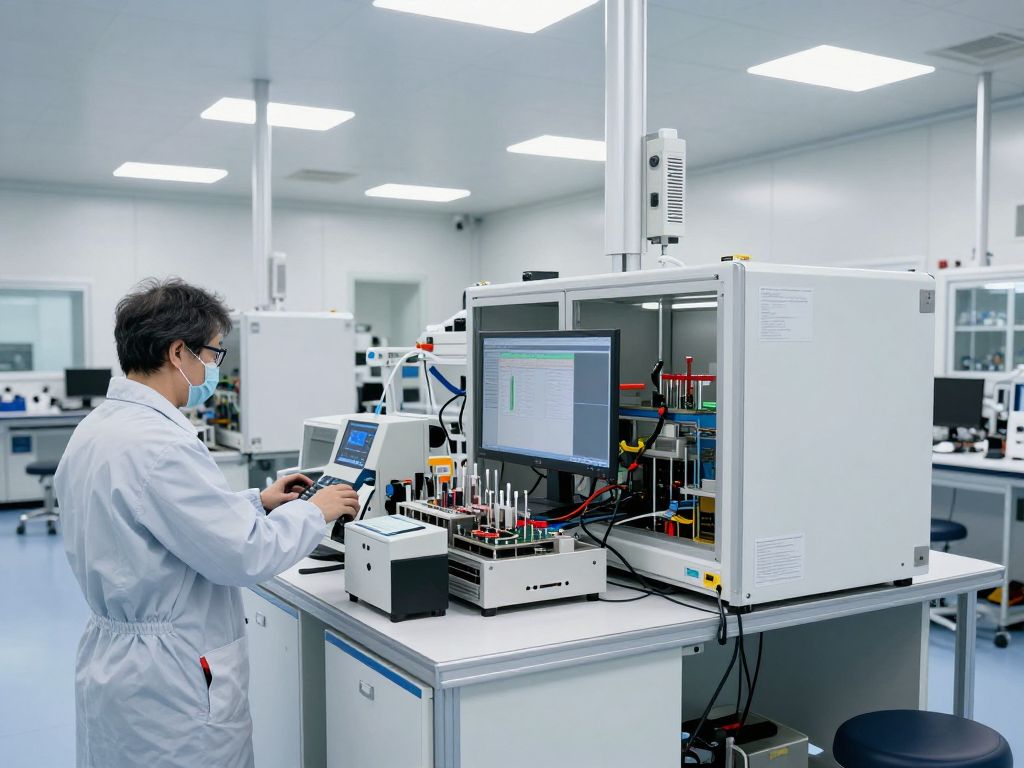
The Micro/Nano Fabrication Center, or MNFC, is a cleanroom facility crucial to UArizona’s efforts in advanced technology. The expansion will upgrade and modernize the MNFC with state-of-the-art equipment, enabling unique capabilities for high-priced tools that are often custom-made. This enhancement will significantly boost the university’s capacity for advanced research and development in areas such as low-dimensional semiconductors for atomic scale transistors, high-speed optical information processors, and quantum computing technologies.
The facility’s increased capacity will support a wide array of research groups across the university’s colleges of optics, engineering, science, management, and applied science & technology, fostering a multidisciplinary approach to innovation. Research focuses include 3D heterogeneous integration of optics, photonics, and semiconductor devices, as well as digital twin technologies and extended reality (XR) applications for real-time decision-making and advanced workforce training.
Cultivating a Skilled Workforce
A central tenet of this expansion is the development of a highly skilled workforce, crucial for meeting the demands of the rapidly growing semiconductor industry. The funding will support the expansion of training and educational modules to ensure Arizona produces the talent needed for this national priority. UArizona is developing innovative and flexible programs, including certificates and microcredentials, to equip students with critical skills.
The university also plans to develop an augmented and virtual reality training curriculum to overcome limitations of in-person lab training, allowing for more students to gain expertise in semiconductor technologies. This forward-thinking approach to education highlights adaptability and innovation in preparing students for complex, high-demand careers.
Beyond UArizona, statewide efforts are underway to build the semiconductor talent pipeline. Northern Arizona University (NAU) received $13 million to establish a Semiconductor Workforce Training Center and research lab in Phoenix, expanding access to training programs. Arizona State University (ASU) also received significant investment, including $47.5 million for its Materials-to-Fab Center in partnership with Applied Materials, further enhancing research and hands-on learning opportunities for students.
Strengthening the Domestic Semiconductor Supply Chain
The United States currently holds a 12% share of global semiconductor production capacity, with 90% of sophisticated chips manufactured in Taiwan. The COVID-19 pandemic underscored critical weaknesses in the global supply chain, prompting a national imperative to expand domestic semiconductor manufacturing. Arizona is at the forefront of this national initiative, demonstrating leadership in establishing a robust, end-to-end semiconductor manufacturing ecosystem on U.S. soil.
Since 2020, Arizona has attracted over $102 billion in semiconductor-related investments, leading the nation in new projects and projected job creation. This commitment to onshore production ensures greater national security and economic stability. The expansion at UArizona, alongside investments in other state universities and community colleges, directly contributes to this goal by building infrastructure and nurturing the talent necessary for a resilient domestic supply chain.
Collaborative Ecosystem for Innovation
This expansion is not an isolated effort but a key component of a broader collaborative strategy across Arizona. UArizona is an important collaborator in the Southwest Nano-Lab Alliance, a coalition of universities dedicated to advancing the regional semiconductor industry. A formal agreement between UArizona and NAU further solidifies a plan for inter-university and industry collaboration on research projects, academic partnerships, and shared resources.
Such partnerships, including those with industry leaders like Intel and TSMC, are vital. Intel, with its largest U.S. manufacturing site in Chandler, has also launched apprenticeship programs with Maricopa Community Colleges to train manufacturing facility technicians, demonstrating industry’s commitment to local workforce development. This integrated approach, fostering strong ties between academia and industry, exemplifies a disciplined and responsible strategy for economic growth and technological advancement in Arizona AZ higher education.
Key Semiconductor Industry Data in Arizona
| Feature | Details |
|---|---|
| UArizona MNFC Expansion Investment | $35.5 million (State-level) |
| Total ACA Semiconductor Investment | $100 million for state universities (State-level) |
| Global Semiconductor Production (U.S. Share) | 12% (Nationwide) |
| New Semiconductor Investments (Arizona, since 2020) | Over $102 billion (State-level) |
| Projected New Industry Jobs (Arizona, since 2020) | Over 15,700 (State-level) |
The expansion of the University of Arizona’s semiconductor facility represents a significant milestone in Arizona’s journey toward becoming a global leader in microelectronics. This substantial investment, driven by a commitment to academic excellence and strategic partnerships, ensures that the state’s universities continue to serve as engines of innovation and workforce development. By focusing on critical research and providing students with unparalleled opportunities, Arizona is building a robust and resilient future for its economy and contributing substantially to national technological independence. We encourage all readers to explore the diverse programs offered by Phoenix AZ college news and universities, attend campus events, and stay informed about the dynamic advancements shaping Arizona AZ higher education.
***
Frequently Asked Questions
What is the purpose of the University of Arizona semiconductor facility expansion?
The purpose of the expansion is to enhance manufacturing and research efforts involving semiconductors, computer chips, optical devices, and quantum computing systems, as well as to expand training and educational modules to address workforce demand.
How much funding is being invested in the University of Arizona’s facility expansion?
The University of Arizona College of Engineering was awarded $35.5 million in funding for the expansion.
Who provided the funding for this expansion?
The Arizona Commerce Authority provided the $35.5 million in funding.
What is the Micro/Nano Fabrication Center (MNFC)?
The Micro/Nano Fabrication Center, or MNFC, is a cleanroom facility at the University of Arizona that supports manufacturing and research efforts involving semiconductors, computer chips, optical devices, and quantum computing systems.
What is Arizona’s overall commitment to the semiconductor industry?
The state of Arizona announced a $100 million investment to support the growth of its semiconductor industry, focused on building a public-private partnership for infrastructure, workforce, and research and development.
Deeper Dive: News & Info About This Topic
HERE Resources
Arizona’s Economic Engines: 10 Firms Propelling Growth
Garmin Expands Aviation Footprint at Mesa Gateway Airport
Phoenix’s East Valley Welcomes Advanced Manufacturing Powerhouse
Tempe Transforms: Vacant Office Becomes Innovation Hub
East Valley Emerges as a Premier Destination for Data Centers
Cooling Phoenix’s Future: Cordia’s Infrastructure Boosts Growth
Phoenix’s Tech Ascent: Building America’s Next Innovation Hub
University of Arizona Partners with Taiwan to Boost High-Tech Workforce
DHS Invests $70 Million in Surprise’s Industrial Hub
Phoenix Welcomes Semiconductor Expansion in Ahwatukee