

News Summary
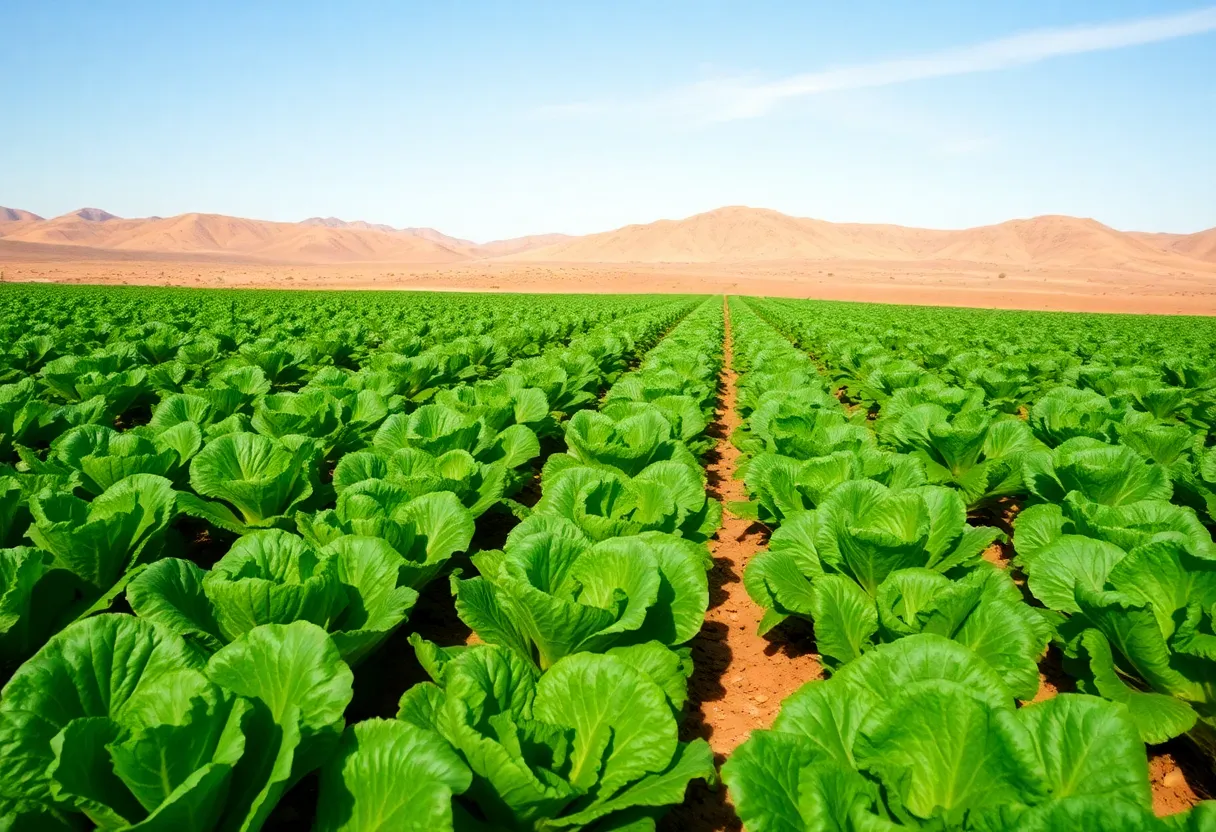
Researchers at the University of Arizona are investigating natural plant additives called biostimulants to enhance lettuce production in Yuma, which supplies a significant portion of the nation’s leafy greens. The study focuses on reducing water consumption in an area facing drought challenges. Early results indicate that integrating biostimulants with advanced irrigation methods could boost crop yields while conserving vital water resources. This research is part of a larger commitment to sustainable agriculture in arid climates, highlighting the collaboration between local universities and farms.
Phoenix, AZ – In an innovative stride toward sustainable agriculture, researchers at the University of Arizona are exploring the use of natural plant additives called biostimulants to bolster lettuce production in Yuma, Arizona. This initiative is crucial as Yuma County plays a pivotal role in supplying nearly 90% of the nation’s leafy greens from November through March, and the region faces significant threats from prolonged drought affecting the Colorado River, Arizona’s primary water resource.
Assistant Professor Ali Mohammed at the University of Arizona’s Yuma Agricultural Center has been at the forefront of this research, investigating how biostimulants, such as seaweed extracts and beneficial bacteria, can enable lettuce crops to thrive with lesser water inputs. Early findings indicate that integrating biostimulants with smart irrigation systems and organic farming practices has heightened crop yields, with possibilities of reducing water consumption by as much as 1 to 2 inches per acre during the critical growing season.
This research represents part of a broader commitment by Arizona’s colleges and universities to address pressing challenges in agricultural sustainability in arid climates. Collaborations across institutions, such as partnerships with local farms, highlight an ongoing effort to cultivate community engagement and incentivize responsible farming practices.
The Promise of Biostimulants
Biostimulants are natural substances designed to improve plant resilience and nutrient uptake. They play an important role in sustainable farming as they can enhance crop growth while decreasing dependency on water resources, vital for regions grappling with drought.
Water Conservation Benefits
The application of biostimulants, alongside organic farming techniques, could potentially allow Yuma’s organic lettuce farms to minimize watering cycles. With water scarcity being a persistent issue, adopting these strategies stands to significantly reduce the ecological footprint of agriculture while maintaining crop productivity.
Innovations in Agrivoltaics
The University of Arizona has also secured $1.2 million in funding from the U.S. Department of Energy to study agrivoltaics—a dual land-use approach that combines crop cultivation with solar energy collection. This innovative strategy aims to optimize land utilization, allowing for sustainable farming and renewable energy production, particularly in areas facing severe drought conditions and climate change challenges.
Collaborative Efforts by Arizona State University
In a complementary initiative, Arizona State University has formed partnerships with local farms to advocate for sustainable and local food growth. The program seeks to reconnect communities with agricultural practices, promoting not just sustainability, but also enhancing local food systems and community ties.
Impact on Local Economies
The combined efforts of these academic institutions are poised to fortify local economies through the promotion of sustainable practices. By reducing water usage and improving crop yields, farmers can sustain their livelihoods while contributing to the health and well-being of the broader community.
A Commitment to Sustainability
The research and initiatives undertaken by the University of Arizona and Arizona State University reflect a steadfast dedication to advancing Arizona’s higher education landscape by addressing critical environmental issues. Through innovation, effective resource management, and community engagement, these institutions are setting a standard for sustainability in agriculture, which is essential for future food security.
As both students and researchers continue to engage with these initiatives, it is essential for the community to connect with and support such pioneering projects. Attending campus events and staying informed about local agricultural advancements can foster a culture of awareness and responsibility in the pursuit of sustainable living.
| Key Feature | Description |
|---|---|
| Biostimulants | Natural additives like seaweed extracts or beneficial bacteria that enhance plant resilience and nutrient efficiency, aiding in sustainable farming practices. |
| Agrivoltaics | The dual use of land for both agriculture and solar energy production, promoting environmentally conscious land use, particularly in drought-affected areas. |
| Arizona State University’s Initiative | A partnership with local farms to promote sustainable, local food growth, aiming to reconnect people with the land and strengthen community ties through sustainable practices. |
FAQ
- What are biostimulants, and how do they help in sustainable farming?
- Biostimulants are natural additives like seaweed extracts or beneficial bacteria designed to make plants hardier or use nutrients more efficiently. In sustainable farming, they help improve crop yields while reducing water usage.
- What is agrivoltaics, and how does it contribute to sustainable agriculture?
- Agrivoltaics refers to the simultaneous use of land for both growing crops and collecting solar energy. This approach allows for more environmentally conscious land use, especially in areas impacted by drought and climate change.
- How is Arizona State University involved in promoting sustainable agriculture?
- Arizona State University has partnered with local farms to promote sustainable, local food growth, aiming to reconnect people with the land and strengthen community ties. This initiative focuses on cultivating character through sustainable practices.
Deeper Dive: News & Info About This Topic
HERE Resources
University of Arizona Declines Academic Compact Proposal
Innovative Agricultural Research Enhances Lettuce Growth in Arizona
Judge Halts Proposed Chicken Plant in Coffee County
Southwest Airlines Launches New Route from Phoenix to Tucson
Arizona Faces Severe Water Shortage Amid Ongoing Drought
Global Water Crisis Threatens Economies and Communities
Significant Groundwater Depletion Threatens Global Water Supply
Phoenix Officials Urge Residents to Conserve Water Amid Drought
Arizona Faces Further Colorado River Water Cuts Amid Ongoing Drought
Arizona Faces Water Reductions Amid Colorado River Drought

Author: STAFF HERE PHOENIX WRITER
The PHOENIX STAFF WRITER represents the experienced team at HEREPhoenix.com, your go-to source for actionable local news and information in Phoenix, Maricopa County, and beyond. Specializing in "news you can use," we cover essential topics like product reviews for personal and business needs, local business directories, politics, real estate trends, neighborhood insights, and state news affecting the area—with deep expertise drawn from years of dedicated reporting and strong community input, including local press releases and business updates. We deliver top reporting on high-value events such as the Waste Management Phoenix Open, Cactus League Spring Training, and Arizona State Fair. Our coverage extends to key organizations like the Greater Phoenix Chamber of Commerce and Visit Phoenix, plus leading businesses in technology and healthcare that power the local economy such as Intel and Banner Health. As part of the broader HERE network, including HERETucson.com, we provide comprehensive, credible insights into Arizona's dynamic landscape.