

Phoenix, AZ, January 2, 2026
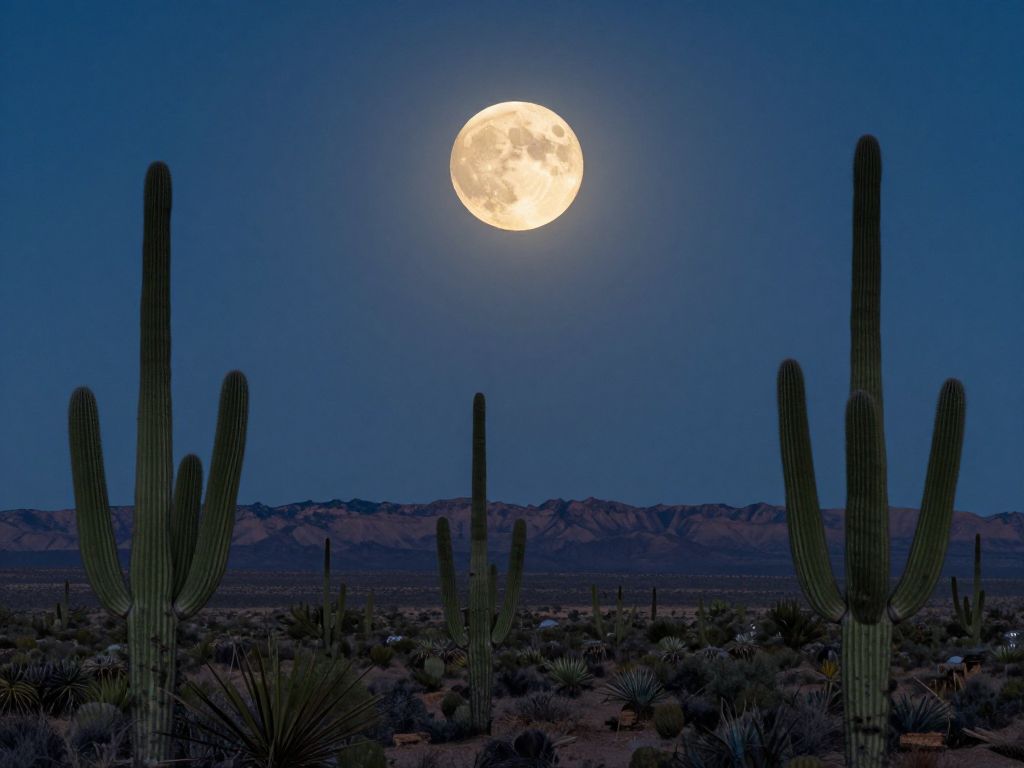
This weekend, residents of Phoenix can experience the magnificent Wolf Moon, the first supermoon of 2026. This captivating celestial event invites the community to engage with the night sky, offering a wonderful opportunity to foster bonds and enhance appreciation for the cosmos. The supermoon will be at its most brilliant and visible from various locations across Arizona, coinciding with other celestial happenings like the Quadrantid meteor shower, making it a perfect moment for skywatching.
Phoenix, AZ
Phoenix’s First Supermoon of 2026 Arrives This Weekend: The Wolf Moon Shines Bright
Arizona prepares for a dazzling celestial event as the Wolf Moon, the year’s inaugural supermoon, graces our night skies with enhanced brilliance and size, inviting residents to look skyward.
As the new year commences, Phoenix is set to experience its first celestial highlight of 2026: the majestic Wolf Moon supermoon. This natural spectacle offers a compelling opportunity for community members to connect with the cosmos, fostering a shared sense of wonder and encouraging personal initiative in exploring the natural world around us. Arizona’s inherent clear skies and dedication to preserving night-time visibility, often a result of mindful local planning and community engagement, make our state an exceptional place for such astronomical observations. This event serves as a reminder of the awe-inspiring beauty that can be appreciated when individuals and communities prioritize engagement with their environment.
This particular supermoon is not just a visual treat; it’s a chance to step away from daily routines and marvel at the predictable yet profound rhythms of our universe. Such moments of collective observation can strengthen local bonds and inspire a deeper appreciation for both scientific understanding and the simple act of looking up together.
Understanding the Supermoon Phenomenon
A supermoon is a captivating astronomical event characterized by a full moon occurring when the Moon is at its closest point to Earth in its elliptical orbit, a position known as perigee. This proximity results in the Moon appearing notably larger and brighter in the night sky compared to a typical full moon, potentially up to 14 percent larger and 30 percent brighter. While “supermoon” is a popular term coined by an astrologer in 1979, astronomers refer to this event as a “perigean full moon” or “perigee syzygy.”
When and Where to Observe in Arizona
Arizona’s first supermoon of 2026, known as the Wolf Moon, is set to illuminate the skies on Saturday, January 3, 2026. Skywatchers can anticipate excellent viewing opportunities between Friday, January 2, and Sunday, January 4. The full moon will officially rise at 4:04 p.m. in Arizona on Saturday. While the Moon reaches its peak fullness at approximately 5:03 a.m. EST on Saturday, January 3, the most striking views often occur just after sunset as the Moon climbs above the eastern horizon. The supermoon will reach its highest point in the sky at 11:26 p.m. on January 3, positioned high in the southern sky. For optimal viewing, observers should face east or northeast shortly after sunset, especially with an unobstructed horizon. Later in the evening, the gaze can shift southward as the Moon ascends higher.
The Wolf Moon: More Than Just a Full Moon
This January supermoon holds particular significance. It marks the first supermoon of 2026 and is the final one in a series that began in late 2025. Following this event, Arizona will not experience another full supermoon until the Beaver Moon on November 24, 2026, and the Cold Moon on December 23, 2026. Adding to the weekend’s celestial spectacle, the Wolf Moon will coincide with the Quadrantid meteor shower, although the bright moonlight may reduce the visibility of the meteors. The bright planet Jupiter will also be visible nearby, creating an even more captivating scene for sky observers. Notably, the Moon will be rising and setting near its northernmost points, an occurrence that happens on an 18.6-year cycle.
Arizona’s Prime Stargazing Environment
Arizona stands out as an exceptional location for night-sky viewing, a testament to its unique geographic and atmospheric conditions. The state boasts extensive dark-sky coverage, with approximately 92.90% of its land area falling within Bortle 1–3 dark-sky zones, which are areas with minimal light pollution. This, combined with favorable moon positioning, lower humidity, and higher average elevations (around 4,100 feet), contributes to clearer skies and enhanced visibility for astronomical events. These natural advantages offer a conducive environment for individuals to engage in stargazing with unparalleled clarity. Recommended viewing locations, often outside major urban centers, include the outskirts of Phoenix or Tucson, Sedona & Oak Creek Canyon, the Flagstaff Dark Sky Region, Saguaro National Park, and the Superstition Mountains. These areas allow for an unobstructed view and minimize light interference, embodying the spirit of personal initiative in seeking out the best conditions for observation.
Embracing Community Observation
The arrival of a supermoon, especially the first of the year, presents a wonderful opportunity for collective community engagement. While specific organized events might vary, the shared experience of observing such a grand celestial display can foster a sense of unity and intellectual curiosity among Phoenix residents. Taking the personal initiative to gather with family, friends, or neighbors to witness this event can create lasting memories and spark conversations about the cosmos. It’s a moment when individuals, through their simple act of observation, contribute to a broader sense of community wonder and appreciation for the universe’s marvels.
Conclusion
The first supermoon of 2026, the Wolf Moon, offers Phoenix a spectacular beginning to the new year’s astronomical calendar. Its enhanced brightness and size provide a memorable visual experience, underscoring Arizona’s prime position for stargazing. We encourage all residents to take the opportunity this weekend to look up and partake in this shared experience, whether from a designated dark-sky location or simply their backyard. Engaging with these natural wonders reinforces our connection to the environment and to each other, highlighting the profound benefits of local initiative and community spirit in appreciating the gifts of the night sky. Let us embrace this chance to collectively marvel at the universe and foster a community that values both personal exploration and shared moments of awe.
Frequently Asked Questions (FAQ)
- When can I see Arizona’s first supermoon of 2026?
- Arizona’s first supermoon of 2026, known as the Wolf Moon, arrives on Saturday, January 3, 2026. It will be visible between Friday, January 2, and Sunday, January 4.
- What time does the full moon rise in Arizona?
- The January full moon rises at 4:04 p.m. Saturday in Arizona.
- What is a supermoon?
- A supermoon is a full moon that occurs when the moon is at its perigee, the point in its elliptical orbit where it is closest to Earth. This proximity can make the moon appear up to 14 percent larger and 30 percent brighter than a typical full moon.
- Why is this particular supermoon special?
- This is the first supermoon of 2026 and the last in a series of consecutive supermoons that began in late 2025. It will also coincide with the Quadrantid meteor shower, though the supermoon’s light may reduce the visibility of the shower. The bright planet Jupiter will also be nearby.
- Where are the best places in Arizona to view the supermoon?
- Recommended viewing locations in Arizona include the outskirts of Phoenix or Tucson, Sedona & Oak Creek Canyon, the Flagstaff Dark Sky Region, Saguaro National Park, and the Superstition Mountains.
Key Features of the 2026 January Supermoon (Wolf Moon)
| Feature | Detail | Scope |
|---|---|---|
| Date of Appearance | Saturday, January 3, 2026 | State-level |
| Visibility Window | Friday, January 2 – Sunday, January 4 | State-level |
| Moonrise Time (Jan 3) | 4:04 p.m. (Arizona time) | State-level |
| Peak Fullness Time (Jan 3) | Approximately 5:03 a.m. EST | Nationwide |
| Highest Point (Jan 3) | 11:26 p.m. (Arizona time), in the southern sky | State-level |
| Apparent Size Increase | Up to 14% larger | Nationwide |
| Apparent Brightness Increase | Up to 30% brighter | Nationwide |
| Associated Celestial Events | Quadrantid meteor shower, proximity to Jupiter | Nationwide |
| Next Full Supermoon After Jan 2026 | November 24, 2026 (Beaver Moon) | Nationwide |
| Arizona’s Night-Sky Viewing Rank (Jan 2026) | No. 9 nationally | State-level |
Deeper Dive: News & Info About This Topic
HERE Resources
Achieve’s 15-Year Run: A Benchmark for Phoenix Workplaces
Stargazing Arizona: A Guide to the Night Sky
Global Ambassador Hotel Hosts New Year’s Eve Celebration
Phoenix, Arizona: Building on a Decade of Innovation
Final Supermoon Over Phoenix: Witness the Cold Moon
Arizona Prepares for December’s Cold Moon Supermoon