

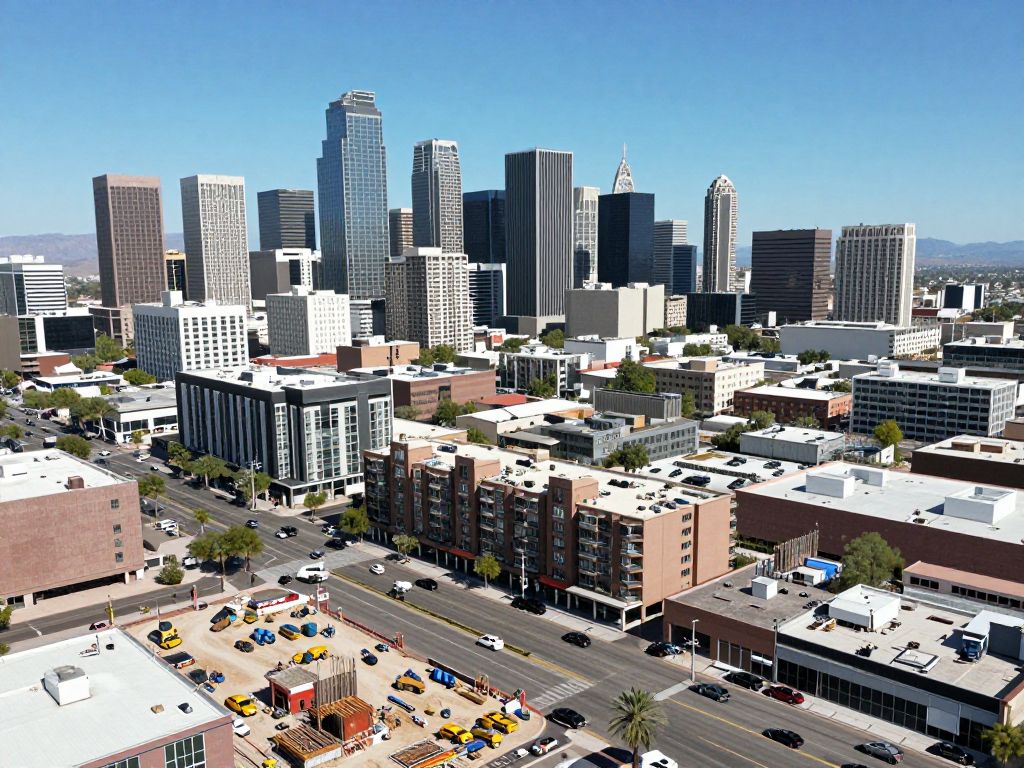
Phoenix, AZ, January 3, 2026
Phoenix is on the verge of significant economic growth, particularly in the commercial real estate sector, as various innovative projects are set to transform the landscape by 2026. The city is witnessing an influx of residential, industrial, and hospitality developments that reflect the vitality and resilience of its economy. Local entrepreneurs and strategic investments are driving this transformation, setting the stage for a thriving metropolis that attracts both investors and residents looking for new opportunities.
Phoenix, AZ
Phoenix’s 2026 Vision: Real Estate Fuels Growth
As Phoenix continues its trajectory as a beacon of economic vitality, 2026 promises to be a landmark year for commercial real estate. This period of dynamic expansion underscores the relentless spirit of local entrepreneurs and the powerful impact of strategic investment across the Valley.
The urban landscape of Phoenix is undergoing a remarkable transformation, driven by an impressive array of commercial real estate projects slated for completion or significant progress in 2026. This growth reflects a broader economic resilience, showcasing how private sector innovation and targeted development are creating new opportunities and enhancing the community’s infrastructure. With a focus on various sectors, from industrial to residential and hospitality, these endeavors highlight the robust health of the Phoenix AZ business environment and its appeal to forward-thinking investors and residents alike.
Driving Forces Behind Phoenix’s Real Estate Boom
The momentum in Phoenix’s commercial real estate sector is not accidental; it is a direct result of several converging factors that foster an environment ripe for development. The city’s consistent population growth and a business-friendly climate continue to attract corporate relocations, fueling demand across all property types. This influx of residents and businesses provides a strong foundation for new projects, demonstrating the power of a dynamic local economy to spur private investment. The state’s economic growth is projected to rebound in 2026, outpacing the rest of the nation, with an Artificial Intelligence (AI) boom and fiscal and monetary stimulus acting as tailwinds.
Arizona AZ entrepreneurs and developers are at the forefront, responding to market demands with innovative projects that are shaping the future of Phoenix’s skyline and local communities. This entrepreneurial drive, coupled with proactive land use and zoning strategies, allows for creative development that meets the evolving needs of a modern metropolis.
Key Commercial Projects Shaping 2026
The year 2026 is marked by the advancement of numerous significant commercial real estate projects throughout Arizona, with many concentrated in the Phoenix metropolitan area. These developments span a variety of sectors, indicating a diversified approach to urban and economic expansion. For instance, the Ray Phoenix project is slated for completion in 2026, offering 401 units across studio, one-, and two-bedroom residences in a 26-story tower in Downtown Phoenix. This development will be a visually striking addition to the city’s skyline, showcasing a modernist form and a textured green façade.
In the residential sector, The Whitney will introduce 328 units to the market at the southwest corner of Central Avenue and McDowell Road, complete with amenities like a clubhouse, rooftop pickleball court, and dog wash. Further enhancing the residential landscape is Amavida Marana, a 200-unit community set near Saguaro National Park West, offering access to outdoor recreation. These residential developments cater to the continuous population growth in the region, ensuring that housing supply keeps pace with demand.
Industrial and Hospitality Innovations
Beyond residential, industrial and hospitality projects are also making significant headway. The Chandler Freeways Business Park exemplifies adaptive reuse, converting a former office building into an 87,600-square-foot industrial facility, with plans for an additional 102,875-square-foot building. This project directly addresses the surplus of challenged office buildings by transforming the site into an industrial complex designed to attract top-tier businesses and create jobs. Similarly, C|303 Phase I is delivering a massive 1.75 million square feet across three buildings, providing flexibility for various industrial users with diverse size requirements. These industrial expansions are crucial for supporting the growing logistics, manufacturing, and semiconductor industries in the region, which are key drivers of Phoenix economy.
The hospitality sector is also seeing innovation with projects like AC Element City North. This dual-branded hotel, a joint venture between LaPour and Holualoa Companies, brings two hospitality experiences—AC Hotel by Marriott and Element by Westin—together within a unified architectural strategy. This development in Phoenix caters to both sophisticated business travel and wellness-focused extended stays, reflecting the evolving needs of visitors to the region.
A Balanced Market and Future Growth
The Phoenix small business landscape and larger corporate entities benefit from a commercial real estate market that, while dynamic, shows signs of balancing. The Phoenix office market, for example, continues to stand out as one of the strongest in the country, with solid demand for high-quality Class A buildings in areas like Scottsdale, Tempe, and Downtown Phoenix. Companies are increasingly prioritizing office spaces that foster culture, collaboration, and modern workplace standards, leading to a “flight to quality” in leasing decisions.
The residential real estate market in Phoenix is also finding its equilibrium. The median sale-to-list price ratio has eased, and houses are spending an average of 62 days on the market, providing buyers with more opportunities to conduct inspections and make informed decisions. While home prices were down 0.43% in August 2025 compared to the previous year, this indicates a less frenzied marketplace rather than a fading demand. Statewide, residential construction is projected to rebound in 2026, with around 50,000 units anticipated to be added to Arizona’s housing supply.
Community Engagement and Economic Outlook
The long-term outlook for Phoenix calls for continued growth that outpaces the U.S. average. The region is benefiting from a diverse, innovation-driven economy, with major developments supporting job creation, population growth, and housing demand. Phoenix was recently named among the Top 10 U.S. markets to watch in 2026, a Nationwide recognition, citing strong job creation, continued population growth, expanding manufacturing and tech sectors, an affordable cost of living, and stable housing fundamentals.
The engagement of the community, local leadership, and private developers is critical in shaping this positive future. Their combined efforts ensure that economic growth is not just about new buildings, but about creating vibrant neighborhoods and robust job markets that enhance the quality of life for all residents. The ongoing investments in infrastructure, such as data centers and power generation, further solidify Arizona’s position as a hub for advanced industries.
Conclusion
Phoenix’s commercial real estate sector is poised for a transformative 2026, marked by significant projects that highlight the city’s entrepreneurial spirit and strategic economic development. From towering residential structures to expansive industrial parks and innovative hotels, these ventures reflect a confident and growing metropolis. This period of expansion is a testament to the collaborative efforts of developers, businesses, and the community, all working to build a more prosperous future.
We encourage our readers to stay informed and engaged with the developments shaping our city. Supporting local businesses and understanding the drivers of our local economy are vital to ensuring Phoenix continues to thrive as a center of innovation and opportunity. Explore Phoenix, AZ’s evolving neighborhoods and witness the tangible results of forward-thinking investment.
Frequently Asked Questions
- What types of commercial real estate projects are prominent in Phoenix for 2026?
- Prominent projects include residential towers like Ray Phoenix, mixed-use developments, industrial parks such as Chandler Freeways Business Park and C|303, and hospitality projects like AC Element City North.
- What is the outlook for Phoenix’s office market in 2026?
- The Phoenix office market is expected to remain strong, with solid demand for high-quality Class A buildings, particularly in Scottsdale, Tempe, and Downtown Phoenix, driven by companies prioritizing culture, collaboration, and modern workplace standards.
- Is Phoenix considered a good market for real estate investment Nationwide?
- Yes, Phoenix was recently named among the Top 10 U.S. markets to watch in 2026 Nationwide, due to strong job creation, continued population growth, expanding manufacturing and tech sectors, affordable cost of living, and stable housing fundamentals.
- How is the residential construction sector performing in Arizona for 2026?
- Residential construction is projected to rebound in 2026 Statewide, with around 50,000 units anticipated to be added to Arizona’s housing supply.
- What economic factors are driving growth in Arizona for 2026?
- Arizona’s economic growth is projected to rebound in 2026, outpacing the rest of the nation, with an Artificial Intelligence (AI) boom and a combination of fiscal and monetary stimulus as key tailwinds.
Key Features of Phoenix’s 2026 Commercial Real Estate Landscape
| Feature | Description | Scope |
|---|---|---|
| Residential Development | Ray Phoenix (401 units), The Whitney (328 units), Amavida Marana (200 units). Around 50,000 units anticipated to be added to Arizona’s housing supply in 2026. | Local-level (Ray Phoenix, The Whitney, Amavida Marana), State-level (50,000 units) |
| Industrial Expansion | Chandler Freeways Business Park (office to industrial conversion), C|303 Phase I (1.75 million sq ft industrial). | Local-level |
| Hospitality Growth | AC Element City North (dual-branded hotel). | Local-level |
| Office Market Strength | Solid demand for high-quality Class A buildings, “flight to quality” trend. | Local-level |
| Economic Outlook | Phoenix named a Top 10 U.S. market to watch in 2026. Arizona’s economic growth projected to rebound in 2026, outpacing the rest of the nation. | Nationwide (Phoenix Top 10 Market), State-level (Arizona economic growth) |
| Key Drivers | Population growth, business-friendly climate, manufacturing, tech sectors, AI boom, strategic investment. | Local-level, State-level |
Deeper Dive: News & Info About This Topic
HERE Resources
Avondale Advances River Corridor Planning for Economic Growth
Chandler Fashion Center Unveils Ambitious Redevelopment
Arizona Sees Significant Rise in Influenza Cases
What Are the Most Popular Neighborhoods for Custom Home Building in Phoenix?
Phoenix’s Pinnacle Properties: A Glimpse into the Luxury Market
Phoenix Records Significant Drop in Homicides and Violent Crime
Phoenix Powers Up: Data Center Giant Expands Arizona Footprint
Phoenix Firm Expands Real Estate Consulting Services
How to Leverage Local Events and Amenities to Enhance Your Home Buying Experience in Phoenix, AZ
University of Arizona Research Highlights Housing Market Shift