

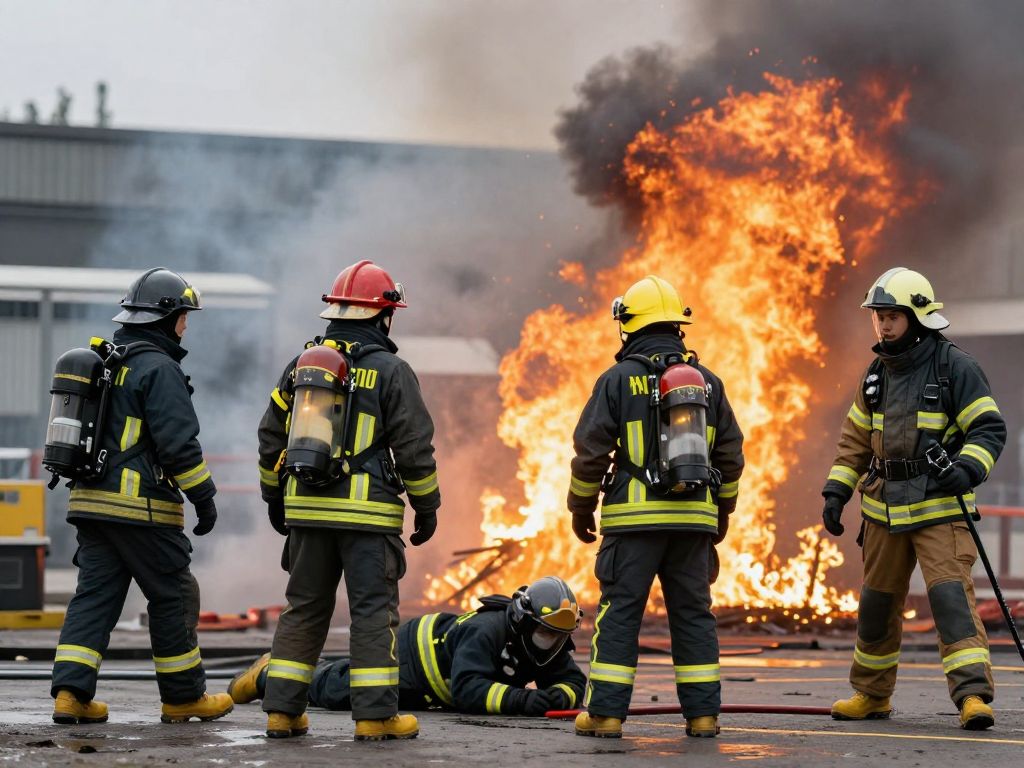
News Summary
The University of Arizona, alongside Arizona State University, has conducted a pivotal study on PFAS levels in U.S. career firefighters. Published in the Journal of Occupational and Environmental Medicine, the research identifies key predictors of elevated PFAS levels, emphasizing the link between occupational practices and health risks. This collaborative effort reflects a commitment to public health and safety, offering actionable insights aimed at mitigating the health risks that these frontline professionals face in their line of duty.
Phoenix, AZ — The University of Arizona, a cornerstone of higher education in the Southwest, continues to demonstrate its commitment to impactful research with a significant new study. This latest endeavor, co-led by researchers from the University of Arizona and Arizona State University, provides crucial insights into the factors influencing per- and polyfluoroalkyl substances (PFAS) levels in career firefighters across the United States. Published in the Journal of Occupational and Environmental Medicine, the findings highlight the intersection of academic rigor and real-world application, directly contributing to the health and safety of frontline professionals.
This research underscores the University of Arizona’s ongoing dedication to public health and safety, embodying the spirit of innovation and personal responsibility. By meticulously identifying the predictors of PFAS accumulation, the study not only advances scientific understanding but also equips fire departments and individual firefighters with actionable knowledge to mitigate occupational risks. Such contributions exemplify how Arizona’s higher education institutions foster leadership and make a tangible community impact, extending benefits far beyond campus borders.
The collaborative nature of this research, involving both the University of Arizona and Arizona State University, reflects a broader commitment within Arizona’s academic landscape to address complex societal challenges. It showcases how dedicated scholarship and disciplined inquiry can lead to discoveries that protect those who bravely serve our communities, reinforcing the vital role of academic freedom in pursuing knowledge that safeguards public well-being. This kind of scientific advancement is crucial for strengthening the health security and prosperity of Arizona and the nation.
Unpacking the PFAS Challenge for Firefighters
Per- and polyfluoroalkyl substances, widely recognized as “forever chemicals” due to their environmental persistence and accumulation in the human body, are synthetic chemicals employed for their resistance to water, grease, and stains. These compounds are prevalent in numerous products, including firefighting foams and protective gear. Research has consistently shown that firefighters exhibit higher serum PFAS levels compared to the general public and other occupations, largely due to their frequent exposure to these substances in high-risk environments during their duties. Elevated PFAS levels have been associated with various adverse health outcomes, such as immune dysfunction, certain cancers, and endocrine disruption.
Key Predictors Identified by the Study
The University of Arizona and Arizona State University study, drawing data from the comprehensive Fire Fighter Cancer Cohort Study, pinpointed specific occupational and demographic factors contributing to elevated PFAS levels. The research revealed that everyday fireground practices and departmental protocols play a significant role. Routines associated with handling contaminated turnout gear, inconsistent decontamination procedures, and improper equipment storage without isolation were all linked to increased PFAS concentrations in firefighters’ blood. These findings suggest that exposure is not merely from singular incidents but from cumulative contact over years of service.
Furthermore, the study identified demographic and lifestyle characteristics as influential predictors. Factors such as a firefighter’s years of service, their rank or role within the fire service, and personal behaviors were found to correlate with PFAS levels. This evidence highlights that both workplace conditions and individual choices contribute to a firefighter’s overall chemical exposure profile.
Leadership in Research: The Arizona Collaboration
This groundbreaking research was co-led by Melissa Furlong, PhD, an assistant professor of environmental health sciences at the University of Arizona’s Mel and Enid Zuckerman College of Public Health. Reagan Conner, a public health doctoral student, served as the lead author, demonstrating the integral role of student growth and academic development in cutting-edge research. Other University of Arizona co-authors included James Hollister, Karen Lutrick, Shawn Beitel, Cynthia Porter, Olivia Healy, and Jeff Burgess. Contributions also came from Floris Wardenaar of Arizona State University, retired Captain John Gulotta of the Tucson Fire Department, and retired Assistant Fire Chief Eric Valliere of Scottsdale Fire Department, highlighting a robust collaborative effort spanning academic and community sectors. The study received partial funding through a grant from the Arizona Board of Regents and the Federal Emergency Management Agency for the Fire Fighter Cancer Cohort Study.
Implications for Firefighter Health and Safety
Understanding the specific predictors of PFAS accumulation is a critical step towards safeguarding the long-term health of the essential firefighting workforce. The insights gained from this study provide a clear direction for developing targeted interventions. Modifications in decontamination procedures, improved gear storage practices, and revised routine operational policies have been suggested as potential strategies to reduce PFAS exposure among firefighters.
Previous research by the University of Arizona has also explored the connection between PFAS exposure and genetic changes, finding that certain chemicals firefighters are exposed to can affect gene activity linked to cancer and other diseases. This ongoing research into occupational exposure to PFAS is vital for reducing associated health risks, which extend beyond specific cancers to include elevated cholesterol levels and diminished antibody responses to immunizations.
Fostering Innovation for Community Impact
The University of Arizona’s commitment to rigorous scientific inquiry, exemplified by this study, directly translates into a positive impact on the community. By providing evidence-based strategies to protect firefighters, the university reinforces its role as a leader in public health and safety research. This proactive approach not only benefits individuals within the fire service but also contributes to the broader health and economic well-being of Arizona. The dedication to academic freedom allows researchers to pursue challenging questions, fostering innovations that lead to better practices and improved quality of life for all citizens. Furthermore, the collaboration with fire departments underscores the importance of practical partnerships in translating academic discovery into real-world protective measures.
Looking Ahead: Continued Research and Proactive Measures
This significant study from the University of Arizona serves as a call to action for fire departments and policymakers nationwide to re-evaluate current practices and implement changes that reduce PFAS exposure. While challenges remain, the clear identification of key predictors offers a pathway for proactive measures, moving towards a future where the health risks faced by firefighters are systematically minimized. Ongoing research continues to explore methods for reducing PFAS levels, including the potential effectiveness of blood and plasma donation. The sustained efforts of Arizona’s higher education sector in addressing complex health issues demonstrate a powerful model for leadership, discipline, and community impact. Readers are encouraged to stay informed about ongoing research from the University of Arizona and other Phoenix, AZ college news sources to learn how innovation in Arizona AZ higher education continues to benefit society.
Key Study Findings at a Glance
| Feature | Details | Scope |
|---|---|---|
| Lead Institutions | University of Arizona, Arizona State University | State-level |
| Study Focus | Predictors of PFAS levels in career firefighters | Nationwide |
| Key Contributors | Melissa Furlong (UArizona), Reagan Conner (UArizona), Jeff Burgess (UArizona), John Gulotta (Tucson FD), Eric Valliere (Scottsdale FD) | State-level |
| Primary Publication | Journal of Occupational and Environmental Medicine | Nationwide |
| Data Source | Fire Fighter Cancer Cohort Study | Nationwide |
| Occupational Predictors | Fireground practices, decontamination procedures, gear storage | Nationwide |
| Demographic/Lifestyle Predictors | Years of service, rank, personal behaviors | Nationwide |
| Linked Health Risks | Immune dysfunction, certain cancers, endocrine disruption | Nationwide |
| Potential Mitigation | Modified decontamination, improved gear storage, revised operational policies | Nationwide |
Frequently Asked Questions About the Firefighter PFAS Study
What is the main focus of the new study from the University of Arizona?
The new study identifies key predictors of PFAS levels in US career firefighters.
Which institutions collaborated on this research?
The research was conducted by University of Arizona and Arizona State University researchers.
Where was the study published?
The study was published in the Journal of Occupational and Environmental Medicine.
Who were the lead researchers involved?
Melissa Furlong, an assistant professor at the Zuckerman College of Public Health, co-led the study, and public health doctoral student Reagan Conner was the lead author.
Why are firefighters more susceptible to high PFAS levels?
Firefighters have higher serum PFAS levels than other workers and the general public due to on-the-job circumstances, often in high-risk environments, that expose them to a variety of hazardous substances.
What are PFAS chemicals linked to in terms of health?
PFAS have been linked to adverse health outcomes, including immune dysfunction, certain cancers, and endocrine disruption.
What specific occupational practices were identified as predictors of increased PFAS levels?
Fireground practices and departmental protocols, including routines related to handling contaminated equipment and personal protective gear, were significantly associated with higher blood serum concentrations.
Can personal factors influence PFAS levels in firefighters?
Yes, demographic and lifestyle characteristics such as years of service, rank or role within the fire service, and personal behaviors also predicted PFAS levels.
What are potential actions to reduce PFAS exposure for firefighters?
Modifications in decontamination procedures, gear storage practices, and routine operational policies may reduce exposure to PFAS among firefighters.
Was this study funded?
This research was partially funded through a grant from the Arizona Board of Regents and the Federal Emergency Management Agency for the Fire Fighter Cancer Cohort Study.
Deeper Dive: News & Info About This Topic
HERE Resources
New Findings Reveal Firefighter Cancer Risks in Phoenix