

News Summary
The University of Arizona has conducted groundbreaking research in Iceland, exploring how microbial communities colonize fresh lava flows. This pioneering study offers insights into the resilience of life in extreme environments and its implications for extraterrestrial life, especially on Mars. By analyzing microbial colonization processes, researchers deepen our understanding of ecosystem development, highlighting the role of interdisciplinary collaboration in scientific inquiry.
Phoenix, AZ – The University of Arizona AZ has unveiled groundbreaking research shedding light on one of nature’s most fundamental processes: how life takes its first steps on new, barren terrain. A dedicated team of ecologists and planetary scientists from the university recently conducted extensive field studies in Iceland, investigating how microbial communities colonize fresh lava flows. This pioneering work offers critical insights into the resilience of life and its potential to thrive in extreme environments, both on Earth and beyond.
This innovative study, led by the University of Arizona’s Lunar and Planetary Laboratory and its molecular and cellular biology department, exemplifies the academic rigor and commitment to discovery that defines Arizona AZ higher education. By understanding the intricate mechanisms of microbial colonization, researchers are not only deepening our knowledge of Earth’s ecosystems but also informing the quest for life on other planets, particularly Mars. Such significant contributions underscore the vital role of Phoenix-area universities in fostering intellectual leadership and advancing global scientific frontiers.
The research provides a unique perspective on biological succession, demonstrating how life establishes itself from a “clean slate.” This endeavor highlights the importance of interdisciplinary collaboration and sustained scientific inquiry in addressing complex questions about life’s origins and its remarkable adaptability. The findings reflect a dedication to academic freedom and the pursuit of knowledge that ultimately benefits the wider community, influencing future research and inspiring the next generation of scientists.
A Natural Laboratory in Iceland
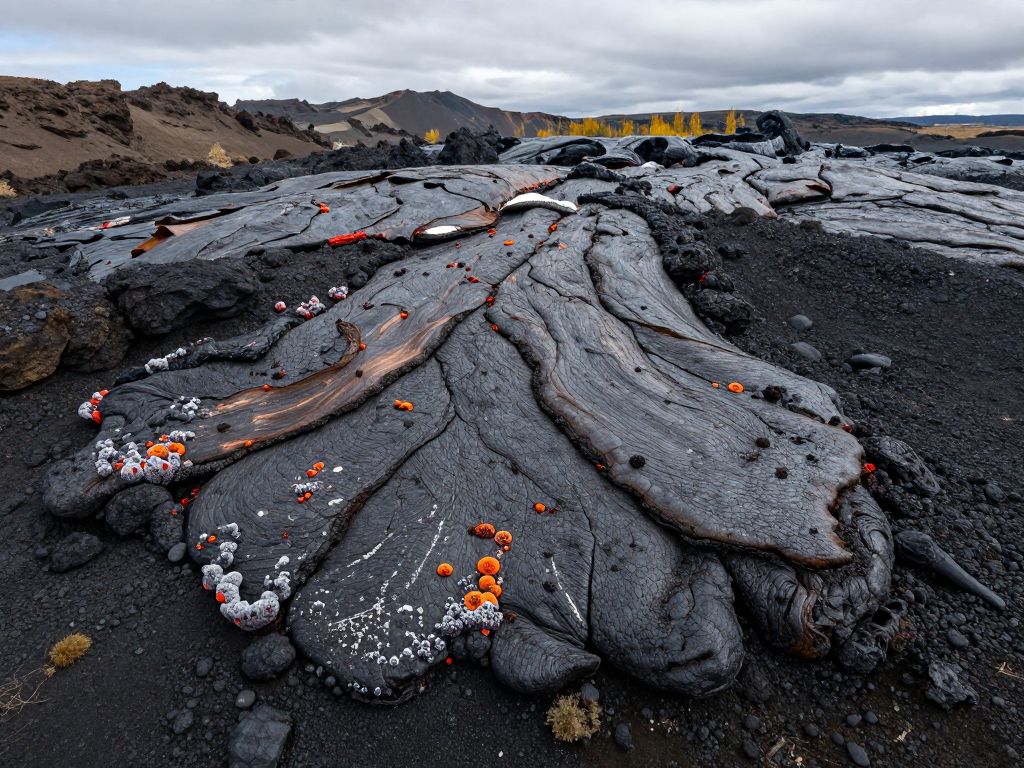
The core of this significant research was conducted in Iceland, taking advantage of a unique “natural laboratory” provided by the Fagradalsfjall volcano in the southwestern part of the island. Between 2021 and 2023, the volcano experienced a series of three eruptions, with fresh lava flows continually blanketing the surrounding tundra. This continuous geological activity created fresh, sterile surfaces, offering an unparalleled opportunity to observe life’s primary colonization processes from their very beginning. The lava emerges from the ground at temperatures exceeding 2,000 degrees Fahrenheit, making it initially devoid of any life. This sterile starting point allowed the University of Arizona team to observe how life initiates and develops on a truly pristine habitat.
Unraveling Microbial Origins and Adaptations
To understand how these new habitats become colonized, the University of Arizona research team, including doctoral student Nathan Hadland and Professor Solange Duhamel, meticulously collected samples from various potential sources. Samples were gathered from lava that had solidified mere hours before, as well as from rainwater, airborne particles (aerosols), nearby soil, and older rocks in the surrounding areas. The scientists then extracted DNA from these samples and utilized advanced statistical and machine learning techniques. This sophisticated analysis allowed them to identify the specific organisms present on the freshly deposited lava flows, determine the composition of these micro-habitats, and trace their precise origins.
The Resilient Pioneers of New Habitats
The study revealed that despite the extremely harsh conditions of fresh lava—characterized by minimal water retention and very low organic nutrient content—microbes begin colonizing these surfaces remarkably quickly. Early colonizers are described as “tough” or “badass” microbes, possessing the ability to survive in environments comparable to Earth’s lowest biomass regions, such as Antarctica or the Atacama Desert. Initially, these pioneering microorganisms primarily arrive on the lava surface through wind-blown soil and aerosols. This rapid colonization demonstrates the incredible adaptability and discipline of microbial life in establishing new footholds, even in seemingly inhospitable landscapes.
Rainwater’s Pivotal Role in Ecosystem Development
As the colonization progressed over several months and seasonal shifts, a distinct pattern emerged regarding the sources of microbial life. While early colonizers were mainly transported by wind, the study highlighted rainwater as playing a critical and increasingly significant role in shaping the microbial communities on freshly deposited lava. Rainwater, known to carry microbes, contributes significantly to the diversity and stabilization of these nascent ecosystems. The research indicated that after the initial winter following an eruption, microbial diversity, which had initially increased, experienced a temporary decline. This reduction was attributed to the seasonal shifts selecting for a specific subset of microbes capable of enduring the altered environmental conditions. Over subsequent winters, the analyses showed less turnover and a gradual stabilization of diversity within the microbial community.
Implications for Earth and Beyond: Mars Habitability
The findings of this University of Arizona AZ research extend far beyond understanding ecological succession on Earth. The study offers a mechanistic understanding of how biological communities establish over time from their very inception. This knowledge is particularly relevant to the ongoing exploration of habitability on other celestial bodies, especially Mars. Much of the Martian surface is basaltic and bears the marks of volcanic processes similar to those on Earth. Although volcanism on Mars has largely subsided, past eruptions could have created transient periods conducive to life by injecting heat, releasing volatile gases, and potentially melting subsurface frozen water. By understanding how microbes colonize fresh lava on Earth, scientists can better predict how life might have emerged on Mars long ago and what biosignatures future missions should endeavor to detect.
Advancing Scientific Understanding Through Rigorous Research
This extensive study by the University of Arizona team, with its focus on primary succession at the microbial level, represents a significant advancement in ecological and planetary science. The research, published in the esteemed journal Nature Communications Biology, underscores the value of sustained, disciplined academic inquiry. It exemplifies how higher education institutions like the University of Arizona contribute not only to foundational scientific knowledge but also to broader societal understanding and technological innovation. The insights gained from observing life’s tenacious beginnings on lava flows inspire new avenues for scientific exploration, demonstrating the impact of rigorous research originating from Arizona AZ higher education.
Key Study Features
| Feature | Description |
|---|---|
| Lead Institution | University of Arizona |
| Research Focus | Microbial colonization of fresh lava |
| Study Location | Fagradalsfjall volcano, Iceland |
| Study Period | 2021-2023 (three eruptions) |
| Key Researchers | Nathan Hadland (doctoral student), Solange Duhamel (professor) |
| Initial Lava Condition | Sterile, over 2,000°F (1093°C) |
| Primary Colonizer Sources (Early) | Wind-blown soil, aerosols |
| Key Factor in Later Colonization | Rainwater |
| Publication | Nature Communications Biology |
The University of Arizona’s leadership in this research highlights the impactful contributions emerging from Phoenix AZ college news. This investigation into how life colonizes new habitats provides a deeper appreciation for the resilience of biological systems and offers a scientific roadmap for understanding potential extraterrestrial life. We encourage readers to explore the diverse academic programs and research initiatives at the University of Arizona AZ and other institutions contributing to Arizona AZ higher education. Stay updated on further breakthroughs and campus events that continue to shape our understanding of the world and beyond.
Frequently Asked Questions
What was the main focus of the University of Arizona’s research in Iceland?
The main focus of the University of Arizona’s research in Iceland was to study how microbial communities colonize fresh lava flows, revealing insights into how new ecosystems form.
Who led the research team from the University of Arizona?
The research team from the University of Arizona was led by ecologists and planetary scientists, including doctoral student Nathan Hadland and Professor Solange Duhamel.
Where did the University of Arizona team conduct their field research?
The University of Arizona team conducted their field research in Iceland, specifically at the Fagradalsfjall volcano in the southwestern part of the island.
What role did rainwater play in the colonization of lava?
Rainwater played a critical and increasingly significant role in shaping the microbial communities on freshly deposited lava, especially after initial colonization.
What are the broader implications of this research for understanding life beyond Earth?
The broader implications of this research include providing a mechanistic understanding of how biological communities establish from the beginning, which informs the understanding of habitability on other worlds like Mars.
Deeper Dive: News & Info About This Topic
HERE Resources