

Phoenix, February 5, 2026
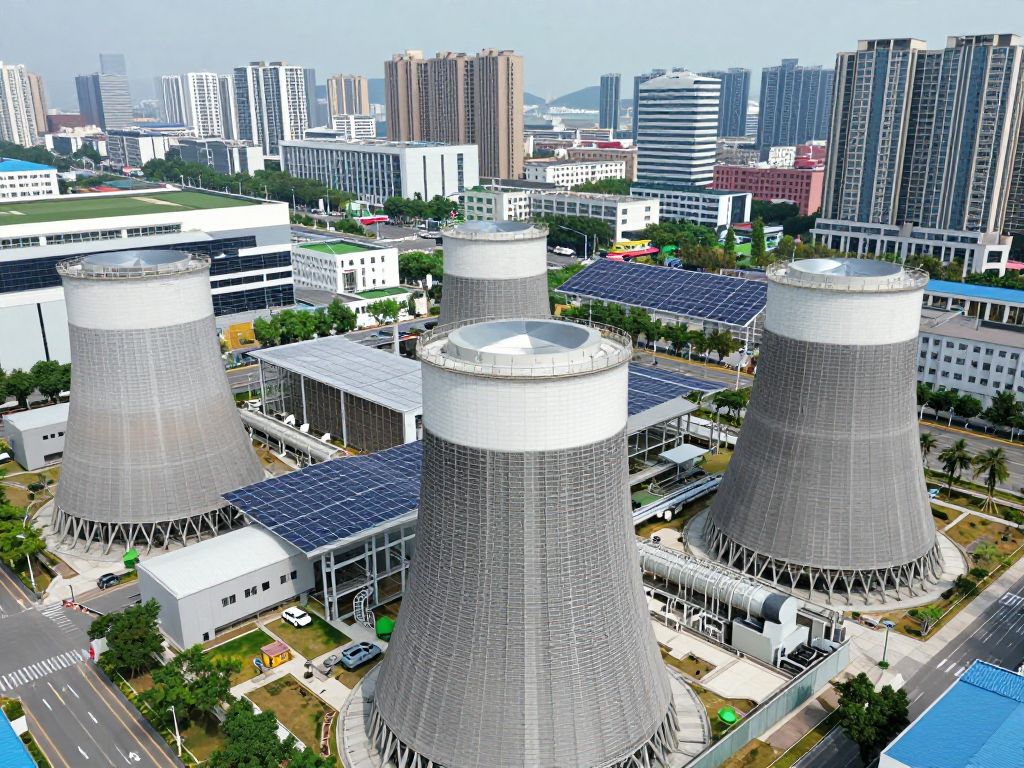
Cordia is expanding its district cooling network in downtown Phoenix to support the city’s economic growth amid rising temperatures. This strategic investment marks Cordia’s commitment to sustainable urban development, ensuring comfort for residents and businesses while reflecting the importance of private investment in public infrastructure. The new Plant 4, set to break ground in March 2026, will enhance cooling capacity with renewable energy solutions, addressing the challenges of extreme heat faced by the city.
Phoenix
Cooling Phoenix’s Future: Cordia’s Infrastructure Investment Heats Up Downtown Growth
As Phoenix continues its remarkable trajectory of economic expansion and population growth, the demand for robust and innovative infrastructure solutions becomes ever more critical. One private enterprise, Cordia, is stepping up to meet this challenge by significantly expanding its advanced district cooling network, a vital service for sustaining the city’s vibrant downtown core amidst rising temperatures.
This strategic expansion highlights the power of entrepreneurial foresight and private investment in fostering resilient urban development. By proactively addressing the unique environmental demands of the region, companies like Cordia are not only ensuring comfort and operational efficiency for businesses and institutions but are also laying essential groundwork for continued economic prosperity in the Grand Canyon State. Such private-sector leadership, often unfettered by excessive red tape, demonstrates how local innovation and direct investment can effectively boost job creation and overall business success.
Cordia’s Enduring Commitment to Downtown Phoenix
Cordia Phoenix has been a cornerstone of downtown Phoenix’s infrastructure since 2001, providing district cooling services to a wide array of buildings. This extensive network serves approximately 44 downtown structures, including key civic and commercial entities such as the City of Phoenix facilities, Chase Field, the Phoenix Convention Center, Arizona State University, the University of Arizona, Maricopa County complexes, the Sheraton Hotel, various biomedical research facilities, and numerous high-rise condominiums and office spaces.
The company maintains a strong record of reliability, reporting 99.99% operational uptime since its inception. The system is comprised of three primary plants and two ice storage tanks, connected by approximately four miles of chilled water pipelines, collectively cooling more than 12 million square feet of building space. This centralized approach has also contributed to substantial efficiencies for its customers, with Cordia Phoenix demonstrating energy savings of around 13% for connected buildings. The total capacity of their facilities encompasses 27,500 tons of mechanical cooling and an impressive 96,000 ton-hours of ice thermal storage.
Expanding Capacity for Future Growth: Plant 4
In a significant move to support Phoenix’s ongoing development, Cordia is set to expand its cooling infrastructure with the addition of Plant 4, a new central energy facility. This facility is slated to break ground in March 2026 and become fully operational by Fall 2027. The initial focus for Plant 4 will be to provide renewable district cooling to the new Arizona State University (ASU) Health headquarters within the Phoenix Bioscience Core (PBC). This initiative aligns with broader sustainability goals, as Plant 4 will be powered by 100% renewable electricity.
The new plant is designed with an eye toward future expansion, capable of serving additional developments throughout the growing Phoenix Bioscience Core. This substantial investment, estimated between $40 million and $50 million, will add another 10,000 tons of refrigeration capacity, primarily targeting the University of Arizona’s medical campus area downtown and other nearby buildings. The 20-year agreement with ASU Health headquarters underscores a long-term commitment to providing essential, reliable energy solutions to critical institutions.
Phoenix’s Climate Challenges and Innovative Responses
Phoenix faces the unique challenge of being one of the largest and hottest cities in the nation, regularly experiencing extreme heat. The city has recorded temperatures of 100°F or higher for over 144 days in a single year. This intense heat is exacerbated by urban development, which contributes to an urban heat island effect where concrete and asphalt absorb and trap heat, leading to higher temperatures, particularly at night. To mitigate these challenges, the Mayor of Phoenix has established an Office of Heat Response and Mitigation, a dedicated entity focused on year-round heat solutions. The city actively maps out its hottest areas to inform decision-making, exploring greening initiatives and leveraging technology to reduce urban heat.
Beyond centralized cooling systems, entrepreneurial spirit in Phoenix is fostering other innovative solutions. The City of Phoenix Office of Innovation, in collaboration with organizations like Venture Café Phoenix, organizes hackathons to generate community-sourced ideas for combating heat. These events have led to practical solutions, such as designs for manufactured shade structures and chilled drinking water fountains in public spaces, with one successful design featuring a polycarbonate shell and thermoelectric cooling currently undergoing testing near City Hall. Furthermore, local companies like Phoenix Manufacturing, Inc. are innovating in the evaporative cooling sector, with their recently launched Agricool system designed for large-scale agricultural and commercial applications, demonstrating a commitment to high-performance cooling solutions for demanding climates.
Economic Growth and Infrastructure Demands in Arizona
Arizona’s economy has experienced robust growth, with 2025 marking a period of significant expansion. The state secured over $34 billion in new investment and is projected to create nearly 28,000 new jobs statewide. This growth spans critical sectors, including semiconductors, aerospace, artificial intelligence (AI), and broadband. The Phoenix data center market alone demonstrates this rapid expansion, reaching a deployed capacity of 2.4 GW in 2025 and projected to reach 4.5 GW by 2030, driven by increasing AI workloads and cloud computing demands.
Such rapid economic development places considerable demands on existing infrastructure. The construction sector in Phoenix has seen unprecedented activity, with large projects like TSMC Arizona’s third fabrication plant generating thousands of jobs. However, this growth also highlights challenges, as existing infrastructure, including utilities, water, and transportation systems, must keep pace. Large, centralized projects can face complex permitting processes and long planning cycles, which can delay development and increase costs. The strains are particularly evident during extreme weather, where electricity use in cities like Phoenix can spike 30% above projections, pushing existing grid capacity. Addressing these infrastructure needs through a balance of private-sector agility and efficient public-sector coordination is crucial for sustaining Arizona’s economic momentum.
Fostering Innovation and Entrepreneurship
The entrepreneurial spirit is a key driver of Phoenix’s economic resilience. Institutions like the Center for Entrepreneurial Innovation (CEI) in Arizona play a vital role in supporting emerging businesses, particularly in bio, life science, and technology sectors. CEI provides critical resources, training, and collaborative environments, helping startups navigate the path from conception to expansion. Such incubators are essential for transforming innovative ideas into viable businesses, contributing to job creation and diversifying the local economy. The emphasis on fostering a supportive ecosystem for new ventures underscores a commitment to self-reliance and the belief that private ingenuity can best solve emerging challenges.
The Path Forward: Sustaining Phoenix’s Prosperity
The expansion of Cordia’s cooling infrastructure represents a significant private investment in Phoenix’s ability to thrive despite its challenging climate. It exemplifies how entrepreneurial innovation can directly support economic growth and enhance the quality of life for residents and businesses. As Phoenix continues to attract new residents and industries, the ongoing collaboration between forward-thinking companies and community leaders in addressing infrastructure needs will be paramount. By prioritizing efficient and scalable solutions, the city can ensure its economic engine continues to run strong, creating opportunities for all who call the Grand Canyon State home.
We encourage our readers to recognize the importance of robust infrastructure and the innovative spirit of Arizona AZ entrepreneurs. Supporting businesses that invest in the foundational elements of our city’s prosperity, whether through new technologies or expanded services, is key to our collective future. Stay engaged in Phoenix’s economic future and celebrate the ingenuity that keeps our city growing.
FAQ
What services does Cordia Phoenix provide?
Cordia Phoenix provides energy-efficient and environmentally sound district cooling services to buildings in downtown Phoenix, operating since 2001.
Which types of buildings does Cordia Phoenix serve?
Cordia Phoenix serves 44 downtown buildings including the City of Phoenix, Chase Field, Phoenix Convention Center, Arizona State University, University of Arizona, Maricopa County, Sheraton Hotel, several biomedical research facilities, and high-rise condominiums and office complexes.
What is the reliability record of Cordia Phoenix’s system?
Cordia Phoenix has a reliability record of 99.99% since 2001.
How much building space does Cordia Phoenix cool?
Cordia Phoenix cools more than 12 million square feet of building space via approximately four miles of chilled water pipelines.
What energy savings have customers experienced with Cordia Phoenix?
Cordia Phoenix has demonstrated customer energy savings of approximately 13% after its connection to the downtown system.
What is Cordia’s expansion plan for cooling infrastructure?
Cordia is expanding its cooling infrastructure with a new central energy facility, Plant 4, scheduled to break ground in March 2026 and become fully operational by Fall 2027.
Which new facility will Plant 4 primarily serve?
Plant 4 will initially supply renewable district cooling to the new Arizona State University (ASU) Health headquarters at the Phoenix Bioscience Core (PBC).
What type of power will Plant 4 use?
Plant 4 will be powered by 100% renewable electricity.
What is the projected additional cooling capacity of Plant 4?
Plant 4 is expected to add another 10,000 tons of refrigeration capacity.
What is the estimated cost of developing Plant 4?
The development of Plant 4 is estimated to cost between $40 million and $50 million.
How does Phoenix address its extreme heat challenges?
The City of Phoenix has an Office of Heat Response and Mitigation, maps out hottest areas, and explores greening initiatives and technology. It also hosts hackathons to find community solutions for heat challenges.
What was Arizona’s new investment and job creation in 2025?
In 2025, Arizona secured over $34 billion in new investment and nearly 28,000 projected new jobs statewide.
Key Features of Cordia Phoenix’s Cooling Infrastructure Expansion
| Feature | Details | Scope |
|---|---|---|
| Current Operations Start Year | 2001 | Local |
| Current Reliability Record | 99.99% since 2001 | Local |
| Buildings Served (Current) | 44 downtown buildings | Local |
| Cooled Space (Current) | More than 12 million square feet | Local |
| Chilled Water Pipelines (Current) | Approximately four miles | Local |
| Customer Energy Savings (Current) | Approximately 13% after connection | Local |
| Total Mechanical Cooling Capacity (Current) | 27,500 tons | Local |
| Ice Thermal Storage Capacity (Current) | 96,000 ton-hours | Local |
| New Facility | Plant 4 | Local |
| Plant 4 Groundbreaking | March 2026 | Local |
| Plant 4 Operational | Fall 2027 | Local |
| Initial Customer of Plant 4 | New Arizona State University (ASU) Health headquarters at the Phoenix Bioscience Core (PBC) | Local |
| Plant 4 Power Source | 100% renewable electricity | Local |
| Additional Refrigeration Capacity (Plant 4) | 10,000 tons | Local |
| Estimated Cost (Plant 4) | $40 million to $50 million | Local |
| Agreement Duration with ASU Health Headquarters | 20 years | Local |
| Arizona New Investment (2025) | Over $34 billion | State-level |
| Arizona Projected New Jobs (2025) | Nearly 28,000 | State-level |
| Phoenix Data Center Market Capacity (2025) | 2.4 GW | Local |
| Phoenix Data Center Market Projection (2030) | 4.5 GW | Local |
Deeper Dive: News & Info About This Topic
HERE Resources
Arizona Higher Education Achievements and Challenges
Denver Public Schools Cancel Classes Due to Extreme Heat
Safety Concerns Rise Over Elkhorn Elementary Schools
Phoenix Faces Record-Breaking Extreme Heat Wave
Shifts in the Phoenix Housing Market Favor Buyers
Arizona State University Plans $1 Billion Infrastructure Investment
Arizona’s Real Estate Market Shifts to a Buyer’s Advantage
Ongoing Construction Projects Enhance ASU Campus
Phoenix Prepares for Extreme Summer Heat and Supports Homeless
Phoenix Activates Comprehensive Heat Response Plan