
10 Essential Tips for Designing a Colorful Garden in Phoenix’s Desert Climate
Introduction
Designing a vibrant, sustainable garden in Phoenix’s desert environment demands strategic planning and informed selection of plant species. The region’s extreme heat, low annual rainfall, and high sun exposure create challenging growing conditions. Nonetheless, with targeted techniques, it is possible to craft a garden that is both colorful and resilient, transforming a dry landscape into a lively oasis. This guide provides ten essential tips grounded in principles of drought management, native plant utilization, and sustainable design to help you achieve a thriving, colorful garden in Phoenix’s desert climate.
1. Select Drought-Resistant, Colorful Plants
The foundation of a successful desert garden is choosing drought-tolerant plants that thrive with minimal water and are visually striking. Prioritize native or adapted species known for their resilience and colorful blooms:
Key Plant Selections
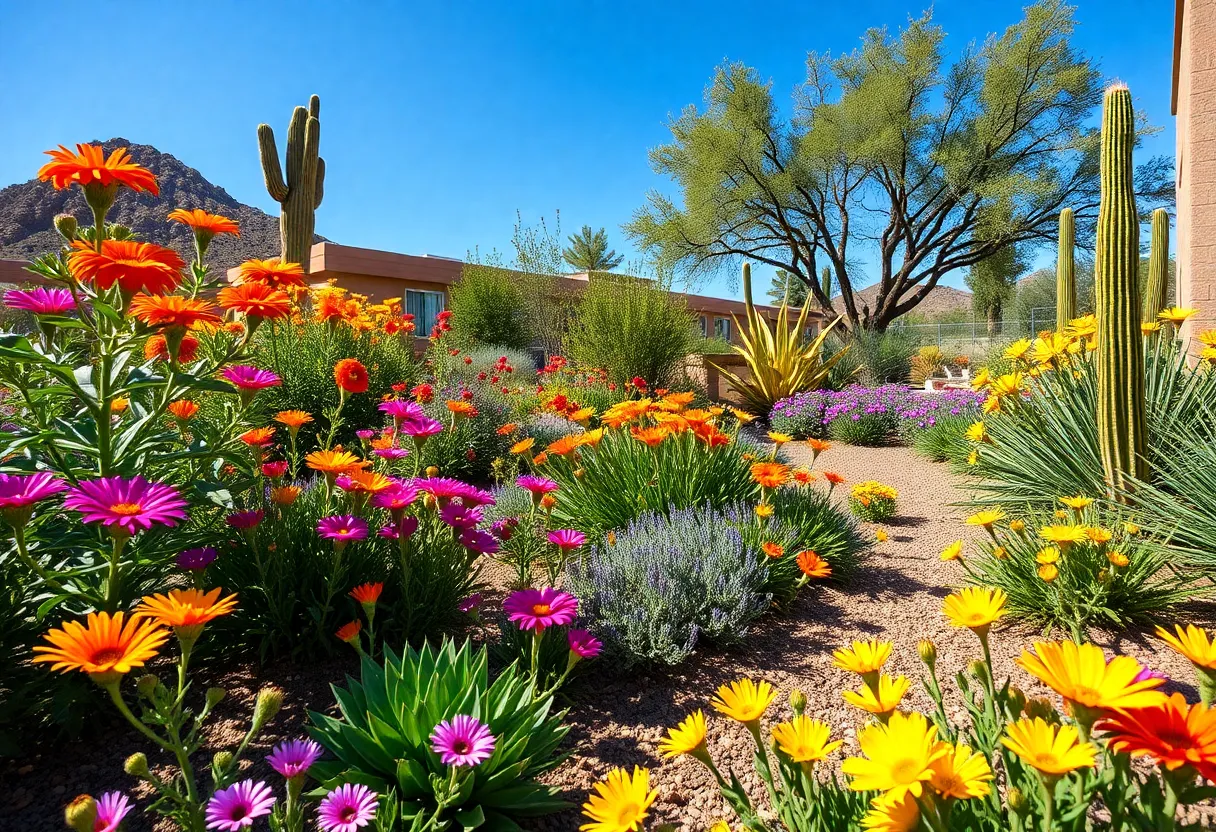
- Lantana: Exhibits vibrant clusters in shades of yellow, orange, and red. It attracts pollinators like butterflies and hummingbirds, enhancing ecological diversity.
- Red Bird of Paradise: Features striking red, orange, or yellow flowers with fern-like foliage, adding both visual interest and texture.
- Desert Marigold: Delivers bright yellow flowers, spreading quickly to brighten large areas efficiently.
- Chuparosa: Produces tubular red flowers favored by hummingbirds, ideal for adding dynamic color while supporting pollinator populations.
- Bare Grass: Arizona native offering linear form, white cone-shaped flowers, and low water needs.
- Outback Sunrise Emu Grass: Adds colorful foliage ranging from green to reds and yellows, with graceful movement in breeze.
- Arizona Ash: Provides shade and wind resistance, with an ability to withstand local pests and diseases.
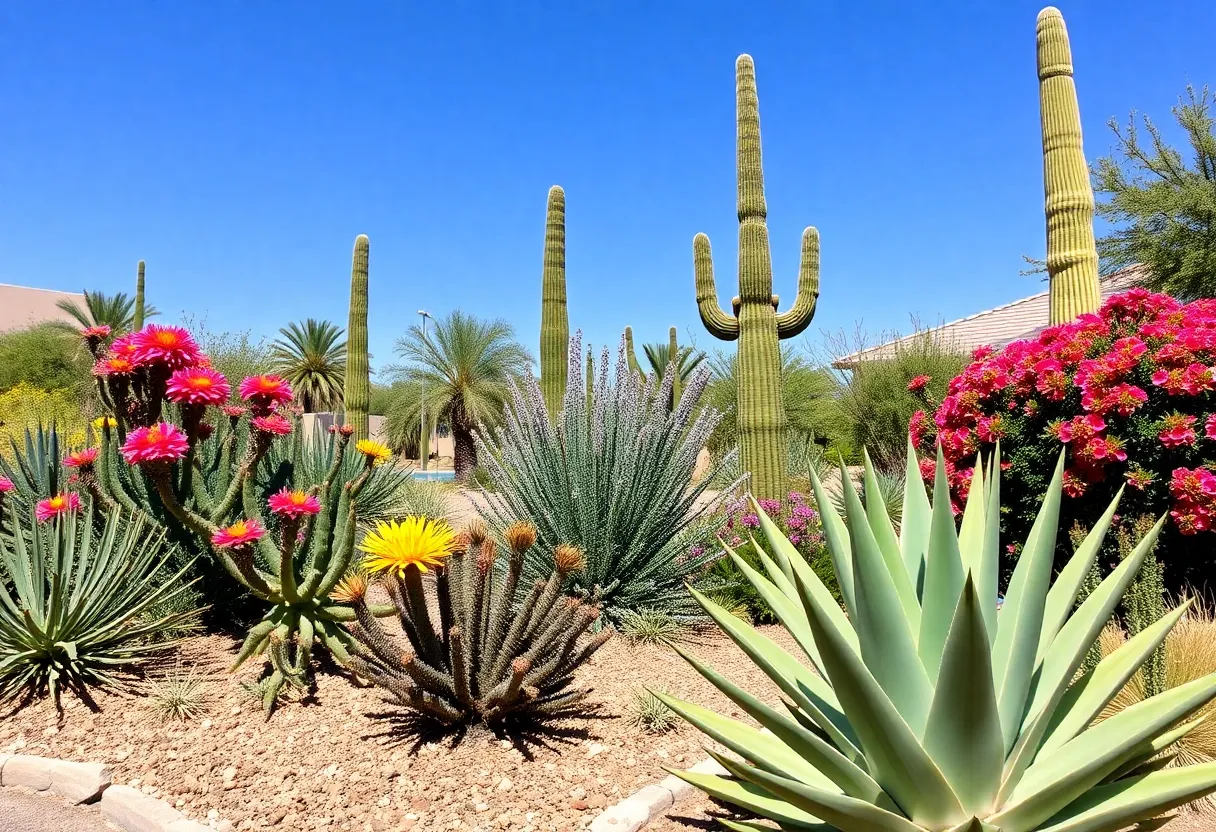
- Succulents (Agave, Aloe Vera, Barrel Cactus, Golden Torch Cactus): Structural focal points with dramatic forms and seasonal bursts of color in flowers.
- Ocotillo: Long, spiny stems with bright red blossoms in spring, creating visual drama.
- Damianita: Compact groundcover with yellow flowers, useful for filling gaps and adding color at ground level.
- Deer Grass: Ornamental grass that adds movement, texture, and native resilience to the landscape.
Incorporating a diverse palette of these species ensures continuous seasonal interest and reduces dependency on supplemental watering once established.
2. Implementation of Water-Optimized Irrigation
Efficient irrigation is crucial for sustaining colorful plants in an arid climate. Drip irrigation systems are the most effective, delivering water directly to plant roots and minimizing evaporation. Key points include:
- Use emission-controlled drip emitters to regulate flow and prevent water waste.
- Regularly inspect tubing and emitters for clogs or leaks.
- Adjust watering schedules seasonally to match plant needs and weather patterns.
- Incorporate soil moisture sensors for precise watering that prevents over- or under-irrigation.
Achieving water efficiency not only conserves resources but also promotes healthier plants by avoiding water stress.
3. Utilize Mulch Effectively
Applying organic mulch around plants significantly reduces soil moisture loss and helps maintain consistent soil temperatures. Use materials like wood chips, bark, or straw, spread evenly around roots and beds. Benefits include:
- Minimizing weed growth, thereby reducing competition for water and nutrients.
- Preventing rapid soil evaporation under high sun exposure.
- Adding organic matter over time as mulch decomposes.
Ensure mulch is replenished annually to maintain its effectiveness and prevent soil compaction.
4. Create Shade and Microclimates
Implementing shade structures and strategic planting mitigates the harsh midday sun’s impact. Techniques include:
- Installing shade cloths or canopies over sensitive plants during peak sunlight hours.
- Placing taller plants or trees to block sun from smaller, shade-sensitive species.
- Utilizing pergolas or arbors to provide partial shade and create inviting garden spaces.
Microclimates improve plant health, reduce water evaporation, and expand planting options, especially during extremely hot months.
5. Incorporate Native and Adapted Species
Using native plants harmonizes your garden with the local ecosystem, reducing water and maintenance needs. Native species like Palo Verde and Desert Willow are especially suited for Phoenix’s climate, offering several advantages:
- Require minimal supplemental watering once established.
- Are adapted to local pests and diseases, reducing chemical interventions.
- Require less soil modification and fertilization.
- Support native pollinators and wildlife.
Mixing native species strategically enhances both the sustainability and aesthetic appeal of your colorful garden.
6. Plan for Continuous Seasonal Color
To maintain vibrant visual interest year-round, select plants that bloom during different seasons. This approach involves:
- Spring blooms from species like Chuparosa and Desert Marigold.
- Summer vibrancy from Lantana and Red Bird of Paradise.
- Fall and winter interest from plants like Ocotillo and some ornamental grasses.
Proper planning with a bloom calendar helps ensure there are always colorful elements visible, reducing gaps in visual appeal.
7. Use Permeable and Earth-Friendly Hardscaping
Hardscape elements should support water conservation. Employ permeable materials such as decomposed granite, porous pavers, or gravel to:
- Allow rainwater to infiltrate soil rather than runoff.
- Support groundwater recharge.
- Maintain an eco-friendly aesthetic that blends with plantings.
This approach minimizes urban heat effects and promotes sustainable landscape design.
8. Harvest and Use Rainwater Effectively
Implementing rainwater harvesting systems alleviates reliance on municipal water. Techniques include:
- Installing rain barrels connected to roof gutters.
- Using larger cisterns for extended storage, especially in rainy season.
- Incorporating gravity-fed drip systems from stored rainwater to reduce energy use.
Rainwater is free of chemicals and better suited to sensitive succulent roots and native plants.
9. Foster Pollinator-Friendly Gardens
Supporting local biodiversity enhances the vibrancy and health of your garden. Select plants that attract bees, butterflies, and hummingbirds, such as:
- Desert Milkweed
- Lavender and Salvia
- Fuchsia, Penstemon, and Gaillardia (Blanket Flower)
A pollinator-friendly landscape contributes to ecological balance, resulting in more prolific and colorful blooms.
10. Maintain Vigilance Through Regular Garden Management
Consistent monitoring and maintenance are fundamental to sustaining colorful, healthy plants:
- Prune dead or diseased growth promptly.
- Adjust irrigation based on plant response and weather conditions.
- Remove weeds that compete for water and nutrients.
- Fertilize selectively and sparingly, favoring organic inputs.
Observant management minimizes pest or disease outbreaks and prolongs plant health and vibrancy.
Conclusion
Creating a colorful garden in Phoenix’s desert climate hinges on strategic plant selection, water conservation practices, and thoughtful design. Emphasizing drought-tolerance, native species, and sustainable hardscape choices ensures longevity and visual appeal. Implementing these principles transforms challenging terrain into a dynamic, thriving landscape that captivates year-round. With careful planning, your garden can burst with color while respecting the fragile desert ecosystem.
FAQs
What are the best plants for coloring a desert garden?
Plants like Lantana, Desert Marigold, Chuparosa, Red Bird of Paradise, Ocotillo, and succulents such as Agave and Aloe Vera are excellent choices for vibrant desert gardens due to their drought tolerance and colorful blooms.
How can I conserve water while maintaining a colorful garden?
Implementing drip irrigation, using mulching techniques, collecting rainwater, and selecting native plants significantly reduce water usage while supporting colorful and healthy plant growth.
What design strategies help protect plants from Phoenix’s intense sun?
Creating shade structures, planting strategic trees, and designing microclimates with shade cloths or pergolas shield plants from harsh midday sun, reducing stress and conserving moisture.
How do I ensure my garden remains colorful throughout the year?
Choose a diverse mix of plants with different bloom times, including spring, summer, and fall bloomers. Proper planning guarantees continuous visual interest in your desert landscape.
What hardscape materials support sustainable desert gardening?
Use permeable materials such as decomposed granite or porous pavers for pathways and patios. These materials allow water infiltration, supporting groundwater recharge and reducing runoff.
Key Features of a Colorful Desert Garden
| Feature | Description | Benefits |
|---|---|---|
| Adaptive Plant Selection | Drought-tolerant, native, and adapted species with vibrant blooms. | Low water needs, resilience, year-round color. |
| Efficient Watering | Drip irrigation, rainwater harvesting, and soil moisture control. | Water conservation, plant health. |
| Shade and Microclimates | Shade structures and strategic planting. | Protection from intense sun, reduced evaporation. |
| Sustainable Hardscaping | Permeable pavements and natural materials. | Water infiltration, eco-friendly design. |
| Continuous Blooming | Year-round planting plan with seasonal blooms. | Persistent visual vibrancy. |
| Pollinator Support | Native flowering plants attracting bees, butterflies, hummingbirds. | Enhanced biodiversity and flower productivity. |
| Regular Maintenance | Pruning, weed control, monitoring. | Garden longevity and vibrancy. |