

Phoenix, AZ, February 5, 2026
The East Valley is rapidly establishing itself as a key player in industrial growth, particularly with the exponential rise of data centers. This development reflects Phoenix’s strategic advantages, including a stable climate and business-friendly regulations, attracting significant private investment. Major tech companies are expanding their operations, leading to job creation and economic growth while fostering innovation and entrepreneurship within the region. As the demand for digital infrastructure increases, the East Valley’s future looks promising with ample opportunities for local entrepreneurs and the business community.
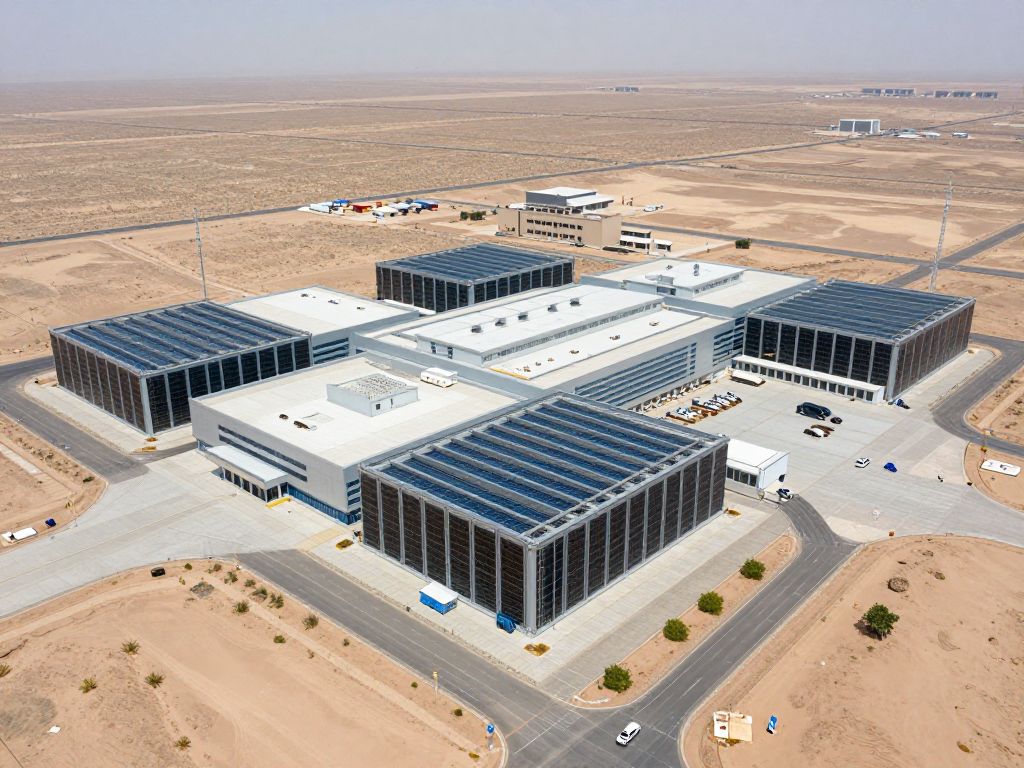
Phoenix, AZ – The East Valley is rapidly solidifying its reputation as a premier destination for industrial growth, with data centers emerging as a dominant force in the region’s economic landscape. This surge in digital infrastructure highlights Phoenix’s proactive approach to fostering a competitive business environment, attracting significant private investment, and creating new opportunities for Arizona entrepreneurs and the Phoenix AZ business community.
The growth reflects a broader trend of technological advancement, where the demand for reliable data storage and processing capabilities is paramount. Arizona’s strategic advantages, including a stable climate and a business-friendly regulatory framework, have been instrumental in positioning the state as a leading hub for these essential digital warehouses. This environment empowers local innovators and contributes to robust East Valley economic growth.
East Valley’s Digital Dominance Accelerates
The East Valley, encompassing cities such as Mesa, Chandler, Gilbert, Tempe, and Scottsdale, has become a dynamic technology hub, drawing substantial investment in sectors like semiconductor manufacturing, aerospace, and data centers. Tech giants have expanded their presence, contributing to a significant surge in economic growth. The East Valley has quickly become one of the fastest-growing markets for data centers, which are a crucial component of today’s digital economy.
Companies like Meta have opened large data centers in Mesa, while Google is also preparing to launch a data center in the same city, further cementing the region’s status as a key player in digital infrastructure. These facilities provide high-paying jobs and stimulate demand for advanced technological solutions, including renewable energy. This expanding portfolio of data centers is expected to continue growing, driven by increasing reliance on cloud computing and artificial intelligence.
Arizona’s Strategic Appeal for Data Centers
Arizona’s appeal to data center developers is multi-faceted. Key factors include speed-to-market expectations for hyperscale and cloud users, predictable permitting processes, and the availability of large, appropriately zoned parcels. The state also boasts a lower risk of natural disasters, such as earthquakes and hurricanes, ensuring more consistent and secure data operations compared to many other parts of the U.S. Additionally, the state’s energy grid is recognized for its affordability and reliability, a critical advantage for facilities that require substantial, continuous power.
The state has proactively implemented incentives to attract and support the data center industry. The Arizona Computer Data Center (CDC) Program, established in 2013, provides Transaction Privilege Tax (TPT) and Use Tax exemptions at state, county, and local levels for qualifying equipment purchases. These exemptions are available for up to ten years, with an extended period of up to 20 years for facilities that qualify as Sustainable Redevelopment Projects, encouraging environmentally responsible development. For a data center to qualify, it must meet specific investment thresholds, such as at least $50 million of new investment in counties with populations over 800,000, or $25 million in less populated counties, within five years of certification.
Economic Impact and Job Creation for Arizona
The data center industry has become a significant contributor to Arizona’s economy. In 2023, the sector supported more than 81,000 jobs statewide. A February 2025 economic impact study indicated that in 2023, Arizona data centers contributed $11.1 billion to Arizona’s Gross Domestic Product (GDP) and generated $2.3 billion in local and state revenue between 2021 and 2023. It is estimated that in 2023 alone, the data center industry generated more than 88,000 jobs in Arizona, contributing $7.6 billion to the state’s labor income. For every job directly created by a data center, another 6.5 jobs are supported elsewhere in the local economy, encompassing sectors such as construction, retail, and services. This multiplier effect underscores the broad benefits to Phoenix small business operations and the wider Arizona economy.
The construction phase of a single data center can generate hundreds of jobs for local skilled trades and contractors, including electricians, carpenters, pipefitters, and HVAC technicians, often spanning several years. Once operational, a facility may employ 100 or more workers with specialized technical skills. These investments provide a stable long-term tax base, generating high-value property tax revenue with minimal demand on city services.
Fostering Innovation and Entrepreneurship
The growth of the data center sector contributes to a thriving technology ecosystem, strengthening fiber networks and attracting related industries such as cloud services, cybersecurity, and advanced manufacturing. This environment fosters entrepreneurial innovation and supports the expansion of existing businesses, creating a robust landscape for Arizona AZ entrepreneurs. The Center for Entrepreneurial Innovation (CEI) in Phoenix, for instance, provides a supportive community and resources specifically tailored for bio, life science, and emerging tech companies, assisting them from launch to expansion phases. These programs and collaborative spaces are vital in enabling businesses to prosper and achieve their full potential in Arizona.
Local economic development teams play a crucial role in attracting these high-profile investments, with entities like Mesa’s Office of Economic Development instrumental in securing tech sector commitments and driving regional expansion. This strategic approach ensures that the rapid growth is not isolated but creates a supportive network for businesses of all sizes.
Addressing Community Concerns and Sustainable Growth
While the economic benefits are substantial, some communities have raised concerns regarding resource consumption, particularly water and energy, and the potential impact on residential areas. Data centers are known for their significant power requirements, operating around the clock, which necessitates careful management of the power grid. Some cities are implementing new zoning rules to manage data center development, ensuring that these facilities align with community goals and do not clash with residential zones.
However, the industry is continually evolving towards greater sustainability. Newer data centers are significantly more water-efficient due to innovations like air-cooled technologies and closed-loop systems, making their water consumption comparable to other large industrial buildings. Furthermore, data centers are increasingly investing in renewable energy sources like solar and wind power to offset their environmental impact, aligning with Arizona’s broader sustainability initiatives. Utilities are also working with data centers to manage energy demand, sometimes requiring facilities to pay their fair share for infrastructure upgrades or even build their own power plants to maintain a reliable and affordable energy supply for all residents.
The Path Forward for Phoenix’s Economic Future
The expansion of data centers in the East Valley underscores Phoenix’s dynamic economic growth and its emergence as a pivotal technology hub. The balance between attracting major tech investments, supporting local businesses, and addressing community concerns is crucial. Arizona’s commitment to a business-friendly environment, coupled with ongoing innovation in sustainable practices, positions the region for continued prosperity. To ensure this momentum benefits all, ongoing engagement between local governments, utility providers, and the community is essential in aligning development expectations with shared resources. We encourage our readers to support the diverse range of Phoenix AZ business enterprises that contribute to this vibrant economic tapestry and stay engaged in shaping Phoenix’s promising economic future.
Frequently Asked Questions
What is the role of data centers in the East Valley’s industrial growth?
Data centers are a dominant force in the East Valley’s industrial growth, solidifying its reputation as a dynamic technology hub and attracting significant private investment.
What are the primary factors attracting data centers to Arizona?
Primary factors attracting data centers to Arizona include speed-to-market expectations for hyperscale and cloud users, predictable permitting processes, availability of large, appropriately zoned parcels, a lower risk of natural disasters, and an affordable and reliable energy grid.
What tax incentives does Arizona offer to data centers?
Arizona offers Transaction Privilege Tax (TPT) and Use Tax exemptions at state, county, and local levels for qualifying data center equipment purchases under the Computer Data Center (CDC) Program established in 2013. These exemptions can last up to ten years, or up to 20 years for Sustainable Redevelopment Projects.
What is the economic impact of data centers in Arizona?
In 2023, the data center industry supported more than 81,000 jobs statewide in Arizona. The industry contributed $11.1 billion to Arizona’s GDP and generated $2.3 billion in local and state revenue between 2021 and 2023. In 2023 alone, the data center industry generated more than 88,000 jobs in Arizona, contributing $7.6 billion to the state’s labor income.
How many jobs does a data center create in the wider economy?
For every job directly created by a data center, another 6.5 jobs are supported elsewhere in the local economy, including construction, retail, and services.
What are some community concerns regarding data center development?
Community concerns include significant water and energy consumption, potential impacts on residential areas, and the need for careful management of the power grid.
How are data centers addressing sustainability concerns in Arizona?
Newer data centers are becoming more water-efficient through air-cooled technologies and closed-loop systems. They are also increasingly investing in renewable energy sources like solar and wind power to offset environmental impact.
Key Features of Data Center Growth in East Valley, AZ
| Feature | Description | Scope |
|---|---|---|
| Dominant Industrial Growth | Data centers are a dominant force in the East Valley’s industrial expansion, solidifying its reputation as a dynamic technology hub. | Regional |
| Key Attractors | Factors include predictable permitting, large zoned parcels, low natural disaster risk, and an affordable, reliable energy grid. | State-level |
| Tax Incentives | Arizona’s Computer Data Center Program offers Transaction Privilege Tax and Use Tax exemptions for qualifying equipment. | State-level |
| Exemption Duration | Exemptions are available for up to ten years, with up to 20 years for Sustainable Redevelopment Projects. | State-level |
| Investment Threshold for Exemption | Minimum investment of $50 million in populous counties or $25 million in less populated counties within five years. | State-level |
| Jobs Supported (2023) | More than 81,000 jobs supported statewide in Arizona. More than 88,000 jobs generated in Arizona, contributing $7.6 billion to state’s labor income. | State-level |
| Economic Output (2023) | Contributed $11.1 billion to Arizona’s GDP and generated $2.3 billion in local and state revenue between 2021 and 2023. Sector contributed $25.5 billion to Arizona’s GDP, with $2.1 billion in tax revenue. | State-level |
| Job Multiplier Effect | Each direct data center job supports 6.5 additional jobs in the local economy. | State-level |
| Sustainability Efforts | Newer facilities employ water-efficient technologies and invest in renewable energy sources. | Industry-wide (applied in AZ) |
Deeper Dive: News & Info About This Topic
HERE Resources
Fatal Domestic Violence Incidents Rock Gilbert Amid Rate Hike Controversy
Phoenix Logistics Adapts Amid GNC Warehouse Closure
Arizona’s Housing Market: Rising Home Prices
Arizona’s Commitment to Patient Safety and Quality Care
Trammell Crow Company Breaks Ground on West 101 Logistics Center
Phoenix Welcomes West 101 Logistics Center Development
Phoenix Industrial Construction Slows but Pipeline Remains Strong
Phoenix Implements Comprehensive Regulations for Data Centers
Phoenix Faces Air Quality Crisis Amid Dust Storms and Heat
Tidewalk Partners Wins REIAC/Rockefeller Group Challenge