

News Summary
The University of Arizona has introduced living corals to its Biosphere 2 Ocean Habitat for the first time in over 30 years. This innovative research initiative aims to develop strategies for coral resilience against climate change, ultimately impacting global ecosystems. Utilizing controlled environments, scientists will conduct essential experiments to uncover how corals adapt to higher temperatures, while promoting educational outreach to foster environmental stewardship among students.
Phoenix, AZ — The University of Arizona, a cornerstone of Arizona AZ higher education, is charting a course for global environmental solutions from its unique Biosphere 2 facility. In a significant advancement for coral reef conservation and climate change research, Biosphere 2’s Ocean Habitat has welcomed living corals for the first time in over three decades. This multi-year research initiative represents a bold commitment to academic rigor and innovation, aiming to develop strategies for coral resilience that could impact ecosystems worldwide.
This undertaking underscores the University of Arizona’s dedication to tackling pressing environmental challenges through interdisciplinary research and promoting student growth. By harnessing the controlled environment of Biosphere 2, scientists are poised to conduct experiments that are unfeasible in natural settings, offering unparalleled insights into coral survival and restoration. The project not only highlights institutional excellence but also positions Arizona as a leader in scientific discovery with far-reaching community and economic implications.
Pioneering Coral Resilience Research at Biosphere 2
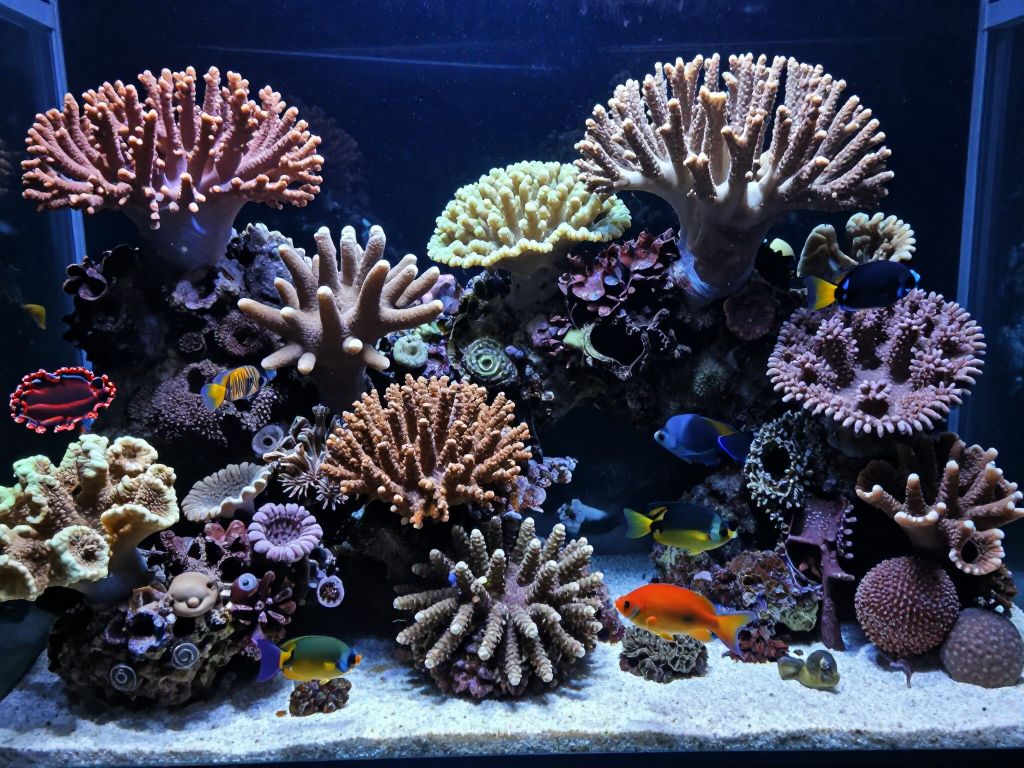
The Biosphere 2 Ocean Habitat, a meticulously controlled environment, has recently introduced 108 living corals as part of an ambitious temperature-resilience experiment. This marks a pivotal moment, being the first time corals have resided in this simulated ocean in over 30 years. The primary objective is to gain a deeper understanding of how corals respond to predicted higher future temperature conditions, a critical challenge facing marine ecosystems globally.
Researchers are employing custom-engineered structures, dubbed “Coral Arks,” to support these delicate organisms beneath the water surface. This innovative approach allows for precise observation and manipulation of environmental factors, facilitating the study of coral adaptation and survival mechanisms. The project is designed to develop novel solutions for restoring degraded coral reefs and increasing their resistance to climatic stressors.
A Multi-Phase Approach to Understanding Coral Survival
The coral resilience initiative at Biosphere 2 is structured as a comprehensive three-phase research program, projected to span 5 to 8 years. Each phase is meticulously planned to build upon previous findings, integrating expertise from various scientific disciplines including genomics, microbiology, and geochemistry.
The initial phase involves rigorous monitoring of the reef’s current conditions and documenting the transition from an algae-dominated state to a thriving coral ecosystem. Subsequent phases will introduce alterations to the habitat, including the careful addition of key species such as different corals, symbionts, and herbivores. The ultimate goal of the final phase is to expose a newly developed “super reef” to anticipated future environmental conditions, such as elevated temperatures and lower pH levels, to assess its adaptive potential. This systematic approach exemplifies academic discipline in addressing complex ecological problems.
Interdisciplinary Collaboration and Scientific Leadership
This groundbreaking research is led by a team of dedicated scientists from the University of Arizona, including Dr. Diane Thompson, director of marine research at Biosphere 2, and doctoral students Samantha King and Mikayla Deigan. Dr. Thompson’s extensive research into the historical recovery of coral reefs provides crucial context, while King focuses on the genetic basis of coral health and resilience to heat stress. Deigan’s work investigates the impact of environmental stress on coral skeleton chemistry, offering insights into past and future climate change effects.
The project also fosters strong collaboration with several external institutions, enhancing its scientific value and demonstrating Biosphere 2’s capacity for large-scale, controlled ecosystem research. This collaborative spirit embodies the principle of shared responsibility in scientific advancement, bringing together diverse perspectives to address a common global challenge.
Technological Advancements and Habitat Enhancement
To facilitate this sophisticated research, Biosphere 2’s Ocean Habitat underwent significant upgrades. These enhancements include the installation of a new heat exchanger, an advanced circulation pump, and innovative water-turbulence devices. A sophisticated lighting truss system was also integrated, designed to mimic the natural sunlight patterns found in a healthy coral reef environment. These technological improvements are essential for creating the precise conditions required for controlled experiments on coral physiology and ecosystem dynamics.
The ability to manipulate environmental variables with such precision within Biosphere 2 provides an unmatched platform for testing interventions like assisted evolution, which involves selective breeding and microbiome manipulations to optimize coral resistance. This controlled environment allows researchers to explore “radical” techniques that are too risky to implement directly in natural reefs, offering a responsible pathway to developing effective conservation strategies.
Educational Outreach and Future Impact for Arizona AZ
Beyond its immediate research objectives, the Biosphere 2 coral resilience project serves as a vital educational platform. The facility actively engages learners of all ages, from K-12 students to graduate researchers, fostering scientific literacy and environmental stewardship. Programs such as the Research Experiences for Undergraduates (REU), supported by the National Science Foundation, offer invaluable hands-on research opportunities for students across the country, preparing them for future careers in environmental science.
The insights garnered from Biosphere 2’s research have the potential to significantly influence global reef restoration efforts, providing scalable solutions for a critical environmental crisis. By investing in such innovative research and educational initiatives, the University of Arizona is not only contributing to global scientific knowledge but also strengthening Arizona’s position as a hub for cutting-edge environmental science and responsible resource management.
Summary of Biosphere 2 Coral Research Project
| Feature | Description |
|---|---|
| Location | University of Arizona Biosphere 2, Oracle, Arizona |
| Objective | Understand coral resilience to climate change, develop restoration solutions. |
| Initiation Date | February 4, 2026 (corals introduced) |
| Project Duration | 5-8 years (three-phase program) |
| Key Research Areas | Temperature resilience, genetic response, skeleton chemistry, assisted evolution. |
| Leadership | Dr. Diane Thompson (Director of Marine Research) |
| Unique Aspect | Controlled, large-scale experimental ocean for testing “radical” interventions. |
The University of Arizona’s pioneering work at Biosphere 2 in coral resilience research exemplifies the kind of innovative leadership and commitment to personal responsibility required to address global environmental challenges. This ongoing initiative, a testament to academic freedom and rigorous scientific inquiry, offers a beacon of hope for the world’s imperiled coral reefs. Readers interested in supporting groundbreaking research or exploring educational opportunities in environmental science are encouraged to visit the University of Arizona’s Biosphere 2 website for more information on programs, events, and how to get involved in the vibrant Arizona AZ higher education community.
Keywords: University of Arizona AZ, Phoenix AZ college news, Arizona AZ higher education, coral resilience research, Biosphere 2
Frequently Asked Questions About Biosphere 2 Coral Research
Q: What is the primary goal of the new coral research at Biosphere 2?
A: The primary goal is to help coral reefs across the world recover and become more resilient to environmental challenges, particularly higher future temperature conditions.
Q: When were corals first introduced into Biosphere 2’s Ocean Habitat for this research?
A: Corals were introduced into Biosphere 2’s Ocean Habitat on February 4, 2026.
Q: Who is leading the marine research at Biosphere 2?
A: Dr. Diane Thompson is the director of marine research at Biosphere 2.
Q: What makes Biosphere 2 a unique location for coral research?
A: Biosphere 2 provides a unique combination of control, scale, and complexity, allowing scientists to test novel, even radical, coral reef interventions that cannot be implemented in natural reefs due to their vulnerability.
Q: What are “Coral Arks” in the context of this project?
A: “Coral Arks” are custom-engineered, spherical support structures consisting of triangular lattices of PVC piping, onto which living corals are attached and suspended beneath the water surface.
Q: How long is the Biosphere 2 coral resilience research project expected to last?
A: The research project is a three-phase program covering 5-8 years.
Deeper Dive: News & Info About This Topic
HERE Resources
Phoenix’s Tech Ascent: Building America’s Next Innovation Hub
Arizona Innovation Ignites: Prescott Pitch & Flagstaff Tech Shine
University of Arizona’s Biosphere 2 Leads Coral Resilience Research
10 Best Shade-Loving Plants for Your Phoenix Garden to Beat the Heat
How to Create a Vibrant Desert Paradise in Your Phoenix Backyard
Celebrate Hanukkah with Local Events in Phoenix
Creating a Sustainable and Visually Appealing Landscape in Phoenix: The Essential Guide to Choosing Desert Plants
10 Beautiful Cacti and Succulents to Enhance Your Phoenix Garden Landscape