

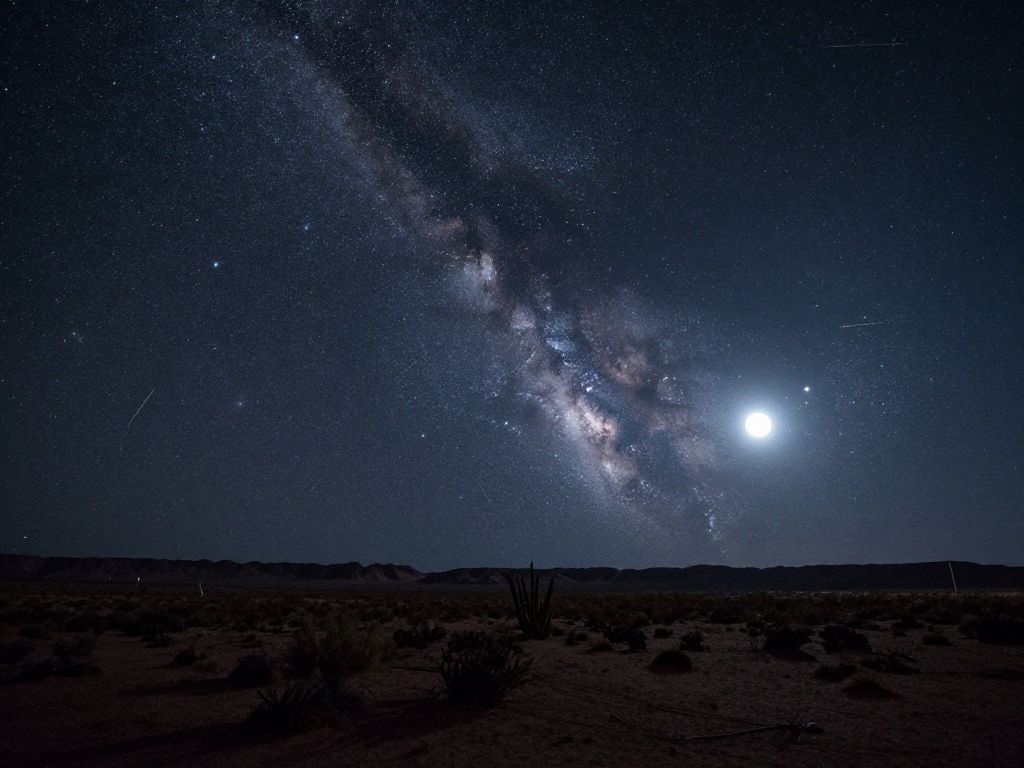
Arizona, December 20, 2025
Arizona’s dark skies promise an extraordinary array of celestial events in 2026, offering residents and visitors an opportunity to explore the cosmos. With minimal light pollution and clear skies, the state is ideal for stargazing enthusiasts. Anticipated events include supermoons, meteor showers, and eclipses, encouraging personal exploration and community engagement. By embracing these astronomical wonders, individuals can foster a deep appreciation for the natural world and connect with fellow skywatchers throughout the year.
Phoenix, AZ
Stargazing Arizona: Your 2026 Night Sky Guide
Prepare for a spectacular year of celestial wonders as Arizona’s dark skies host numerous astronomical events, inviting all to explore the cosmos through personal initiative and community appreciation.
Arizona, with its expansive clear skies and often minimal light pollution beyond urban centers, offers a unique opportunity for residents and visitors to connect with the cosmos. The year 2026 promises a full calendar of astronomical spectacles, making it an exciting time for skywatchers across the state. These natural wonders underscore the value of our pristine environment and the simple, yet profound, joy that individual discovery and shared community experiences can bring. Embracing these opportunities fosters a spirit of self-reliance and appreciation for the natural world that requires little more than personal curiosity and a clear view of the heavens.
Engaging with these celestial events is a testament to personal initiative and the inherent human drive to explore and understand our surroundings. While no complex civic programs are necessary to enjoy the vastness above, local communities can certainly benefit from shared appreciation and thoughtful stewardship of dark sky environments. This approach allows for maximum personal freedom in observation while organically strengthening community bonds around a common, awe-inspiring interest. Phoenix residents, like all Arizonans, have the chance to plan their own celestial adventures, whether from their backyards or designated stargazing locales.
Arizona’s Unrivaled Celestial Advantage
Arizona is renowned for its exceptional stargazing conditions, largely due to its high elevations, dry climate, and proactive efforts in some regions to limit light pollution. This natural advantage provides an unparalleled canvas for observing the night sky, making it a premier destination for amateur astronomers and casual observers alike. The clarity of the atmosphere here allows for brilliant views of even distant celestial objects, an outcome that benefits greatly from community awareness and individual choices to minimize upward light spill. This dedication to preserving natural darkness exemplifies how local action can yield statewide benefits.
A Full Year of Astronomical Wonders in 2026
The year 2026 is set to deliver a diverse array of astronomical events for skywatchers across Arizona. From the regular cycle of full moons and the more dramatic supermoons to captivating meteor showers and rare eclipses, there will be abundant opportunities to engage with the night sky. This continuous calendar of events highlights the dynamic nature of our universe and offers consistent occasions for personal reflection and scientific interest. Individuals can look forward to a year-long journey of discovery, charting their own course through the celestial landscape.
Full Moons and Supermoons: Accessible Spectacles
Throughout 2026, Arizona will experience the regular occurrence of full moons, offering consistently bright and easily observable celestial displays. Some of these will be supermoons, which occur when a full moon coincides with the Moon’s closest approach to Earth in its elliptical orbit. Supermoons appear noticeably larger and brighter than average full moons, creating a particularly striking visual for observers. These events are readily accessible to anyone with a clear view of the sky, demonstrating that some of the most profound natural spectacles require no special equipment or organized effort, only personal attention and a willingness to look up.
Meteor Showers: Earth’s Journey Through Cosmic Debris
Several meteor showers are expected to grace Arizona’s night skies in 2026. These celestial phenomena occur when Earth passes through streams of cosmic debris left by comets and asteroids. As these small particles enter Earth’s atmosphere, they burn up, creating streaks of light commonly known as “shooting stars.” Observing meteor showers is a testament to the individual’s patience and the rewards of seeking out moments of natural wonder. These events offer a compelling reminder of our planet’s journey through space and the universe’s vastness, inspiring awe and encouraging further exploration of scientific principles.
Eclipses: The Grand Alignment of Celestial Bodies
Arizona skywatchers can anticipate opportunities to witness eclipses in 2026. Eclipses, whether lunar or solar, are among the most dramatic astronomical events, involving the precise alignment of the Sun, Earth, and Moon. Lunar eclipses occur when the Earth passes directly between the Sun and the Moon, casting a shadow on the lunar surface. Solar eclipses happen when the Moon passes between the Sun and Earth, blocking all or part of the Sun’s light. These relatively rare events serve as powerful reminders of the elegant mechanics governing our solar system, inspiring both scientific curiosity and a profound appreciation for the natural order.
Embracing the Night Sky: Personal Initiative and Community Spirit
Making the most of Arizona’s stargazing events in 2026 is largely a matter of personal initiative. Identifying dark sky locations, even within a short drive from Phoenix, can significantly enhance the viewing experience. Many individuals find joy in simply observing with the naked eye, while others choose to use binoculars or telescopes to explore deeper into the cosmos. While formal events can be enjoyable, the beauty of stargazing often lies in its accessibility and the freedom for individuals to pursue it at their own pace and preference. Local communities can foster this interest by encouraging dark sky preservation and by individuals sharing their knowledge, creating a vibrant network of celestial enthusiasts through shared passion rather than organized mandate.
As 2026 approaches, Arizonans are encouraged to mark their calendars and prepare for a year filled with astronomical marvels. The opportunity to witness full moons, supermoons, meteor showers, and eclipses underscores the profound beauty of our natural world and the boundless opportunities for personal discovery. By embracing these events, individuals not only enrich their own lives but also contribute to a broader appreciation for our state’s unique dark sky heritage, reinforcing the value of individual curiosity and the community-driven stewardship of our shared environment. Let us look to the skies, not just for wonder, but as a reminder of the enduring power of personal initiative and the intrinsic value of preserving our natural resources for generations to come.
Keywords: Phoenix AZ events, Arizona stargazing, 2026 astronomical events, Arizona night sky, community stargazing
Frequently Asked Questions About Arizona’s 2026 Stargazing Events
Here are answers to common questions about the upcoming astronomical events in Arizona.
What types of stargazing events can Arizona see in 2026?
Arizona can see a full year of astronomical spectacles in 2026, including every full moon, supermoon, meteor shower, and eclipse.
Will there be supermoons visible in Arizona in 2026?
Yes, supermoons are among the astronomical events expected to be visible in Arizona in 2026.
Are meteor showers expected in Arizona in 2026?
Yes, meteor showers are listed as one of the astronomical events Arizona can see in 2026.
Will eclipses be visible in Arizona during 2026?
Yes, eclipses are part of the astronomical events anticipated for Arizona in 2026.
Overview of Arizona’s 2026 Astronomical Events
| Event Type | Description | Visibility in Arizona (2026) | Scope |
|---|---|---|---|
| Full Moon | Occurs monthly when the entire side of the Moon facing Earth is illuminated by the Sun. | Yes, throughout the year. | State-level |
| Supermoon | A full moon that coincides with the Moon’s closest approach to Earth, appearing larger and brighter. | Yes, anticipated among the year’s events. | State-level |
| Meteor Shower | Streaks of light in the night sky created by cosmic debris burning up in Earth’s atmosphere. | Yes, multiple showers expected. | State-level |
| Eclipse | Celestial event where one heavenly body is obscured by another, either lunar or solar. | Yes, specific eclipses are expected. | State-level |
Deeper Dive: News & Info About This Topic
HERE Resources
Arizona’s State Parks Celebrate the Holiday Season
Arizona Prepares for December’s Cold Moon Supermoon
Explore Free Weekend Events in Phoenix, AZ
Phoenix Updates Planetarium Experience with High-Tech Renovation
Sonora Quest Laboratories Partners with Flagstaff Medical Center
Top Affordable Retirement Cities in Arizona