

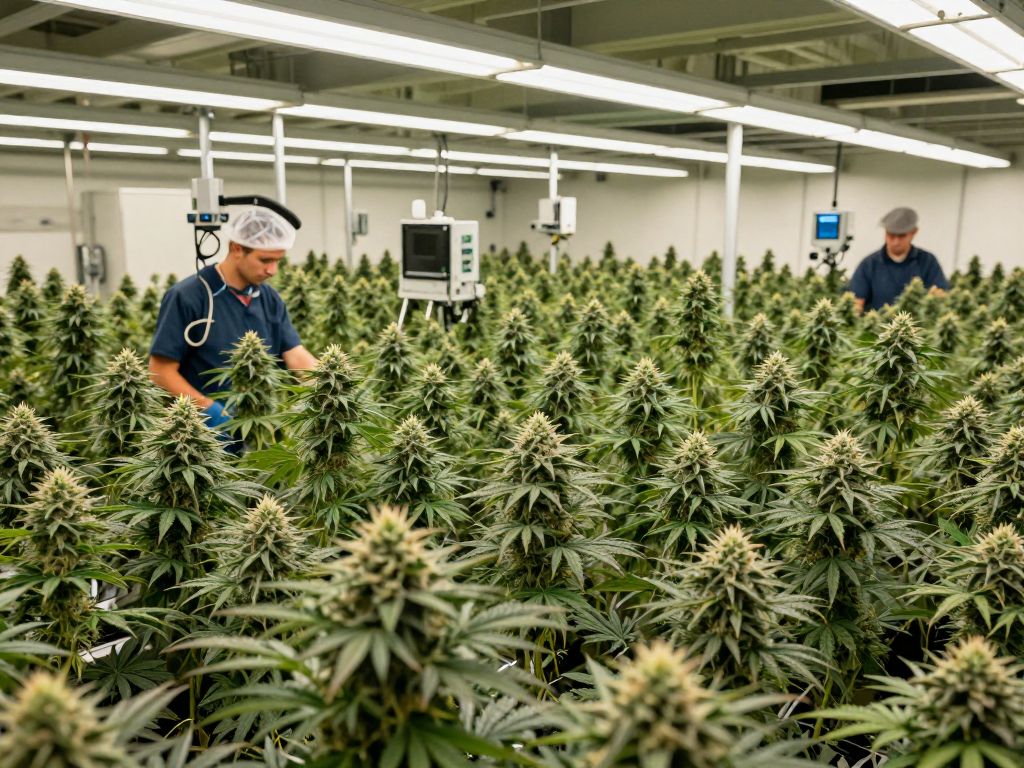
Phoenix, December 17, 2025
A federal proposal to reclassify marijuana from Schedule I to Schedule III under the Controlled Substances Act may offer significant benefits for Arizona’s cannabis industry. This change could provide tax relief, improve banking access, and encourage research opportunities. While the potential transformation is met with optimism from local entrepreneurs and business owners, concerns about public health and regulatory challenges persist. As the cannabis landscape evolves, Arizona stands poised to benefit greatly from these developments in the sector.
Phoenix: Federal Shift Could Ignite Arizona’s Cannabis Economy
A significant federal policy decision under consideration in Washington could dramatically reshape the landscape for Arizona’s burgeoning cannabis industry. This potential reclassification of marijuana by federal agencies is anticipated to bring about substantial changes, particularly impacting the financial and operational capabilities of Arizona AZ entrepreneurs and Phoenix small business owners within the cannabis sector.
For years, state-legal cannabis enterprises have navigated a complex regulatory environment, balancing state-level acceptance with federal prohibitions. The proposed move to reclassify cannabis at the federal level represents a pivotal moment, promising to alleviate some of the unique challenges these businesses face and potentially unlock new avenues for economic growth and innovation across the state.
Understanding the Reclassification Proposal
The U.S. Drug Enforcement Administration (DEA) is weighing a recommendation to move cannabis from Schedule I to Schedule III under the Controlled Substances Act (CSA). This administrative process follows a directive from President Biden in October 2022 and a subsequent recommendation from the U.S. Department of Health and Human Services (HHS) in August 2023. While the DEA proposed a rule in May 2024, and a public comment period closed in July 2024, the finalization of this reclassification remains under review, with a hearing scheduled for January 21, 2025. However, as of December 2025, the reclassification process “remains enigmatic”.
Currently, cannabis is categorized as a Schedule I substance, alongside drugs like heroin and LSD, implying a high potential for abuse and no currently accepted medical use. Reclassification to Schedule III would formally acknowledge cannabis as having accepted medical value and a lower potential for abuse than Schedule I or II drugs, placing it among substances such as ketamine and Tylenol with codeine. It is crucial to note that this reclassification, if finalized, would not federally legalize marijuana for recreational use, nor would it permit interstate commerce; cannabis would remain a federally controlled substance.
Financial Relief: A Boost for Arizona’s Cannabis Businesses
One of the most profound nationwide impacts of reclassification for cannabis businesses would be significant tax relief. Currently, under IRS Code 280E, businesses dealing with Schedule I or II substances are prohibited from deducting standard operating expenses from their federal taxes. Moving cannabis to Schedule III would exempt these businesses from 280E, allowing them to claim typical business deductions. This change could save the industry billions in taxes, freeing up capital for reinvestment, higher employee wages, and expansion efforts.
For Phoenix AZ business leaders in the cannabis sector, this translates into more stable operations and enhanced profitability. Businesses like Mint Cannabis in Phoenix, for instance, could benefit from reduced tax burdens, enabling them to secure loans, grow their operations, and create more jobs for the local economy. This financial flexibility is a critical factor for the resilience and long-term success of Arizona AZ entrepreneurs in this dynamic market.
Enhancing Banking Access and Investment
Another significant nationwide benefit expected from reclassification is improved access to banking services. While it would not fully resolve all banking challenges for the cannabis industry, moving cannabis to Schedule III could reduce perceived legal risks for financial institutions engaging with state-licensed cannabis businesses. This shift could lead to enhanced access to capital and financial services, which are vital for business development and expansion. The current cash-heavy nature of many cannabis businesses due to banking restrictions presents security challenges and operational inefficiencies.
Broader institutional interest and mainstream public exchange involvement would likely still require further congressional action, such as the passage of federal banking reform legislation. Nevertheless, even a partial easing of banking barriers would empower Phoenix small business owners to operate more efficiently, fostering greater private investment and contributing to overall economic growth in Arizona.
Fostering Research and Innovation
The reclassification could also serve as a catalyst for increased scientific and medical research into cannabis nationwide. Under Schedule I, research on cannabis faces stringent regulatory hurdles. Moving to Schedule III would mean less burdensome DEA requirements for research, potentially accelerating studies into its therapeutic applications. This official acknowledgment of cannabis’s medical value is a significant step, which could encourage federal health officials to consider a wider range of research, including studies conducted overseas.
For Arizona, this could translate into more research opportunities for state universities and agricultural agencies, driving innovation in product development and cultivation techniques. Such advancements could further solidify Arizona’s position as a leader in the cannabis industry and provide new avenues for medical solutions, aligning with themes of entrepreneurial innovation.
Considerations and Future Outlook for Arizona
While the potential benefits are substantial, some considerations and differing perspectives exist. Critics nationwide highlight concerns regarding potential public health impacts, such as addiction, schizophrenia, and psychosis, advocating for more regulations before federal changes are made. There are also concerns that deductible advertising expenses could lead to increased marketing targeting younger individuals. Additionally, some industry figures worry that without full federal legalization, reclassification could expose existing state-legal businesses to new federal risks, potentially favoring large pharmaceutical companies if Schedule III drugs are primarily sold in pharmacies via prescription after FDA approval.
Despite these points, the overall sentiment among Arizona AZ entrepreneurs and industry stakeholders in the state is one of cautious optimism. Arizona’s cannabis industry is already a significant economic force, generating $1.43 billion in sales in 2023 and contributing $173 million in excise taxes that fund community colleges, public safety, and health services. The state legalized recreational use for adults over 21 through Proposition 207, which also permits home cultivation and imposes a 16% excise tax. Reclassification could fuel further growth, leading to more jobs and increased tax revenue, and potentially diversifying market participation.
Conclusion
The potential federal reclassification of marijuana represents a transformative moment for Arizona’s cannabis industry. By offering significant tax relief, improving banking access, and fostering research, this change could empower Phoenix small business owners and Arizona AZ entrepreneurs to innovate and expand, driving robust economic growth throughout the state. While challenges and varying perspectives remain, the promise of reduced regulatory burdens and increased operational freedom is a testament to the resilience and determination of those shaping Arizona’s economic future. We encourage our readers to stay informed and continue to support local businesses as this dynamic industry evolves.
Frequently Asked Questions
What is the federal reclassification being considered for marijuana?
The U.S. Drug Enforcement Administration (DEA) is recommending moving cannabis from Schedule I to Schedule III under the Controlled Substances Act (CSA).
What is the current status of marijuana under federal law?
As of December 2025, cannabis is still classified as a Schedule I substance under federal law.
How would reclassifying marijuana impact taxation for cannabis businesses Nationwide?
Nationwide, cannabis businesses would no longer be subject to IRS Code 280E, allowing them to deduct standard business expenses, which could lead to significant tax savings.
Would marijuana reclassification legalize cannabis federally?
No, reclassification to Schedule III would not legalize marijuana federally; it would remain a federally controlled substance.
What are the potential effects of reclassification on banking access for cannabis businesses Nationwide?
Nationwide, while not a complete solution, reclassification could reduce legal risks for financial institutions, potentially enhancing access to capital and financial services for state-licensed cannabis businesses.
What is the timeline for this reclassification process?
The process began with President Biden’s directive in October 2022, followed by an HHS recommendation in August 2023, and a DEA proposed rule in May 2024. A public comment period closed in July 2024, and a hearing was scheduled for January 21, 2025. However, the reclassification process “remains enigmatic” as of December 2025.
How might reclassification affect scientific research into cannabis Nationwide?
Nationwide, reclassification could catalyze further medical research into cannabis’ therapeutic applications, as DEA requirements for Schedule III substances are less burdensome than for Schedule I.
Key Features of Marijuana Reclassification
| Feature | Current Status (Schedule I) | Proposed Status (Schedule III) | Scope |
|---|---|---|---|
| Federal Classification | High potential for abuse, no accepted medical use | Accepted medical value, lower potential for abuse than Schedule I or II | Nationwide |
| IRS Code 280E Application | Applies, preventing deduction of standard business expenses | Would not apply, allowing deduction of standard business expenses | Nationwide |
| Impact on Banking Access | Significant barriers and legal risks for financial institutions | Reduced legal risks, potentially enhanced access to capital and services | Nationwide |
| Federal Legality of Marijuana | Illegal | Still federally controlled substance; not legalized | Nationwide |
| Medical Research Requirements | Stringent DEA requirements | Less burdensome DEA requirements | Nationwide |
| Criminal Penalties | More severe for Schedule I substances | Can be less severe for Schedule III substances | Nationwide |
| Interstate Commerce | Not permitted | Not permitted | Nationwide |
| Impact on Arizona Industry | Subject to federal 280E, banking hurdles | Potential for growth, more jobs, increased tax revenue | State-level |
Deeper Dive: News & Info About This Topic
HERE Resources