

Phoenix AZ, December 17, 2025
Arizona is set to invest nearly $1 billion in a rural broadband initiative aimed at providing high-speed internet to underserved communities. This landmark funding, made possible through a combination of federal and private contributions, is expected to serve approximately 160,000 households and create around 5,000 jobs. The Broadband Equity, Access & Deployment (BEAD) Program intends to boost economic opportunities and improve services such as education and healthcare throughout the state.
Phoenix, AZ –
Arizona Launches Historic $967 Million Rural Broadband Initiative
Arizona is embarking on its most extensive campaign yet to bridge the digital divide, committing nearly $1 billion to deploy high-speed internet across its rural and underserved communities. This monumental investment promises to unlock new economic opportunities, foster entrepreneurial innovation, and enhance the quality of life for countless Arizonans, driven by a blend of public vision and robust private-sector participation.
The state’s forward-thinking approach reflects a deep understanding that reliable internet access is no longer a luxury but a fundamental necessity for prosperity in the 21st century. This initiative aims to equip communities with the infrastructure needed for growth, demonstrating a commitment to empowering individuals and small businesses to thrive in an increasingly digital world. The emphasis on public-private partnerships and streamlining deployment processes underlines a practical, limited-regulation philosophy designed to accelerate progress and maximize impact for Arizona AZ entrepreneurs and residents alike.
Bridging the Digital Divide with BEAD
Arizona has received final approval to move forward with a substantial broadband infrastructure expansion through the Broadband Equity, Access & Deployment (BEAD) Program. This program represents the largest broadband investment in the state’s history, with a comprehensive goal of connecting all Arizona residents to high-speed internet by 2030 under the ConnectAllAZ initiative. The total investment for this ambitious endeavor is $967 million, comprising $447 million in federal funding and a significant $520 million in private-sector matching contributions. This public-private collaboration is a testament to Arizona’s commitment to leveraging diverse resources for widespread economic benefit.
The Arizona Commerce Authority (ACA) has been instrumental in shaping this initiative, conducting over 365 outreach events and engaging more than 5,000 stakeholders statewide to ensure the plan addresses local needs effectively. Their diligent efforts even led to the identification of an additional 60,000 households previously unlisted on federal maps, securing an extra $273 million in funding to expand eligibility. This proactive engagement exemplifies a dedication to comprehensive coverage and economic inclusivity across Arizona.
Impact on Rural Communities and Economic Growth
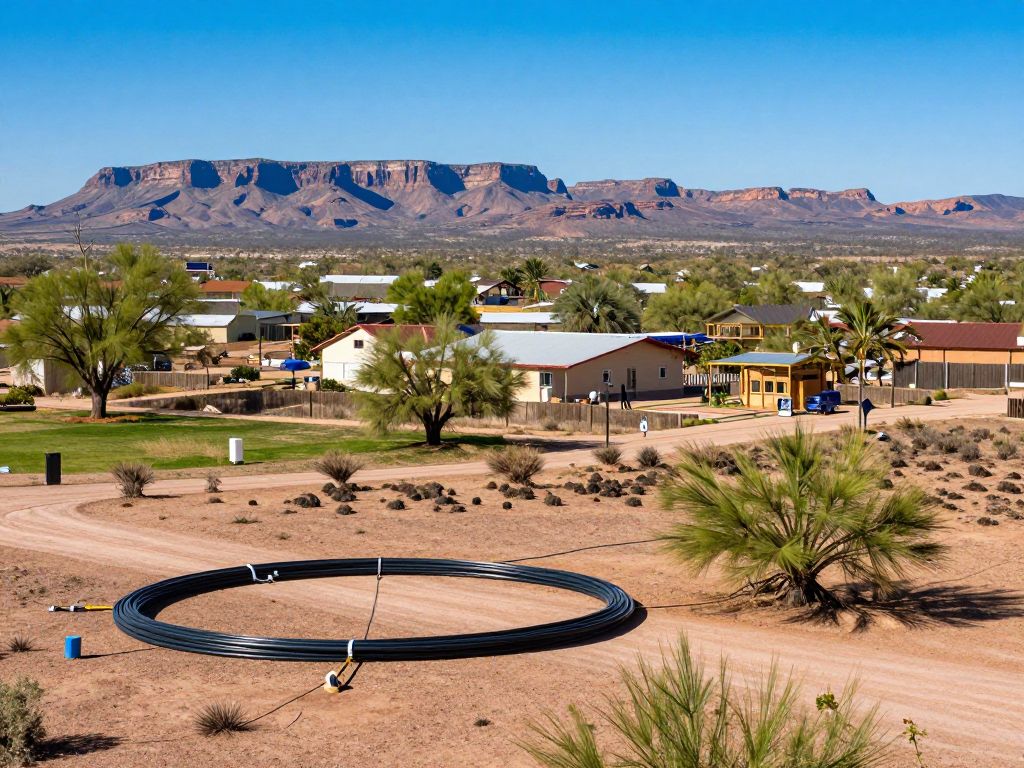
The BEAD program targets 70 project areas throughout Arizona, aiming to connect an estimated 160,000 households and over 1,200 vital community institutions, including schools, libraries, and hospitals. The core of this expansion involves the installation of more than 7,700 miles of advanced fiber optic cable statewide, with construction anticipated to commence in early 2026. This foundational infrastructure is expected to create approximately 5,000 jobs, providing significant employment opportunities within the state.
The expansion of reliable, high-speed internet is poised to deliver multifaceted economic benefits. For Phoenix small business owners and those in rural areas, enhanced connectivity can mean access to broader markets, more efficient operations, and new avenues for innovation. Improved broadband access is recognized as crucial for telehealth, job seekers, entrepreneurs, and students, fostering growth in education, healthcare, and workforce development across the state.
Addressing the Digital Divide: Regional Focus
The digital divide has long presented unique challenges for Arizona’s rural and tribal communities, characterized by limited bandwidth, aging infrastructure, and issues of affordability. For instance, while Maricopa County leads in broadband coverage, specific pockets within the county, such as Gila Bend and Guadalupe, still face significant connectivity and affordability barriers. Rural areas like Apache County have also been identified as needing substantial investment to support economic growth and workforce development.
The BEAD program includes targeted investments in these critical areas. Mohave County is set to receive $55.4 million, and Pinal County will see over $62 million in support from BEAD grants. Tribal communities, such as the Kaibab Band of Paiute Indians and the Tohono O’odham Nation, are also key beneficiaries, with funding designated to finance broadband installation at approximately 400 sites on the Tohono O’odham Nation alone. This focused approach acknowledges the diverse needs within Arizona and works towards equitable access for all residents.
The Role of Private Investment and Innovation
A crucial component of Arizona’s broadband initiative is the substantial private-sector investment, totaling $520 million. This commitment highlights the confidence businesses have in the state’s economic landscape and the potential for growth in internet infrastructure. A key player in this private-sector engagement is Wecom Fiber, an Arizona-based broadband provider, which has secured $195 million in BEAD funds. This makes Wecom Fiber the largest single BEAD awardee in Arizona, tasked with connecting over 66,000 rural and underserved homes and businesses across 17 project areas in eight Arizona counties, including Yavapai, Coconino, Mohave, Navajo, and Pinal. Such significant private participation is a strong indicator of entrepreneurial innovation driving critical infrastructure development.
Further demonstrating the state’s proactive stance, the ACA has launched the Arizona Permit Finder, an innovative interactive permitting map. This tool centralizes permitting requirements, providing internet service providers and grant recipients with easy access to crucial agency and contact information, thereby streamlining the deployment process. This type of regulatory efficiency is designed to accelerate infrastructure development and minimize bureaucratic hurdles, fostering a more agile environment for investment and growth.
Prioritizing Connectivity for a Stronger Arizona
The BEAD program builds upon earlier state initiatives that have collectively contributed over $1 billion towards improving broadband infrastructure statewide. These prior efforts include the Arizona Statewide Middle Mile Network, which has focused on installing fiber optic conduit along major interstates like I-17 and I-19, and various grant programs such as the Arizona Broadband Development Grant and the Arizona Rural Broadband Development Grant. These sustained investments underscore Arizona’s long-term strategic vision for a connected future.
The prioritization of connecting unserved and underserved locations is paramount, with BEAD funds directed first to areas with service at 25/3 Mbps or less, then to locations with service below 100/20 Mbps, and finally to connecting Community Anchor Institutions to gigabit symmetrical service. This tiered approach ensures that areas with the greatest need receive immediate attention, systematically improving connectivity across the state.
Conclusion
Arizona’s nearly $1 billion investment in rural broadband marks a pivotal moment for the state, promising to deliver reliable, high-speed internet to communities that have historically been underserved. This initiative, championed by the Arizona Commerce Authority and bolstered by significant private investment, is set to create jobs, foster economic growth, and enhance critical services such as education and healthcare. By embracing entrepreneurial innovation and implementing efficient regulatory practices, Arizona is laying a robust foundation for a more connected and prosperous future for all its citizens. We encourage all residents and businesses to stay informed about the progress of this vital infrastructure project and explore the new opportunities it will bring for Phoenix AZ business and beyond.
Frequently Asked Questions (FAQ)
What is Arizona’s BEAD Program?
Arizona’s Broadband Equity, Access & Deployment (BEAD) Program is the state’s largest-ever broadband investment, totaling $967 million, with the principal objective of universal broadband for all Arizona residents. This program combines $447 million in federal funding with $520 million in private-sector contributions to expand high-speed internet access across the state.
What is the main goal of the ConnectAllAZ initiative?
The ConnectAllAZ initiative aims to ensure reliable, high-speed internet connection for all Arizonans by 2030.
How many households and institutions will benefit from this investment?
The BEAD program aims to connect an estimated 160,000 households and over 1,200 community institutions, such as schools, libraries, and hospitals, across 70 project areas in Arizona.
What kind of infrastructure will be installed?
The broadband rollout will include the installation of more than 7,700 miles of fiber optic technology statewide.
When is construction expected to begin?
Construction for the BEAD program is expected to begin in early 2026.
What are the expected benefits of this broadband expansion for Arizona?
The expansion is expected to open doors to economic opportunity, enhance education, improve health care access, support workforce development, improve public safety, and foster small-business growth in every corner of the state.
Which state agency is managing the BEAD Program in Arizona?
The Arizona Commerce Authority (ACA) is managing Arizona’s BEAD Program.
Key Features of Arizona’s Rural Broadband Push
| Feature | Detail | Scope |
|---|---|---|
| Total Investment | $967 million ($447M Federal, $520M Private) | State-level |
| Program Name | Broadband Equity, Access & Deployment (BEAD) Program | State-level |
| Overall Goal | Connect all Arizona residents to high-speed internet by 2030 (ConnectAllAZ initiative) | State-level |
| Households Connected | Estimated 160,000 eligible households | State-level |
| Community Institutions Connected | Over 1,200 (schools, libraries, hospitals) | State-level |
| Fiber Optic Cable Installation | More than 7,700 miles | State-level |
| Jobs Created | Approximately 5,000 jobs | State-level |
| Lead Agency | Arizona Commerce Authority (ACA) | State-level |
| Construction Start | Early 2026 | State-level |
Deeper Dive: News & Info About This Topic
HERE Resources
Witness the SpaceX Falcon 9 Launch from Phoenix Tonight
Arizona Achieves Major Economic Milestones in FY25
MOXI Laser Treatment Transforming Skincare in Phoenix
Arizona Achieves Milestones in Economic Development for FY25
Arizona Reaches Settlement to Improve Internet Services
Arizona Board of Regents Enhances Workforce Development
Arizona Welcomes AT&T’s Major Acquisition to Enhance Internet Connectivity
Southern Arizona’s Connectivity Boom: A Game Changer for Business and Community