

News Summary
The University of Arizona is pioneering a new AI-powered wearable device aimed at enhancing preventative healthcare for the elderly. Developed within the College of Engineering, this innovative mesh sleeve detects early signs of frailty, shifting traditional healthcare paradigms from reactive to proactive care. By monitoring key physiological metrics, the device enables timely interventions, potentially reducing the incidence of falls and hospitalizations among seniors. This advancement underscores UArizona’s commitment to improving health outcomes for an aging population through student-led research and technological innovation.
Phoenix, AZ — The University of Arizona (UArizona) is at the forefront of medical innovation, with its engineers developing an advanced AI-powered wearable device designed to significantly enhance preventative care for the elderly. This groundbreaking technology represents a commitment to academic rigor and student-led research that directly translates into tangible community and health benefits across Arizona. The focus on proactive health solutions underscores a dedication to personal responsibility and improving quality of life for an aging population.
The new device, created within the university’s esteemed College of Engineering, signals a pivotal shift in how healthcare professionals can approach age-related health challenges. By leveraging cutting-edge artificial intelligence, UArizona researchers are moving beyond reactive treatments to equip individuals with tools that identify potential health risks before they escalate. This advancement not only showcases the university’s institutional excellence but also highlights its vital role in fostering an environment where innovation thrives for the greater good of society.
Revolutionizing Preventative Health for Seniors
A significant achievement from the University of Arizona’s Gutruf Lab introduces a novel approach to elder care, aiming to transition from a reactive model to a proactive, preventative one. The researchers have engineered a comfortable, easy-to-use wearable device that integrates artificial intelligence to detect subtle indications of frailty. Frailty, a condition that increases susceptibility to falls, disabilities, and hospitalization, impacts approximately 15% of U.S. residents aged 65 and older. The objective of this innovation is to enable clinicians to intervene at an earlier stage, potentially averting costly and hazardous health outcomes.
The current healthcare paradigm often necessitates a fall or hospitalization before a comprehensive assessment for frailty is conducted. This new wearable technology seeks to provide continuous monitoring and analysis, thereby offering a window for early intervention. This commitment to foresight and disciplined research stands to empower individuals to maintain their independence and well-being with greater confidence.
Ingenious Design in Wearable Health Technology
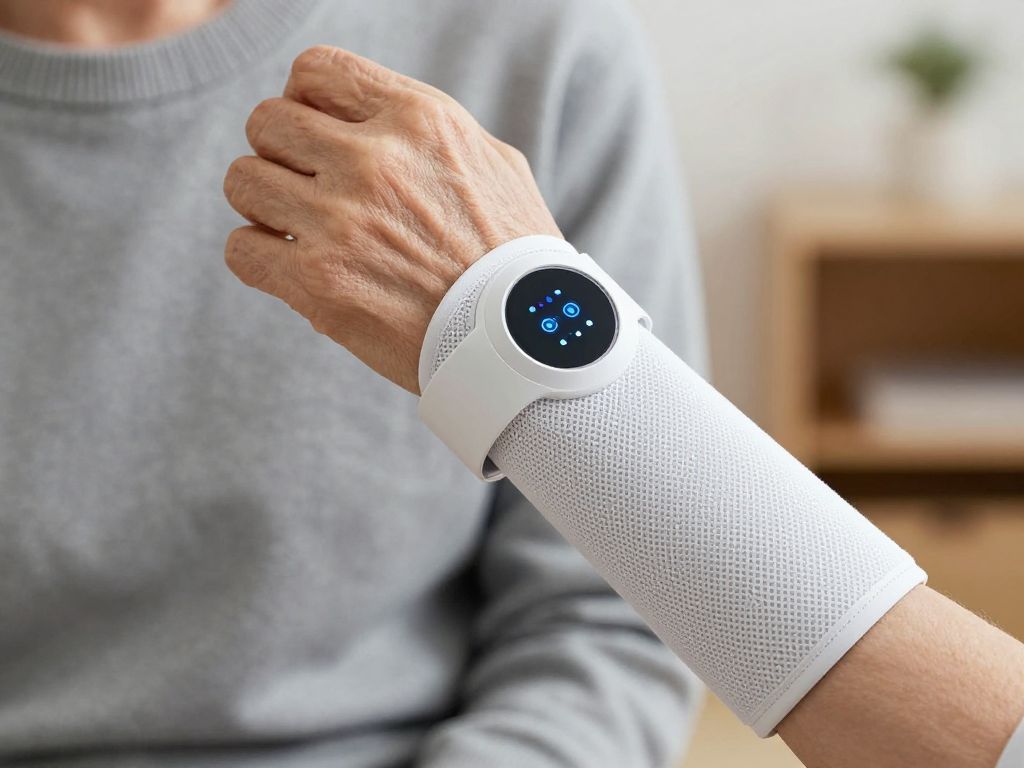
The core of this preventative care breakthrough is a soft mesh sleeve, innovatively designed to be worn around the lower thigh. This approximately two-inch-wide, 3D-printed sleeve is equipped with an array of tiny sensors that continuously monitor critical physiological data. Specifically, the device tracks and analyzes leg acceleration, symmetry, and step variability. These metrics are crucial in identifying changes in gait patterns that can signal increasing frailty.
A defining feature of the wearable is its sophisticated artificial intelligence component. The device is engineered to simultaneously record and analyze the wearer’s motion, generating an AI analysis of the data. Rather than transmitting hundreds of hours of raw data, the wearable sends only these analytical results, achieving a 99% reduction in data transmission requirements. This efficiency minimizes the need for high-speed internet connectivity and enhances user privacy. Further enhancing convenience, the wearable incorporates long-range wireless charging, eliminating the need for users to plug in the device regularly. The design prioritizes user comfort, aiming to be “invisible” during daily activities.
The Gutruf Lab’s Research Excellence
This pioneering work is spearheaded by Dr. Philipp Gutruf, an associate department head of biomedical engineering and the senior author of the study. Dr. Gutruf is also an associate professor of Electrical and Computer Engineering and a distinguished member of the BIO5 Institute at the University of Arizona. His dedication to advancing biomedical technology is evident in his seven years of focused research at UArizona on developing sophisticated tools for monitoring biomarkers. His lab’s recent findings on the AI-powered wearable were formally published in Nature Communications on December 20, 2025. This publication builds upon previous research from his lab, including a May 2025 study in Nature Communications detailing an adhesive-free wearable capable of measuring water vapor and skin gases to track signs of stress. Dr. Gutruf’s research group is renowned for its focus on creating devices that seamlessly integrate with biological systems, combining innovations in soft materials, photonics, and electronics to impact health diagnostics, therapeutics, and neuroscience.
Fostering Innovation and Student Engagement in STEM
The development of such a complex and impactful device is a testament to the robust academic environment and commitment to student development within the University of Arizona’s College of Engineering. The Gutruf Lab actively engages a diverse team of researchers, including postdoctoral fellows, graduate students pursuing both PhD and Master of Science degrees, and undergraduate students. These students contribute significantly to ongoing projects, gaining invaluable hands-on experience in cutting-edge biomedical engineering. This structured involvement provides essential practical skills and fosters a strong sense of personal responsibility in scientific advancement.
Furthermore, the university offers facilities like the Peter and Nancy Salter Medical Device Design Lab, where students receive practical experience in building and testing their own wearable medical devices and sensors. Such programs are crucial for cultivating the next generation of engineers and scientists in Arizona, ensuring that the state remains a hub for innovation and technological leadership. This emphasis on experiential learning reinforces the importance of discipline and rigorous academic pursuit in driving progress.
Broader Impact on Arizona’s Health Ecosystem
The University of Arizona’s leadership in developing advanced health technologies, exemplified by the AI-powered wearable, contributes significantly to Arizona’s growing health and economic landscape. This innovation aligns with the broader mission of UArizona Biomedical Engineering, which focuses on integrating technology and medicine to create products that enhance patient care and outcomes. The university is a cornerstone for interdisciplinary collaboration, notably through the BIO5 Institute, which brings together scientists, engineers, physicians, and computational researchers to tackle complex health challenges.
Further demonstrating this collaborative spirit, the Center for Health and Technology (CHaT), a joint initiative between the College of Engineering and the College of Nursing, is dedicated to accelerating the development of healthcare devices like chip-based wearables. Additionally, UArizona leads the C2SHIP, a National Science Foundation Engineering Research Center, which engages academic and industrial partners in developing in-place healthcare technologies and machine learning models for wearable sensors. These synergistic efforts underscore how education and research at institutions like the University of Arizona actively build leadership and community impact, solidifying Arizona’s position as a leader in advanced health solutions.
Advancing a Healthier Future for Arizona
The introduction of the University of Arizona’s AI-powered mesh sleeve marks a significant step forward in preventative healthcare, particularly for the elderly. This innovative wearable device, developed with precision and advanced artificial intelligence, has the potential to transform how frailty is managed, shifting from detection after an incident to proactive monitoring and early intervention. The dedication of researchers like Dr. Philipp Gutruf and the collaborative environment fostered by the university’s engineering programs exemplify Arizona’s commitment to academic excellence and real-world impact. The University of Arizona continues to be a driving force in technological innovation, contributing meaningfully to the health and well-being of the community and reinforcing Arizona’s position in the national landscape of higher education and scientific discovery. Readers are encouraged to explore more about the cutting-edge research and programs offered by the University of Arizona and stay updated on Phoenix, AZ college news.
Key Features of the AI-Powered Mesh Sleeve
| Feature | Description |
|---|---|
| Device Name | AI-Powered Mesh Sleeve |
| Lead Researcher | Dr. Philipp Gutruf |
| Primary Function | Detects early signs of frailty in the elderly |
| Target Population | Elderly (65 and older) Nationwide |
| Monitoring Parameters | Leg acceleration, symmetry, step variability |
| Key Technology | Artificial Intelligence, 3D-printing, long-range wireless charging |
| Publication | Nature Communications (December 20, 2025) |
| Impact | Shifts care from reactive to preventative, reduces falls and hospitalizations |
Frequently Asked Questions
What is the AI-powered wearable device developed by the University of Arizona?
The AI-powered wearable device is a soft mesh sleeve designed by University of Arizona researchers to detect subtle indications of frailty in the elderly.
Who is leading the research for this AI-powered wearable?
The research for this AI-powered wearable is led by Dr. Philipp Gutruf, an associate department head of biomedical engineering and senior author of the study at the University of Arizona.
What does the mesh sleeve monitor?
The mesh sleeve monitors and analyzes leg acceleration, symmetry, and step variability to provide insights into a wearer’s motion and potential frailty.
How does the device contribute to preventative care?
The device contributes to preventative care by using artificial intelligence to detect early warning signs of frailty, allowing for early intervention and potentially preventing falls, disabilities, and hospitalizations.
Where were the findings of this research published?
The findings of this research were published in Nature Communications on December 20, 2025.
Deeper Dive: News & Info About This Topic
HERE Resources
University of Arizona Expands Medical Education to Yuma
Phoenix Leads the Way in Healthcare Technology Innovation
Hexoskin Secures FDA Clearance for Medical Monitoring Garment
Arizona Health Tech Startups Raise $700,000 for Innovation
The Importance of Open API in Construction ERP for Phoenix Contractors
OpenAI Partners with Jony Ive for New AI Device
Billy Evans Launches Blood-Testing Venture Haemanthus