
How to Choose the Best Xeriscape Techniques for Your Phoenix Garden
Adapting to Phoenix’s extreme arid climate requires strategic landscaping to optimize water conservation and aesthetic appeal. Xeriscaping emerges as an essential methodology, tailored for desert environments. Implementing effective xeriscape techniques ensures a sustainable, low-maintenance, and visually engaging garden.
Understanding Xeriscaping
Xeriscaping is a water-efficient landscaping approach designed to minimize or eliminate supplemental irrigation. Derived from Greek roots meaning “dry” and “to work,” the methodology involves prudent plant selection, soil management, and irrigation strategies to support drought-tolerant landscapes. Properly executed, xeriscaping reduces water bills, conserves resources, and enhances the inherent beauty of desert environments.
Core Principles of Xeriscaping
1. Planning and Design
Begin with a comprehensive approach. Consider the garden’s functional zones, exposure to sun and shade, drainage patterns, and wind directions. Craft a design that aligns with your aesthetic goals and water conservation needs.
2. Selecting Low-Water-Use Plants
Prioritize native and drought-tolerant species that are naturally adapted to Phoenix’s climate. These plants require minimal irrigation after establishing roots, reducing maintenance and resource consumption.
3. Limiting and Strategically Placing Turf
Only incorporate turf where it *serves a specific purpose*, such as recreation or play zones. Avoid elongated patches or narrow strips, which demand unnecessary water and maintenance.
4. Implementing Efficient Irrigation Systems
Use drip irrigation as the standard. It delivers water directly to roots, reducing evaporation. Incorporate features like pressure regulators and filters to maintain system efficiency. Consider smart controllers that adjust watering based on weather data, ensuring optimal irrigation schedules.
5. Soil Improvement
Enhance soil quality by adding organic matter like compost, which improves water retention and nutrient availability. For clay-heavy soils, integrate mineral grit to promote drainage, thus avoiding root rot and other issues.
6. Applying Mulch Effectively
Use mulch—organic (bark, wood chips) or inorganic (rock, gravel)—to suppress weeds, keep soil moist, and moderate temperature fluctuations. Organic mulch gradually enriches soil as it decomposes, while inorganic options require less maintenance.
7. Regular Maintenance
Maintain plants through pruning, deadheading, and pest management. Regular weeding and adjusting irrigation schedules seasonally prolong landscape health and efficiency.
Selecting Optimal Plants for Phoenix Xeriscapes
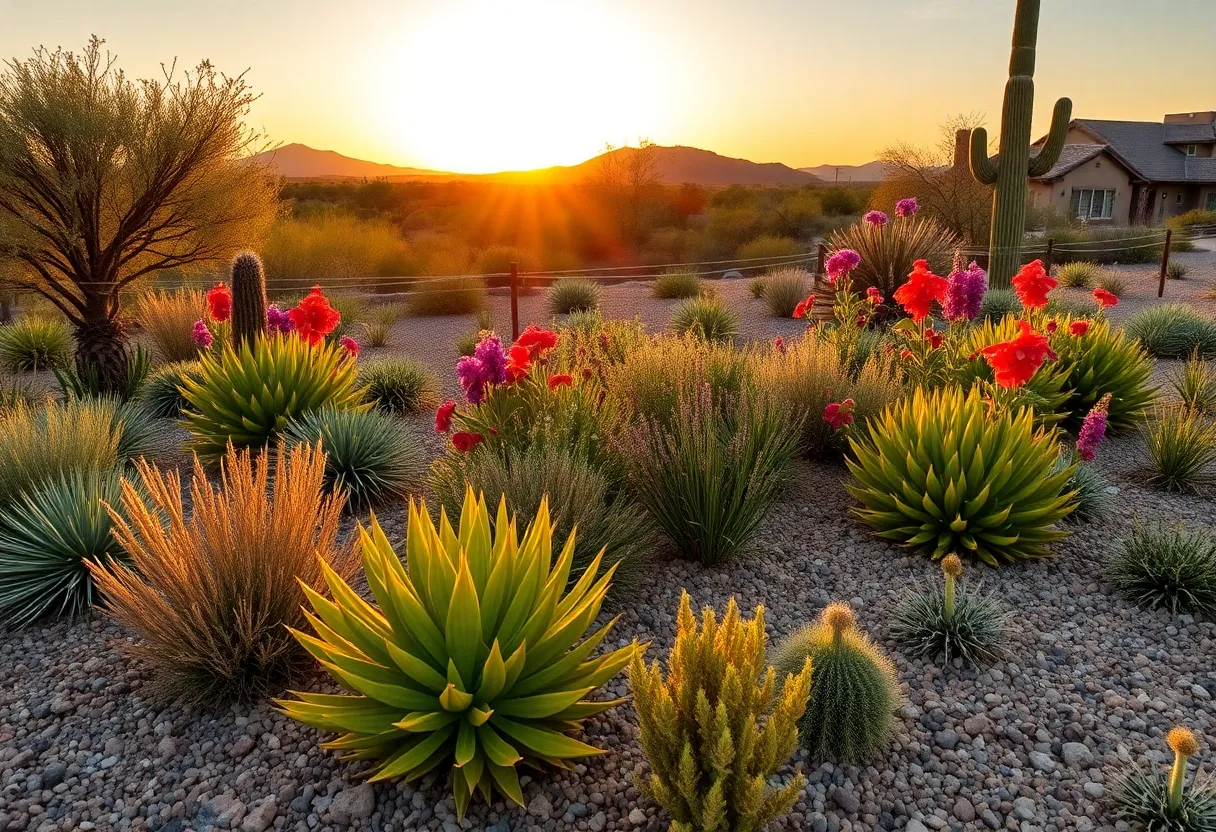
Choosing the right plants is vital for success. Focus on native species and plants with proven drought tolerance. Consider the following options:
- Agave: exhibits dramatic form and minimal water needs.
- Red Yucca: offers heat tolerance, attracts pollinators, and enhances visual interest.
- Ocotillo: distinctive, with elongated stems and bright red flowers.
- Palo Verde Trees: provide shade, thrive in dry conditions, and are highly resilient.
- Desert Marigolds: bright, cheerful blooms with low water requirements.
Implementing and Optimizing Irrigation
For an effective xeriscape, select *drip systems* combined with weather-based controllers. Regular system audits identify leaks or clogs, ensuring water isn’t wasted. Tailor watering schedules to seasonal evapotranspiration rates, reducing water use during cooler months.
Soil Enhancement Strategies
Healthy soil directly influences plant health and water efficiency. Incorporate organic amendments like compost or aged manure. These improve soil structure, increase moisture retention, and provide essential nutrients. For poor drainage soils, amend with mineral grit or install drainage solutions to prevent waterlogging.
Mulch Application Techniques
Apply an appropriate mulch layer of 2-4 inches around plants, avoiding contact with stems or trunks to prevent rot. Organic mulches decompose over time, adding nutrients, whereas inorganic mulches are durable and low-maintenance.
Maintenance for Longevity and Performance
Consistent care preserves the benefits of xeriscaping. Regularly prune dead or diseased branches to promote airflow and overall plant health. Remove invasive weeds promptly to prevent resource competition. Adjust irrigation schedules as plants mature or seasons change. Conduct periodic inspections for pests or disease to curtail problems early.
Additional Techniques and Considerations
Hyrdozoning
Group plants with similar water needs to maximize irrigation efficiency. This reduces over- or under-watering and simplifies maintenance.
Hardscaping Elements
Incorporate features like pathways, patios, rock beds, or decorative stone structures. These reduce the amount of irrigated surface area and contribute to visual harmony.
Shade Structures
Install pergolas or shade sails to protect sensitive plants, reduce weather stress, and limit evaporation.
Conclusion
Implementing xeriscape techniques in a Phoenix garden requires strategic planning and consistent management. Careful plant selection, efficient irrigation, soil improvements, and thoughtful design result in landscapes that are both sustainable and aesthetically compelling. The goal is to mirror the resilience of the desert while conserving precious water resources and creating a thriving outdoor environment.
Frequently Asked Questions
What are the main benefits of xeriscaping in Phoenix?
Xeriscaping conserves water, reduces maintenance costs, supports local ecosystems, and creates visually appealing landscapes tailored for the desert environment.
Which plants are best suited for a Phoenix xeriscape?
Native desert plants such as Agave, Red Yucca, Ocotillo, Palo Verde, and Desert Marigolds are ideal due to their drought tolerance and adaptability to local soil and weather conditions.
How does soil improvement enhance xeriscape success?
Amending soil with organic matter or mineral grit improves water retention or drainage, promotes healthy root growth, and mitigates issues caused by clay or sandy soils.
What irrigation methods promote water efficiency?
Drip irrigation systems combined with smart, weather-based controllers are most effective, delivering water directly to plant roots and adjusting schedules based on weather conditions.
How often should I maintain my xeriscape?
Regular maintenance involves pruning, weeding, adjusting irrigation, and monitoring pests or disease. Frequency depends on plant types and seasonal conditions but should be consistent throughout the year.
Key Features Chart for Phoenix Xeriscaping
| Feature | Details |
|---|---|
| Primary Goal | Water conservation and sustainable landscape design |
| Plant Selection | Native, drought-tolerant species adapted to desert climate |
| Irrigation | Drip systems with smart, weather-adjusted controls |
| Soil Management | Organic amendments and mineral grit based on soil type |
| Mulching | Organic or inorganic to retain moisture and suppress weeds |
| Design Elements | Hardscaping, shade structures, and hydrozoning for efficiency |
| Maintenance Focus | Pruning, weeding, irrigation adjustment, pest control |