

News Summary
Astronomers at the University of Arizona have made a significant discovery regarding supermassive black holes. Their research suggests that these cosmic giants play a crucial role in regulating star formation in nearby galaxies, acting as ‘cosmic predators’. This groundbreaking study challenges existing assumptions and underscores the university’s commitment to advancing astronomical knowledge and fostering future generations of scientists.
Phoenix, AZ — The University of Arizona continues to solidify its reputation as a leader in astronomical research, with a recent groundbreaking study shedding new light on the universe’s most enigmatic phenomena. This latest discovery from University of Arizona astronomers delves into the profound influence of supermassive black holes, revealing their significant role in regulating star formation within nearby galaxies. Such research underscores the critical contributions of Arizona’s higher education institutions to global scientific understanding and positions the state at the forefront of cosmic exploration.
This academic achievement highlights the rigorous pursuit of knowledge and the innovative spirit fostered within the state’s universities. By investigating the intricate dynamics of galactic evolution, University of Arizona researchers are not only expanding humanity’s cosmic perspective but also inspiring future generations of scientists and innovators. The commitment to academic freedom and disciplined inquiry at institutions like the University of Arizona is crucial for pushing the boundaries of what is known and for developing new insights that can have far-reaching impacts on scientific thought and discovery.
Cosmic Predators: Black Holes and Star Growth
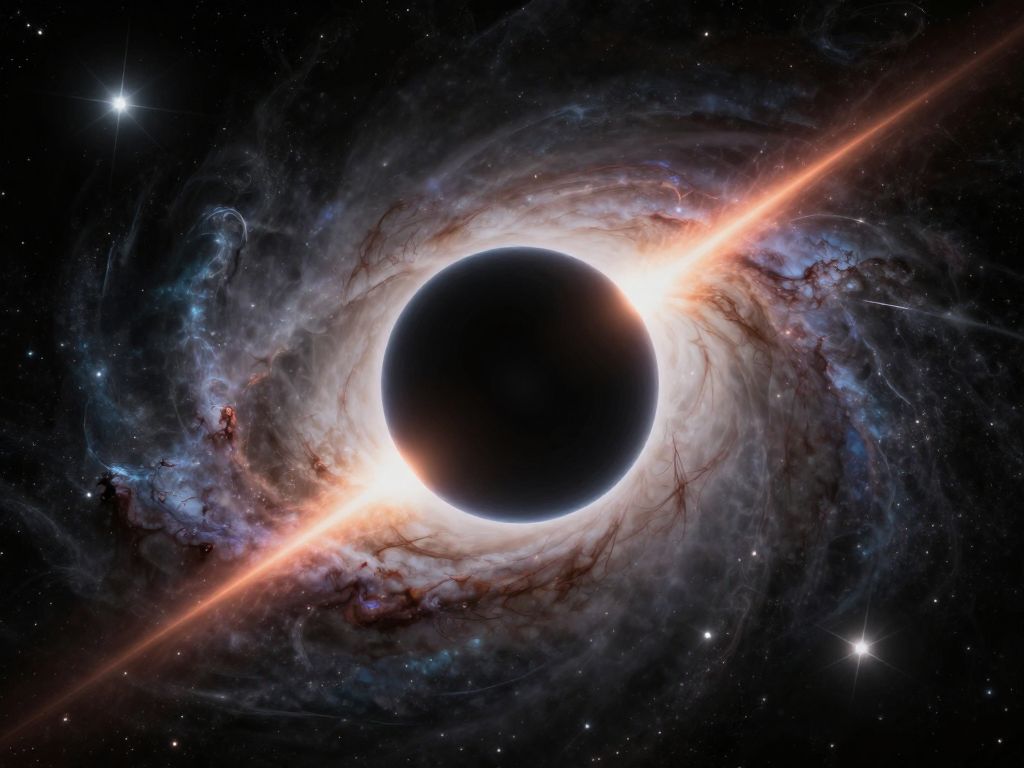
A new study led by astronomers at the University of Arizona has revealed that supermassive black holes may have a far more substantial role in shaping the growth of galaxies than previously understood. These colossal celestial objects, often located at the centers of galaxies, are now being viewed as cosmic predators that significantly influence the rate at which stars form in their host galaxies. The research specifically focuses on the dynamics observed in nearby galaxies, offering valuable insights into the mechanisms governing galactic evolution.
The University of Arizona’s Groundbreaking Research
The study, spearheaded by astronomers from the University of Arizona, suggests a direct link between the activity of supermassive black holes and the suppression of star formation. This innovative research challenges previous assumptions about the primary drivers of galactic development, placing a greater emphasis on the powerful gravitational and energetic outputs of central black holes. The findings represent a significant advancement in the field of astrophysics, demonstrating the University of Arizona’s sustained excellence in cutting-edge astronomical inquiry.
How Supermassive Black Holes Influence Star Formation
The mechanism through which supermassive black holes slow star growth is believed to involve a process known as feedback. As these massive objects actively accrete matter, they can emit powerful jets of energy and high-speed winds. These energetic outflows heat the surrounding gas and can push it out of the galaxy, preventing it from cooling and collapsing to form new stars. By effectively clearing out or disrupting the cold gas reservoirs essential for star birth, black holes act as regulators, dictating the pace of stellar production within their host galaxies. This regulatory function is a critical component in understanding the varied evolutionary paths of galaxies observed across the universe.
Implications for Galactic Evolution
Understanding the role of supermassive black holes as “cosmic predators” is fundamental to comprehending how galaxies evolve over billions of years. If black holes indeed exert such a strong influence on star growth, it means that the central engines of galaxies are key determinants of their overall size, structure, and stellar populations. This insight contributes to a more complete picture of cosmic history, explaining why some galaxies appear to have stopped forming stars prematurely, or why star formation is distributed unevenly within galactic structures. The study’s implications extend to broader theories of cosmology, enhancing our models of how the universe’s large-scale structures came to be.
Advancing Astronomical Understanding in Arizona
This research exemplifies the high caliber of academic and scientific work being conducted within Arizona AZ higher education. The University of Arizona’s contributions to astronomy are well-recognized, with its researchers consistently pushing the boundaries of knowledge regarding celestial bodies and cosmic phenomena. Such endeavors are not only about scientific discovery but also about fostering intellectual discipline and inspiring students to pursue careers in STEM fields. The resources and expertise available at institutions like the University of Arizona are vital for maintaining Arizona’s position as a hub for scientific innovation and for nurturing the intellectual capital necessary for future advancements.
The continuous exploration of the cosmos by the University of Arizona AZ astronomers underscores a commitment to rigorous scientific investigation and the advancement of human knowledge. Discoveries like these not only enrich our understanding of the universe but also highlight the importance of sustained investment in academic research. We encourage readers to explore the many programs and research opportunities available at Arizona’s leading educational institutions and to stay informed about the exciting developments emanating from the Phoenix AZ college news landscape. By supporting academic excellence and scientific inquiry, we collectively contribute to a vibrant community that values intellectual growth and societal impact.
Table: Key Aspects of the Supermassive Black Hole Study
| Feature | Description |
|---|---|
| Lead Institution | University of Arizona |
| Primary Focus | Role of supermassive black holes in slowing star growth |
| Target Galaxies | Nearby galaxies |
| Key Finding | Black holes act as “cosmic predators” regulating star formation |
| Mechanism Proposed | Black hole feedback (e.g., energetic outflows heating and expelling gas) |
| Significance | Advances understanding of galactic evolution and cosmic history |
Frequently Asked Questions About Supermassive Black Holes and Star Growth
What is the new study about supermassive black holes?
A new study led by University of Arizona astronomers suggests that black holes may have played a much larger role in shaping the growth of galaxies by slowing star growth in nearby galaxies.
Who led this research on cosmic predators?
The research on black holes as “cosmic predators” was led by University of Arizona astronomers.
How do supermassive black holes slow star growth?
Supermassive black holes are seen as cosmic predators that can slow star growth through mechanisms like energetic outflows that heat and expel gas, preventing it from forming stars.
Which galaxies were the focus of this study?
The study focused on how supermassive black holes slow star growth in nearby galaxies.
What is the significance of this University of Arizona research?
This research significantly advances the understanding of galactic evolution by highlighting the profound influence of supermassive black holes on star formation rates in galaxies.
Deeper Dive: News & Info About This Topic
HERE Resources
UArizona Discovers Unique Galaxy in Early Universe
University of Arizona Astronomers Discover Galaxy Virgil
Study Reveals Alarming Gap in Heart Age Among U.S. Adults