

News Summary
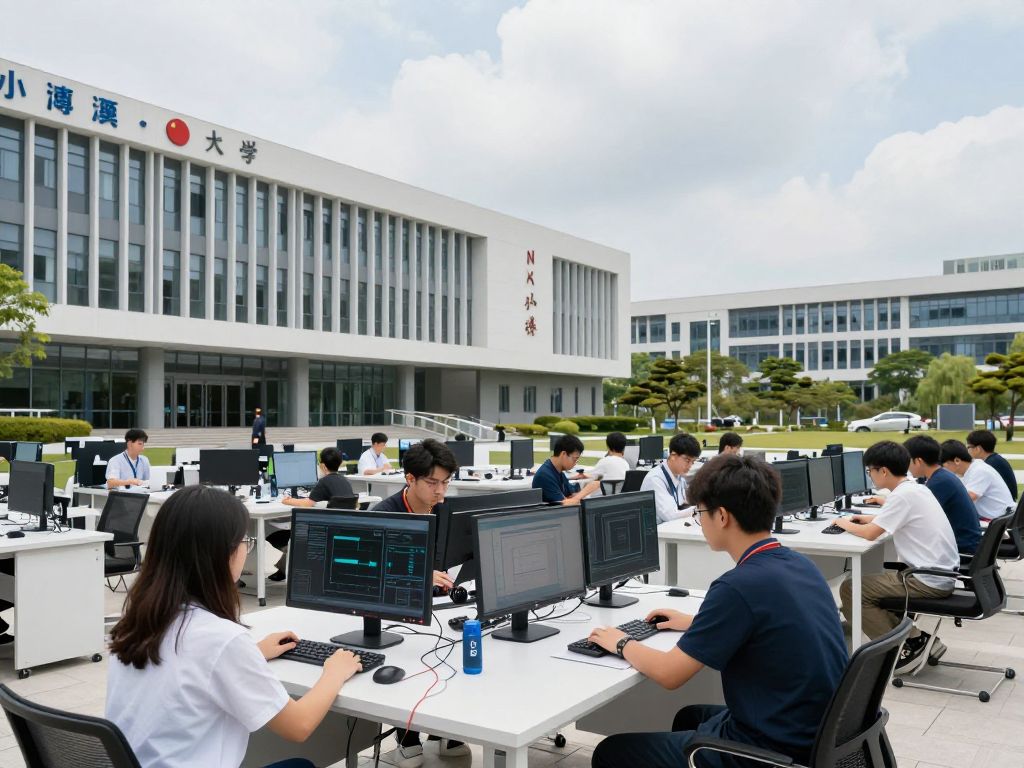
The University of Arizona is leading efforts to strengthen the high-tech workforce in Arizona through a collaboration with National Yang Ming Chiao Tung University in Taiwan. This partnership aims to enhance education in semiconductors, AI, and microelectronics, preparing students for successful careers in a global economy. The newly launched Talent and Innovation Hub will focus on interdisciplinary education and joint research, fostering cultural fluency among future engineers and also addressing Arizona’s critical demand for skilled workers in the semiconductor industry.
Phoenix, AZ — Arizona’s landscape is rapidly transforming, not just with its characteristic saguaros and red rock, but with the bustling activity of a burgeoning high-tech industry. At the forefront of this economic evolution is the critical demand for a skilled workforce, a challenge that the state’s higher education institutions are meeting with innovative and disciplined approaches. The University of Arizona (UArizona), a pillar of academic excellence, is leading a significant effort to cultivate the talent pipeline necessary to sustain and expand this growth, demonstrating a proactive commitment to Arizona’s future and the nation’s technological independence.
This commitment is underscored by strategic global partnerships and a robust expansion of academic and research programs. By emphasizing academic rigor, personal responsibility, and interdisciplinary collaboration, UArizona is not merely responding to industry needs but actively shaping the educational framework that will empower the next generation of leaders and innovators. These initiatives not only promise growth for individual students but also significant community and economic impact, solidifying Phoenix’s role as a hub for advanced technology and a testament to the power of education in driving societal progress.
A Landmark Global Partnership for Workforce Development
The University of Arizona has formalized a groundbreaking agreement with National Yang Ming Chiao Tung University (NYCU) in Taiwan, aimed at redefining workforce development for a globally interconnected high-tech economy. This pivotal partnership saw the signing of a memorandum of understanding on January 28, 2026, officially launching the Talent and Innovation Hub (TIH–NYCU–UA). Further cementing this collaboration, a Declaration of Collaboration was signed on September 7, 2025, involving UArizona, NYCU, the Arizona Commerce Authority (ACA), the Arizona Trade & Investment Office in Taiwan, and Pima County Economic Development. This declaration focused on establishing a Talent & Innovation Hub anchored directly in Arizona.
The establishment of this hub reflects a shared vision to strengthen collaboration across several crucial areas. These include expanding education in semiconductors, microelectronics, artificial intelligence (AI), and healthcare innovation. The partnership also aims to advance joint research and development (R&D) with industry partners and promote student and faculty exchanges between Taiwan and Arizona, fostering vital cross-cultural skills. This strategic alliance underscores the importance of global cooperation in building a resilient and competitive workforce for the future.
Cultivating Culturally Fluent Engineers for a Global Economy
A distinctive feature of the Talent and Innovation Hub’s educational strategy is its emphasis on integrating technical prowess with cultural fluency and international collaboration. The University of Arizona and NYCU are committed to equipping students with not only specialized technical knowledge but also the ability to effectively navigate diverse cultural norms, communication styles, and time zones inherent in a globalized industry. This forward-thinking approach prepares graduates for successful careers that may span across the U.S., Taiwan, Germany, India, or Japan.
The curriculum of the hub is designed to offer dual-degree programs, master’s degrees, minors, and certificates that are closely aligned with industry requirements. For instance, UArizona students can enroll in courses such as “Mandarin for Industry,” while NYCU students will engage in English language instruction. Beyond language, these programs include immersion experiences, exchange studies, and internships, ensuring students gain direct interaction and a deep understanding of management structures, communication skills, and working habits across different countries. Krishna Muralidharan, director of the Center for Semiconductor Manufacturing in the UArizona Office of Research and Partnerships, highlighted the goal of making students “globally successful” through this emphasis on cultural adaptability. Stacy Pigott also contributes from the UArizona Office of Research and Partnerships, further supporting these initiatives.
Fueling Arizona’s Semiconductor Boom
Arizona is rapidly solidifying its position as a global leader in semiconductor manufacturing, a transformation driven by significant investments from major corporations, including Taiwan Semiconductor Manufacturing Company (TSMC). The state has attracted over $210 billion in semiconductor-related investments since 2020, projecting more than 25,000 new jobs—an achievement unmatched by any other state. This remarkable growth showcases Arizona’s strategic advantages and welcoming environment for high-tech industries.
TSMC Arizona’s commitment to the state is particularly impactful. Its three planned fabs are anticipated to create approximately 6,000 direct high-tech, high-wage jobs. Furthermore, TSMC Arizona and the U.S. Department of Commerce have announced up to $6.6 billion in direct funding under the CHIPS and Science Act, contributing to TSMC’s total investment in Arizona which is projected to exceed $65 billion. The first TSMC fab is on track to commence production using 4nm technology in the first half of 2025. A second fab will follow, producing advanced 2nm process technology by 2028, with a third fab expected to begin production by the end of the decade, utilizing 2nm or more advanced processes. These developments underscore a robust long-term vision for semiconductor manufacturing in Arizona, providing sustained opportunities for a skilled workforce.
UArizona’s Research and Educational Pillars for Microelectronics
At the heart of Arizona’s microelectronics advancement is the Center for Semiconductor Manufacturing at the University of Arizona. This center plays a crucial role in fostering cutting-edge research, delivering interdisciplinary education, and facilitating collaboration with industry partners. Its mission is to empower faculty, staff, and students with advanced education and research opportunities, thereby fueling well-paid jobs and positioning UArizona as a leader in both current and future semiconductor and microelectronic industries, including chip-scale quantum technologies and photonic devices.
The university’s commitment extends to foundational educational pathways. UArizona is actively collaborating with a local high school to establish the nation’s first career and technical education program specifically tailored for semiconductor technician training. At the collegiate level, Professor Zafer Mutlu reintroduced and modernized the “Semiconductor Processing Laboratory (MSE 447L/547L)” course in Spring 2024, providing over 25 students with vital hands-on training in semiconductor processing at the Arizona Nano Fabrication Center (ANFC). Additionally, Prof. Mutlu leads the “Research Initiative for Semiconductors at the University of Arizona (RISE Arizona)” project, funded by a grant from the University of Arizona Foundation Board of Trustees, dedicated to attracting, training, and preparing students for impactful careers in semiconductor research and industry. The Materials Science and Engineering Department (MSE) further strengthens this ecosystem, being integral to the Center for Semiconductor Manufacturing and hosting the $30 million NSF New Frontiers of Sound (NewFOS) Science and Technology Center, which focuses on developing new materials for semiconductors, heterogeneous integration, and 3D packaging.
State-Level Commitment to a Future-Ready Workforce
Beyond the impressive efforts of individual institutions, Arizona demonstrates a comprehensive, state-level commitment to building a future-ready workforce for its burgeoning high-tech sectors. The Arizona Board of Regents’ AZ Opportunity initiative serves as a strategic framework, aiming to align higher education with the state’s evolving workforce needs. This initiative ensures that university programs are responsive to industry demands, preparing graduates for the high-wage jobs that are critical to Arizona’s sustained economic growth.
Further bolstering these efforts, Governor Katie Hobbs launched the “Talent Ready AZ Initiative,” designed to cultivate a skilled workforce across key advanced industries, including manufacturing, cybersecurity, and healthcare. This initiative strategically allocates over $25 million in federal grants toward workforce development to meet current demands and foster long-term economic opportunity for Arizonans. Complementing these efforts is the AZNext initiative, spearheaded by Arizona State University (ASU) and supported by an $8 million U.S. Department of Labor grant. This program aims to train at least 2,000 participants in high-demand fields such as advanced manufacturing, cybersecurity, and information technology, with the ambition of creating a workforce development model that can be replicated nationwide. These layered strategies highlight a unified vision across Arizona to invest in human capital and secure its position as a national leader in technological innovation and economic prosperity.
Conclusion
Arizona’s unwavering commitment to cultivating a highly skilled, adaptable workforce stands as a testament to its strategic vision for a high-tech future. Through pioneering partnerships like the University of Arizona’s collaboration with National Yang Ming Chiao Tung University, combined with substantial investments and dedicated state-level initiatives, the Grand Canyon State is forging a comprehensive blueprint for success beyond microchips. This integrated approach, which prioritizes academic freedom, interdisciplinary excellence, and cultural fluency, is not only preparing students for demanding careers in semiconductor manufacturing and artificial intelligence but also ensuring Arizona’s enduring economic vitality and global competitiveness.
As Phoenix continues to grow as a vital center for innovation, the ongoing development of its higher education ecosystem remains paramount. We encourage HEREhouston.com readers to explore the diverse programs offered by Arizona’s universities, attend campus events that showcase student achievement and research breakthroughs, and stay informed on the dynamic advancements within the Phoenix college community. Your engagement helps champion the discipline and personal responsibility that will continue to elevate Arizona’s standing as a leader in education and technology. Keywords: University of Arizona AZ, Phoenix AZ college news, Arizona AZ higher education, semiconductor workforce, high-tech jobs Arizona.
Frequently Asked Questions about Arizona’s High-Tech Workforce Initiatives
What is the key partnership driving Arizona’s high-tech workforce development?
The University of Arizona (UArizona) has formalized an agreement with National Yang Ming Chiao Tung University (NYCU) in Taiwan to redefine workforce development in a high-tech, globally interconnected economy.
What is the Talent and Innovation Hub (TIH–NYCU–UA)?
The Talent and Innovation Hub (TIH–NYCU–UA) is a joint, scalable platform designed by UArizona and NYCU that integrates graduate-level education, professional workforce development, and application-oriented research, formally launched on January 28, 2026.
What are the main areas of education and research focus for the Talent and Innovation Hub?
The Talent and Innovation Hub focuses on expanding education in semiconductors, microelectronics, artificial intelligence (AI), and healthcare innovation; advancing joint R&D with industry partners; and fostering student and faculty mobility between Taiwan and Arizona.
How many direct high-tech jobs are expected from TSMC Arizona’s fabs?
TSMC Arizona’s three fabs are expected to create approximately 6,000 direct high-tech, high-wage jobs.
What is the total investment by TSMC in Arizona?
TSMC’s total investment in Arizona is projected to exceed $65 billion.
What is the Arizona state initiative aimed at connecting higher education with workforce needs?
The Arizona Board of Regents’ AZ Opportunity initiative aims to connect higher education to the state’s evolving workforce needs.
What is the “Talent Ready AZ Initiative”?
The “Talent Ready AZ Initiative,” launched by Governor Katie Hobbs, aims to build a ready workforce for high-tech, advanced industries and has designated over $25 million in federal grants towards workforce development.
What is the AZNext initiative?
The AZNext initiative, led by Arizona State University (ASU) with an $8 million U.S. Department of Labor grant, aims to train at least 2,000 participants for high-paying jobs in advanced manufacturing, cybersecurity, and information technology.
What is the role of the University of Arizona’s Center for Semiconductor Manufacturing?
The Center for Semiconductor Manufacturing at UArizona advances Arizona’s leadership in microelectronics through research, interdisciplinary education, and industry collaboration, empowering students and faculty with cutting-edge opportunities.
Key Initiatives and Impacts on Arizona’s High-Tech Workforce
| Initiative/Entity | Key Focus | Impact/Contribution |
|---|---|---|
| UArizona-NYCU Talent and Innovation Hub | Workforce Development, Research & Innovation, Exchange Programs in Semiconductors, Microelectronics, AI, Healthcare | Formalized agreement (Jan 28, 2026) for globally interconnected high-tech workforce. Cultivates culturally fluent engineers. |
| TSMC Arizona Fabs | Semiconductor Manufacturing | Expected to create 6,000 direct high-tech jobs. Over $65 billion total investment. Production starts H1 2025. |
| CHIPS and Science Act Funding (TSMC) | Federal Investment in Semiconductor Manufacturing | Up to $6.6 billion in direct funding for TSMC Arizona. |
| Center for Semiconductor Manufacturing (UArizona) | Research, Education, Industry Collaboration in Microelectronics | Advancing Arizona’s leadership in microelectronics through cutting-edge research and interdisciplinary education. |
| Talent Ready AZ Initiative (State-level) | Statewide Workforce Development | Designated over $25 million in federal grants towards workforce development for high-tech industries. |
| AZNext Initiative (ASU-led) | Workforce Training for High-Demand Jobs | $8 million U.S. Department of Labor grant to train 2,000+ participants in advanced manufacturing, cybersecurity, IT. |
| NSF New Frontiers of Sound (NewFOS) Center (UArizona MSE Dept) | Materials Science & Engineering Research | $30 million center focusing on new materials for semiconductors, heterogeneous integration, and 3D packaging. |
Deeper Dive: News & Info About This Topic
HERE Resources
Phoenix’s East Valley Soars with New Advanced Manufacturing Hub
ERMCO Expands Manufacturing Footprint in Waddell, Arizona
Phoenix Secures Future with Massive Semiconductor Investment
Phoenix Innovates Amidst Nationwide Chip Supply Squeeze
Phoenix’s Chip Future: TSMC’s $16B Profit & Arizona Growth
Phoenix Industrial Property Changes Hands in $4.6 Million Deal
Phoenix Fuels Advanced Manufacturing Growth with $1.5M Grant
University of Arizona Partners with Precise Systems for National Defense Initiative
Greater Phoenix Chamber Outlines 2026 Growth Blueprint
Mesa’s Economic Boost: KoMiCo Opens New Semiconductor Facility