

News Summary
The University of Arizona has led a significant study exploring solar wind dynamics utilizing NASA’s Parker Solar Probe data. This cutting-edge research enhances our understanding of the sun’s influence on the solar system and aids in forecasting vital space weather events, which can impact technology on Earth. The study, directed by Kristopher Klein, demonstrates the essential role that academic institutions play in scientific innovation and societal safety.
Phoenix, AZ — The University of Arizona (U of A) continues to stand at the forefront of scientific exploration, recently leading a groundbreaking study that delves into the enigmatic dynamics of the solar wind. This research, spearheaded by a dedicated team, represents a significant stride in our understanding of the sun’s influence on the solar system and its direct implications for life and technology on Earth.
Such academic endeavors underscore the profound impact of Arizona’s higher education institutions, showcasing their commitment to rigorous inquiry and the pursuit of knowledge that transcends terrestrial boundaries. The findings, which leverage advanced space instrumentation, not only deepen scientific comprehension but also highlight the critical role universities play in fostering innovation and contributing to global safety and technological resilience.
Pioneering Solar Exploration
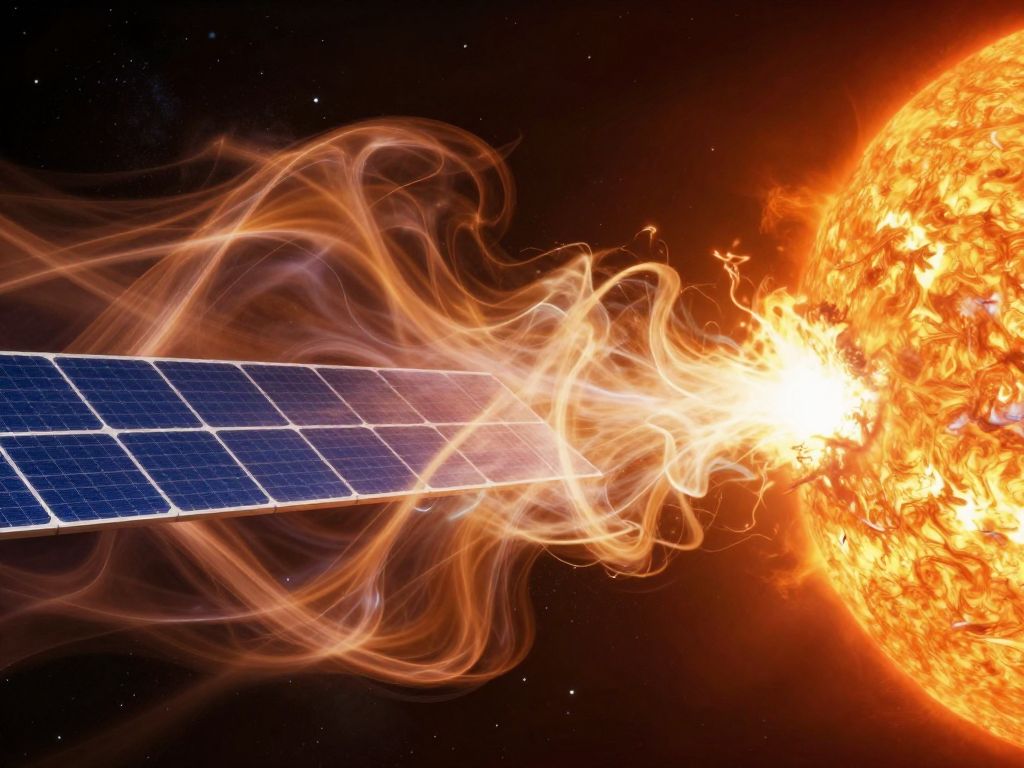
The recent U of A-led research utilized data collected by NASA’s Parker Solar Probe, an instrument designed to venture closer to the sun than any spacecraft before it. During its closest approach to the star, the probe gathered unprecedented information. At the time of these critical measurements, the Parker Solar Probe achieved speeds exceeding 427,000 miles per hour, marking it as the fastest human-made object in history. The probe’s mission is fundamentally aimed at investigating long-standing questions about the sun, including the processes that generate and accelerate the solar wind.
Unveiling Solar Wind Dynamics
A University of Arizona-led team, under the direction of Kristopher Klein, an associate professor in the Lunar and Planetary Laboratory, successfully measured the intricate dynamics and the constantly evolving “shell” of hot gas from which the solar wind originates. This precise measurement is a pivotal step in comprehending the sun’s outer atmosphere. The detailed findings of this study were published in Geophysical Research Letters, contributing to the broader scientific discourse and knowledge base.
The Science of Heliospheric Understanding
The implications of this research extend far beyond mere observation. The findings are instrumental in helping scientists address fundamental questions regarding the movement of energy and matter throughout the heliosphere. The heliosphere encompasses the vast volume of space influenced by the sun’s activity, affecting not only Earth and its moon but also every other planet within our solar system, reaching far into interstellar space. A deeper understanding of these solar processes is crucial for advancing planetary science and astrophysics.
Forecasting Space Weather Impacts
One of the most immediate and impactful applications of this research lies in improving our ability to forecast space weather events. The sun regularly emits bursts of highly energetic, charged particles, such as during a coronal mass ejection. When these particles travel through the solar system, they can interact with Earth’s magnetic field, leading to various impacts on our technologically advanced society. Potential disruptions include interference with satellites, challenges to radio communications, and even increased radiation exposure for individuals traveling by air, particularly over polar regions.
By gaining a more precise understanding of the sun’s atmosphere and the pathways these energetic particles take, researchers can enhance the accuracy of forecasts concerning how solar eruptions propagate. This improved forecasting capability is vital for mitigating potential disruptions to critical infrastructure and ensuring the safety of space-based and Earth-bound technologies.
Academic Discipline and Collaborative Innovation
This achievement by the University of Arizona exemplifies the importance of academic discipline and collaborative innovation in addressing complex scientific challenges. The work conducted by the Lunar and Planetary Laboratory demonstrates a dedication to pushing the boundaries of human knowledge through rigorous scientific methods. Partnerships with national entities like NASA are essential, enabling access to cutting-edge tools such as the Parker Solar Probe, and fostering an environment where advanced research thrives. Such initiatives are not only about scientific discovery but also about training the next generation of scientists and engineers, instilling in them the responsibility to contribute to societal well-being through intellectual rigor.
Key Research Overview
To provide a clear overview of this significant University of Arizona research, here is a summary of its core components:
| Research Aspect | Details |
|---|---|
| Lead Institution | University of Arizona |
| Lead Researcher | Kristopher Klein |
| Research Focus | Dynamics and “shell” of hot gas from where solar wind originates |
| Primary Data Source | NASA’s Parker Solar Probe |
| Publication Journal | Geophysical Research Letters |
| Probe Speed During Measurement | Over 427,000 miles per hour |
| Key Impact | Improved understanding and forecasting of space weather events |
The diligent work by the University of Arizona in unraveling the mysteries of the solar wind reinforces Arizona’s position as a hub for advanced scientific research and educational excellence. This commitment to discovery not only expands our universal knowledge but also provides practical benefits that safeguard our technological infrastructure and inform future space endeavors. We encourage all readers to explore the rich academic programs offered by Arizona’s universities and stay connected with the latest advancements emerging from Phoenix’s vibrant college community.
Frequently Asked Questions
What did the University of Arizona-led research team measure regarding the solar wind?
The University of Arizona-led research team measured the dynamics and the ever-changing “shell” of hot gas from where the solar wind originates.
Who led this solar wind research at the University of Arizona?
Kristopher Klein, an associate professor in the Lunar and Planetary Laboratory at the University of Arizona, led this research study.
What data source was used for this solar wind study?
The research utilized data collected by NASA’s Parker Solar Probe during its closest approach to the sun.
What is the significance of understanding solar wind dynamics?
Understanding solar wind dynamics helps scientists answer fundamental questions about energy and matter moving through the heliosphere, which affects all planets in the solar system, and is crucial for forecasting significant space weather events.
How fast did the Parker Solar Probe travel during these measurements?
When taking measurements for this study, the Parker Solar Probe traveled at more than 427,000 miles per hour.
What are the potential impacts of space weather events on Earth?
Space weather events can have varying impacts on satellites, radio communications, and even the radiation airplane passengers are exposed to when flying over the poles.
Deeper Dive: News & Info About This Topic
HERE Resources
Essential Features for Building Your New Home in Phoenix
What Are the Top Features Home Buyers Are Looking for in Phoenix’s New Construction Market?