
News Summary
The University of Arizona in Tucson has taken a significant role in NASA’s Pandora mission, managing spacecraft operations from the Multi-Mission Operations Center. This achievement reflects the university’s commitment to scientific advancement and complex problem-solving within the aerospace sector. The state-of-the-art facility provides students with hands-on opportunities in spacecraft command, thus preparing the next generation of leaders in space exploration and enhancing Arizona’s reputation as a center for innovation.
Phoenix, AZ — The University of Arizona (U of A) in Tucson has recently marked a significant achievement in space exploration, taking on a leading role in a crucial NASA mission from its campus-based Multi-Mission Operations Center (MMOC). This development highlights the university’s enduring commitment to academic rigor, cutting-edge research, and preparing students for impactful careers in science and technology. As a cornerstone of Arizona AZ higher education, the U of A’s advancements in spacecraft command not only propel scientific understanding but also enhance the state’s reputation as a hub for innovation and specialized talent.
The MMOC, a sophisticated facility located within the U of A’s Applied Research Building (ARB), represents a tangible commitment to leadership in space sciences. Its operations underscore the dedication to fostering environments where complex challenges are met with discipline and inventive solutions. Such initiatives are vital for student growth, offering unparalleled opportunities for engagement in real-world, high-stakes scientific endeavors, thereby cultivating the next generation of leaders in aerospace and beyond. The university’s role in this NASA mission further solidifies Arizona’s contribution to national scientific priorities and economic development.
Arizona’s Hub for Spacecraft Command
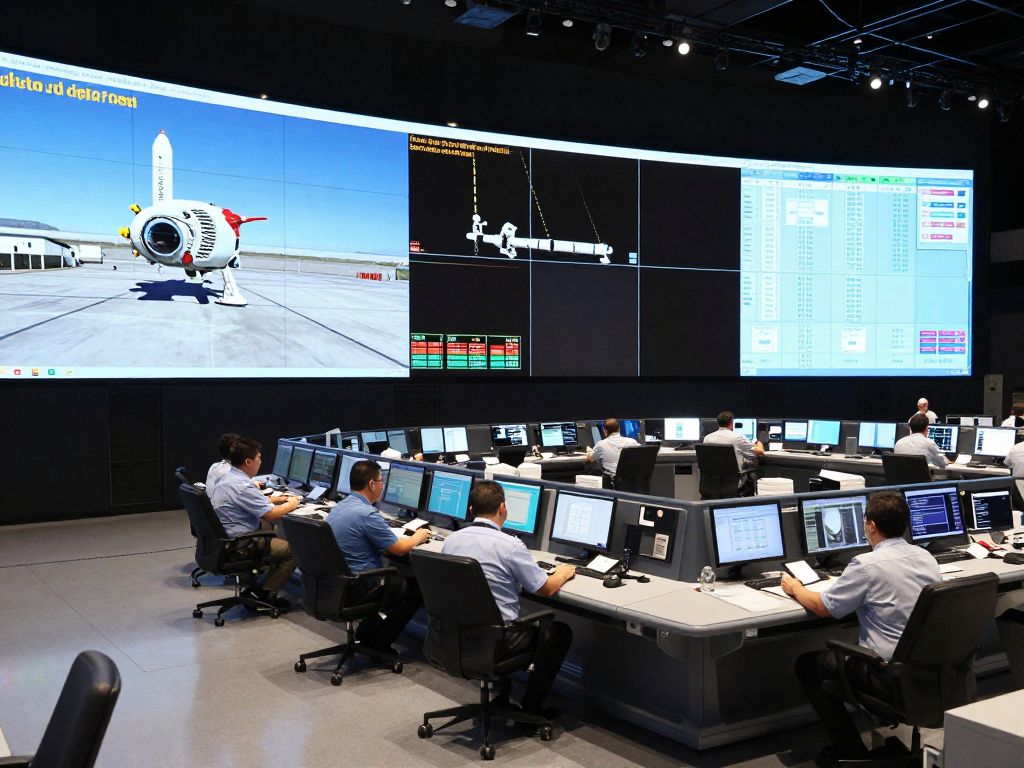
The University of Arizona’s Multi-Mission Operations Center (MMOC) in Tucson serves as a central point for monitoring and commanding spacecraft and balloons post-launch. Located within the Applied Research Building (ARB), this state-of-the-art facility is equipped to handle mission operations for NASA Class D and various balloon-borne missions. The center boasts a large mission control room featuring a 15-screen video wall and 25 workstations, designed to support comprehensive mission management. This infrastructure reflects a significant investment in creating a robust environment for demanding space operations.
The MMOC offers a range of sophisticated capabilities essential for mission success. These include real-time tracking and management of spacecraft operations, meticulous mission planning, and advanced processing and analysis of mission data. The center also provides simulation environments for rigorous testing of spacecraft systems and robust management of communication networks to ensure seamless interaction with distant assets. Furthermore, it facilitates the development of emergency response protocols to maintain mission continuity and promotes collaboration among scientists, engineers, and mission planners.
The Pandora Mission: Exploring Exoplanets
A recent highlight for the MMOC is its pivotal role in the Pandora mission, a NASA-led science endeavor focused on observing exoplanets and their host stars. The Pandora satellite, which is approximately the size of a refrigerator, was launched into orbit on January 11, 2026, via a SpaceX Falcon 9. The University of Arizona’s team officially commenced activities to take over responsibility for spacecraft commanding on January 15, 2026, a significant milestone in the university’s history of space research. This handover occurred on January 16, 2026, from Blue Canyon Technologies, the company responsible for building and integrating the spacecraft.
The MMOC team is entrusted with complete, end-to-end mission operations for Pandora, encompassing spacecraft commanding, telemetry monitoring, anomaly response, and day-to-day flight operations. The mission’s scientific objectives, assisted by U of A Astronomy and Planetary Sciences Professor Daniel Apai, involve studying the atmospheric contents of exoplanets and the behavior of their host stars. This collaboration exemplifies academic freedom in pursuing scientific discovery and the responsibility taken by institutions to contribute to global knowledge.
Cultivating Future Space Leaders
The success of missions like Pandora relies on the discipline and expertise of dedicated professionals. The MMOC team for the Pandora mission consists of approximately 10 individuals, including a mission operations manager, software engineers, systems engineers, and a documentarian. These professionals are drawn from the Arizona Space Institute and the Lunar and Planetary Laboratory at the U of A College of Science, many having gained experience on other U of A space missions such as OSIRIS-REx, OSIRIS-APEX, and Mars Odyssey. Erika Hamden serves as the director of the Arizona Space Institute.
The university’s capability to manage such complex operations from campus provides invaluable opportunities for aspiring scientists and engineers. While the core MMOC team is professional, the broader Arizona Space Institute, which operates the MMOC, aims to train students for scientific space missions. Such hands-on involvement in significant projects fosters personal responsibility, develops critical technical skills, and builds leadership qualities essential for careers in the demanding field of space exploration. This commitment to nurturing talent underscores the U of A’s role in shaping the future of the aerospace industry, contributing to the strength of Phoenix AZ college news with broader implications for the region.
Advanced Facilities and Collaborative Environment
Beyond the MMOC itself, the Applied Research Building (ARB), where the center is housed, offers a suite of world-class facilities supporting various aspects of space-related research and development. This 89,000-square-foot facility, with an investment of $85 million, provides capabilities that attract both university researchers and industry partners. Among its notable features is a 40-ton thermal vacuum chamber, recognized as the largest of its kind at any university, capable of replicating extreme cold and pressure conditions of outer space.
The ARB also includes laboratories for building nanosatellites (CubeSats) and testing high-altitude stratospheric balloons. An anechoic chamber is available for testing deep-space antennae, ensuring accurate performance by isolating devices from external interference. Additionally, an imaging technology laboratory positions the U of A as a leading supplier of advanced scientific imaging sensors. These comprehensive facilities foster a collaborative ecosystem, serving not only U of A researchers but also industry partners in Arizona and around the world, making the U of A a key player in U of A research.
Impact on Arizona’s Educational and Economic Ecosystem
The University of Arizona’s advancements in space mission control significantly contribute to Arizona’s educational and economic landscape. The university holds impressive rankings, including being #1 in Astronomy and Astrophysics since 1987 and #2 in space sciences among public universities. It also ranks #6 in NASA-funded activities among public universities, demonstrating its substantial contribution to national scientific endeavors. The Arizona Space Institute, which oversees the MMOC, aims to support and facilitate this pioneering research heritage.
This dedication to innovation helps strengthen the pipeline of skilled professionals in STEM fields, directly benefiting the state’s workforce and attracting further investment. The MMOC’s goal to serve multiple missions simultaneously and offer its services to external partners highlights its potential as an economic driver and a hub for specialized expertise. By engaging in cutting-edge space research, the U of A not only expands human knowledge but also fortifies Arizona’s position as a national security defense hub for innovation, particularly in areas like optical sciences, space domain awareness, and AI.
Conclusion
The University of Arizona’s Multi-Mission Operations Center represents a beacon of innovation and academic excellence in the realm of space exploration. Through its command of the Pandora mission and its advanced facilities, the U of A continues to demonstrate leadership in scientific discovery, providing invaluable opportunities for research and professional development. This commitment to pushing the boundaries of knowledge, coupled with an emphasis on discipline and practical application, ensures that Arizona remains at the forefront of space science. Readers interested in the forefront of Arizona AZ higher education and cutting-edge U of A research are encouraged to explore the various programs and initiatives at the University of Arizona, and stay updated on the exciting developments within Phoenix’s vibrant college community.
Key Mission Control Features
| Feature | Description |
|---|---|
| Multi-Mission Operations Center (MMOC) | Located in the Applied Research Building (ARB), capable of commanding NASA Class D and balloon-borne missions. |
| Pandora Mission | NASA-led science mission, commanded by U of A, observing exoplanets and their host stars. |
| Command Room | Features a 15-screen video wall and 25 workstations for real-time spacecraft monitoring. |
| Applied Research Building (ARB) | 89,000-square-foot facility with an $85 million investment, housing advanced testing chambers. |
| Thermal Vacuum Chamber | 40-ton chamber, largest at any university, simulates space conditions for testing. |
| Team Size | The Pandora mission operations team consists of approximately 10 professionals. |
Frequently Asked Questions (FAQ)
Q: What is the University of Arizona’s Multi-Mission Operations Center (MMOC)?
A: The Multi-Mission Operations Center (MMOC) is a facility at the University of Arizona’s Applied Research Building (ARB) in Tucson designed for monitoring and commanding spacecraft and balloons after launch, including NASA Class D missions.
Q: Which specific NASA mission is being controlled from the U of A campus?
A: The University of Arizona’s MMOC is controlling the Pandora mission, a NASA-led science mission focused on observing exoplanets and their host stars.
Q: When did the U of A team take over operations for the Pandora mission?
A: The U of A team commenced activities to take over responsibility for spacecraft commanding for the Pandora mission on January 15, 2026. The formal handover of mission control occurred on January 16, 2026.
Q: What are some key features of the Applied Research Building (ARB) where the MMOC is located?
A: The Applied Research Building (ARB) is an 89,000-square-foot facility housing the MMOC, a 40-ton thermal vacuum chamber (the largest of its kind at a university), laboratories for CubeSats and high-altitude balloons, and an anechoic chamber for antenna testing.
Q: How does the University of Arizona contribute to national space research?
A: The University of Arizona is ranked #1 in Astronomy and Astrophysics since 1987, #2 in space sciences among public universities, and #6 in NASA-funded activities among public universities, demonstrating its significant contributions to national space research and security initiatives.
Deeper Dive: News & Info About This Topic
HERE Resources
University of Arizona Takes Charge as Mission Control for New Space Probe
University of Arizona Leads OSIRIS-APEX Space Mission
University of Arizona Explores Orbital Data Centers
UArizona Discovers Unique Galaxy in Early Universe
University of Arizona’s OSIRIS-APEX Mission Achieves Key Milestone
University of Arizona’s HiRISE Captures Interstellar Comet 3I/ATLAS