

News Summary
The University of Arizona has been awarded up to $1.8 million from the ARPA-H to develop a portable lymphatic imaging scanner, aimed at improving diagnostics for lymphatic disorders. The initiative, led by a professor of radiology, seeks to enhance the detection and management of lymphatic diseases that affect millions worldwide. This groundbreaking project aligns with ARPA-H’s mission to fast-track health innovations and highlights the university’s commitment to medical advancements, benefiting communities both locally and globally.
Phoenix, AZ — The University of Arizona has received a significant award from the Advanced Research Projects Agency for Health (ARPA-H), a federal agency dedicated to accelerating health outcomes. This funding, totaling up to $1.8 million, will support the development of a pioneering portable lymphatic imaging scanner. This initiative marks a crucial step forward in medical diagnostics, aiming to address long-standing challenges in identifying and monitoring lymphatic disorders, and represents the first ARPA-H award of its kind for the university.
The project, titled “Game Changing Quantitative and Targeted Multimodal Lymphatic Imaging to Go,” is poised to revolutionize the detection and management of lymphatic diseases. These conditions affect hundreds of millions of individuals globally, often leading to misdiagnosis and inadequate treatment due to limitations in current imaging technologies. This endeavor underscores the critical role of Arizona’s higher education institutions in driving national health innovation and demonstrates a commitment to personal responsibility in advancing medical science for community well-being.
This groundbreaking research aligns with the mission of ARPA-H to make pivotal investments in breakthrough technologies that can transform important areas of medicine and health for all patients, which cannot readily be accomplished through traditional research or commercial activity. The University of Arizona’s involvement highlights its dedication to academic rigor and student growth, as the project will foster an environment of advanced research and technological development within the state’s burgeoning medical research landscape.
Addressing a Critical Medical Need
Lymphatic disorders present a substantial global health challenge. Existing imaging methods, such as lymphoscintigraphy, magnetic resonance imaging, and ultrasound, frequently fall short in providing the detailed information physicians require for accurate diagnoses and effective treatment plans. This often results in delayed or inappropriate care and poor outcomes for many patients. The fundamental difficulty stems from the nature of the lymphatic system itself: its vessels are tiny, collapsible, and translucent, while the lymph fluid they carry moves slowly and under low pressure, making it exceptionally challenging to visualize and track.
Nationally, millions of Americans, including an estimated 10 million living with lymphedema, experience lymphatic dysfunction that often goes misdiagnosed or entirely undiagnosed. This diagnostic gap has led to significant consequences, including preventable hospitalizations, disability, and even death. The advancement of lymphatic diagnostics has lagged decades behind that of other organ systems, creating an urgent unmet need that the University of Arizona’s new project aims to fulfill.
Introducing the Phase Change Ultrasound Lymphograph (PCUS)
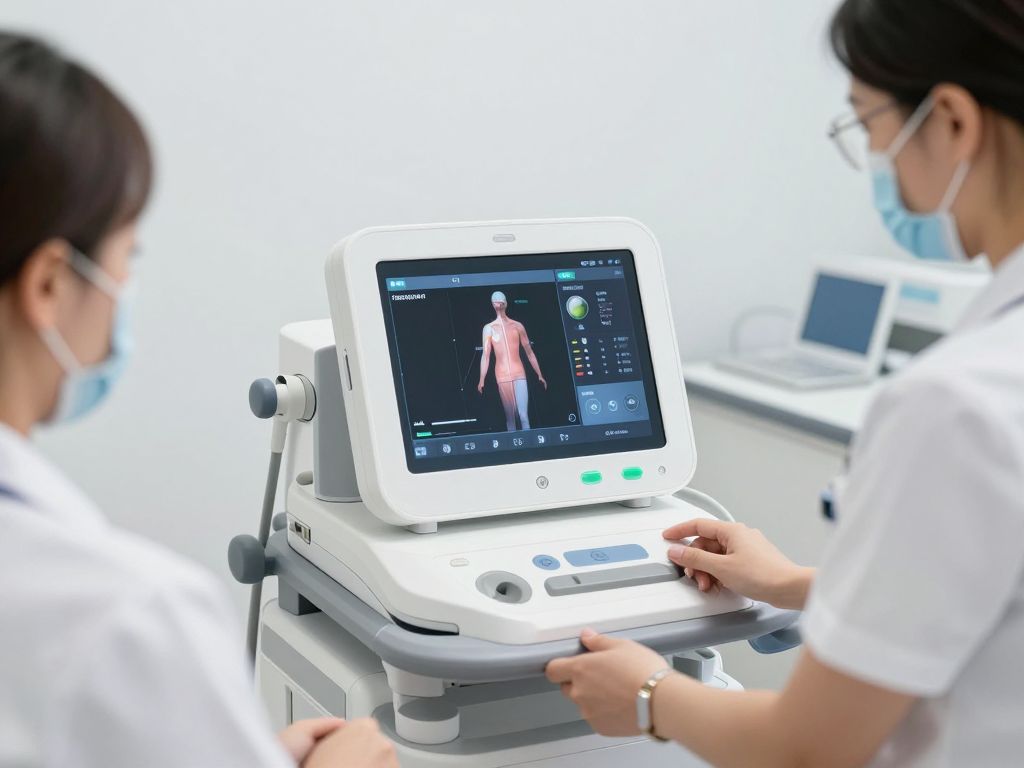
The University of Arizona team, led by Russell Witte, a professor of radiology and imaging sciences at the College of Medicine – Tucson and a member of the BIO5 Institute, is developing an innovative solution known as the Phase Change Ultrasound Lymphograph, or PCUS. This novel modality is designed to provide super-resolution mapping of lymphatic structures. A key feature of the PCUS device is its portability, making it small and light enough for medical professionals to use at the point of care for diagnosing and monitoring patients with lymphatic disease.
The PCUS technology will utilize phase change contrast agents to meticulously map lymph flow, lymphatic vessels, and lymph nodes. This detailed mapping will enable physicians to effectively screen for lymphatic abnormalities and precisely pinpoint obstruction sites within the system. The information gathered is intended to assist medical professionals in closely monitoring patients and making more informed decisions regarding treatment strategies, thereby improving patient outcomes.
Project Leadership and Collaborative Support
The project benefits from the expertise of a dedicated team. Russell Witte serves as the primary leader of this initiative. Complementing his leadership, Dr. Marlys Witte, a distinguished international specialist in lymphology, professor of surgery, and director of multilevel student research programs at the College of Medicine – Tucson, is involved as a program manager. Their combined experience and vision are integral to the project’s success, emphasizing the university’s commitment to interdisciplinary collaboration in addressing complex health challenges.
Further bolstering the project’s capabilities, the BIO5 Institute is contributing $128,000 in cost sharing. This investment will facilitate upgrades to the Translational Biomedical Imaging Resource Core Facility, ensuring that the research team has access to state-of-the-art infrastructure essential for developing this advanced imaging technology. This collaborative approach highlights the strength of Arizona’s academic and research ecosystem, fostering innovation and disciplined pursuit of scientific excellence.
Anticipated Impact and Future Outlook
The University of Arizona team anticipates having the new PCUS modality and associated medical device ready for use within the next five years. The overarching goal is to create technology that is not only effective but also affordable and accessible, providing critical insights into how the lymphatic system functions and malfunctions in real time. This innovation is expected to significantly improve the ability to detect whether lymph flow is improving or if an obstruction has been successfully removed following treatment.
This initiative represents more than just a technological advancement; it is also a concerted effort to increase awareness about the lymphatic system, a vital yet often misunderstood component of human health. By shining a light on this “unseen highway” of the body, the project aims to address conditions linked to its dysfunction, thereby contributing to better health outcomes for communities in Arizona and beyond. The focus on making advanced diagnostics portable and accessible demonstrates a commitment to personal responsibility in health care delivery.
Key Project Highlights
| Feature | Detail |
|---|---|
| Funding Source | Advanced Research Projects Agency for Health (ARPA-H) |
| Award Amount | Up to $1.8 million |
| Matching Funds | $128,000 from BIO5 Institute |
| Lead Institution | University of Arizona |
| Project Lead | Russell Witte, Professor of Radiology and Imaging Sciences |
| Device Name | Phase Change Ultrasound Lymphograph (PCUS) |
| Primary Goal | Portable, accessible, real-time lymphatic imaging |
| Anticipated Availability | Within five years |
The University of Arizona’s leading-edge research into a portable lymphatic imaging scanner, supported by the ARPA-H award, exemplifies the transformative potential within Arizona AZ’s higher education and medical fields. This project not only promises to elevate diagnostic capabilities for lymphatic disorders but also reinforces the university’s role as a hub for medical imaging innovation and disciplined inquiry. The commitment to developing affordable and accessible tools highlights an ethos of broad community impact.
We encourage readers to stay informed about developments from the University of Arizona, exploring the various research initiatives that contribute to our state’s leadership in health sciences and technology. Supporting academic freedom and scientific advancements at institutions like the University of Arizona is vital for the future of Arizona AZ higher education and the well-being of its citizens. Keep an eye on Phoenix AZ college news for more updates on how local universities are shaping the future of medicine and fostering a culture of innovation and personal responsibility.
Frequently Asked Questions About the Portable Lymphatic Imaging Scanner
What is the ARPA-H award for?
The ARPA-H award, totaling up to $1.8 million, will fund the creation of a portable lymphatic imaging scanner at the University of Arizona.
What is the name of the new imaging device?
The new imaging device is called the Phase Change Ultrasound Lymphograph, or PCUS.
Who is leading the research team at the University of Arizona?
The research team at the University of Arizona is led by Russell Witte, a professor of radiology and imaging sciences at the College of Medicine – Tucson and a member of the BIO5 Institute.
What problem does this portable scanner aim to solve?
This portable scanner aims to solve the problem of inadequate detail from standard imaging modalities in diagnosing lymphatic disorders, which affect hundreds of millions of people worldwide and often lead to misdiagnosis and poor outcomes. It will provide a portable, accessible, and simple-to-use method for observing the lymphatic system in real time.
When is the new device expected to be available?
The University of Arizona team hopes to have the new modality and medical device available for use within the next five years.
What is the BIO5 Institute’s contribution to the project?
The BIO5 Institute is providing $128,000 in cost sharing to upgrade the Translational Biomedical Imaging Resource Core Facility as part of this award.
Deeper Dive: News & Info About This Topic
HERE Resources