

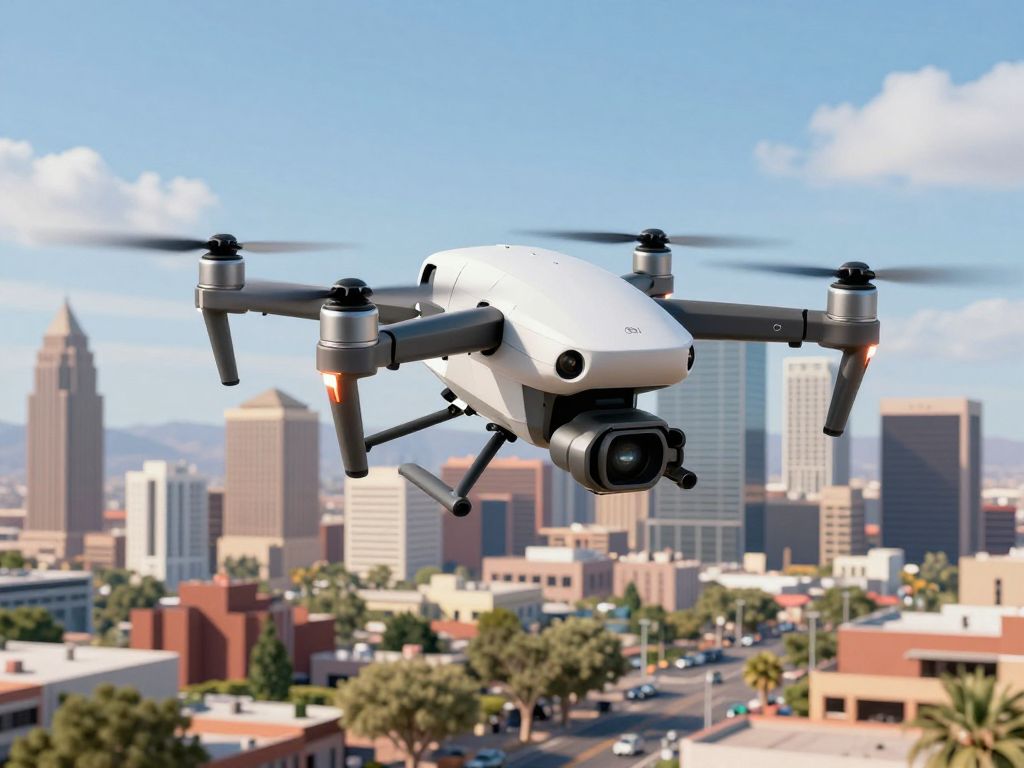
Phoenix, January 23, 2026
Phoenix is set to enhance its logistics landscape with Zipline’s drone delivery service, which will launch in early 2026 after securing $600 million in funding. This innovation reflects a broader trend of integrating advanced technology into local economies, potentially benefiting small businesses by reducing operational costs and improving delivery speed. Mayor Kate Gallego emphasizes the city’s position as a technology hub, and drone delivery could revolutionize local commerce by expanding access to goods efficiently and sustainably.
Phoenix Welcomes Drone Delivery: A New Era for Local Logistics and Innovation
Phoenix, a city known for its vibrant economy and forward-thinking spirit, is poised for a significant leap in its logistics capabilities. The drone delivery startup Zipline is expanding its operations to the metropolitan area in early 2026, backed by a substantial $600 million in new funding. This expansion signals a new chapter for Phoenix AZ business and showcases the power of private investment in driving technological advancement and economic growth.
This development underscores a national trend where entrepreneurial innovation and strategic private capital are converging to reshape industries. For local entrepreneurs and small businesses in Phoenix, the arrival of advanced autonomous delivery systems could offer new avenues for efficiency and customer reach, reducing traditional logistical hurdles and fostering a more dynamic marketplace.
Zipline’s Bold Expansion and Significant Investment
Zipline, a robotics company, has announced its expansion into Phoenix as one of its initial new U.S. markets for 2026. This move is supported by a funding round that raised over $600 million, elevating the company’s valuation to $7.6 billion. The significant private investment from firms like Fidelity Management & Research Co., Baillie Gifford, Valor Equity Partners, and Tiger Global underscores confidence in autonomous delivery solutions. Zipline plans to utilize this capital to accelerate its expansion into at least four new states this year.
The company has already surpassed 2 million commercial deliveries globally, achieving its second million in less than two years. Zipline’s U.S. deliveries have seen approximately 15% week-over-week growth for the past seven months, positioning it as one of the fastest-growing AI and robotics companies worldwide. In Phoenix, eligible customers will soon be able to order tens of thousands of items through the Zipline app, with deliveries potentially arriving in as little as 10 minutes.
Transforming Last-Mile Delivery with Autonomous Technology
Zipline’s service utilizes autonomous electric delivery drones, known as “Zips,” which can travel at speeds up to 70 mph. The company employs two primary platforms: Platform 1 for long-range deliveries and Platform 2 designed for precise home delivery. These drones are capable of delivering food, retail products, and healthcare supplies directly to customers’ homes. The median flight time for a Zipline delivery is typically around three minutes.
The innovation represented by drone delivery addresses challenges in traditional logistics, such as traffic congestion and slow last-mile delivery, offering a faster, cleaner, and potentially more cost-effective alternative. Drones can also reach areas that ground vehicles might struggle to access, improving service availability, especially for lightweight, high-frequency orders.
Economic Benefits for Phoenix AZ Business and Community
The introduction of advanced drone delivery services like Zipline’s could yield substantial economic benefits for the Phoenix metropolitan area. Such services have the potential to boost sales for Phoenix small business by expanding their customer reach and improving response times. Local businesses could also see lower operational costs compared to traditional delivery models, with drones potentially offering cost savings on last-mile logistics.
Furthermore, drone delivery systems contribute to broader community advantages, including reducing vehicle traffic, carbon dioxide emissions, and road accidents. They can enhance access to essential supplies, such as healthy foods and medicine, supporting long-term health outcomes for residents. Phoenix Mayor Kate Gallego has highlighted the city’s role as a national hub for advanced technology and autonomous systems, noting that such investments reinforce its position in mobility and logistics innovation.
Fostering Entrepreneurial Spirit and Resilience
The arrival of Zipline in Phoenix embodies the spirit of entrepreneurial innovation that drives Arizona AZ entrepreneurs. The journey of successful startups often mirrors a key principle: the value of foundational experience. While the allure of immediate startup success is strong, many successful business leaders advocate for gaining practical work experience before launching a new venture. This approach can equip aspiring entrepreneurs with essential skills in areas such as hiring, interviewing, and core operational fundamentals, ultimately increasing the odds of success. This pragmatic perspective on entrepreneurship is vital for building resilient businesses capable of navigating competitive markets.
Establishing and scaling a business, particularly in emerging technological fields, demands careful planning and adaptability. This includes securing appropriate financing, developing strong management skills, fostering competitiveness, and navigating regulatory landscapes. A supportive ecosystem that provides mentorship, training, and access to networks and funding opportunities is crucial for nurturing new businesses. Phoenix’s embrace of innovative solutions like drone delivery creates an environment where such strategic entrepreneurial development can thrive, encouraging local talent to build robust and sustainable enterprises.
Navigating the Regulatory Landscape for Advanced Logistics
The successful deployment of drone delivery services relies heavily on a supportive and clear regulatory framework. Zipline operates under Federal Aviation Administration (FAA) authorization for beyond visual line of sight (BVLOS) flights, which is crucial for scalable drone operations. Nationwide, the FAA mandates that drones for package delivery operate under 400 feet and typically handle a maximum payload of five pounds per package. However, the specific type, size, and quantity of drones can vary, with commercial drones having an average wingspan of about five feet.
Companies like Amazon have also expanded drone delivery in Arizona, specifically in the West Valley Phoenix Metro Area, serving customers in Tolleson. These operations often stem from hybrid facilities that combine fulfillment and delivery, enabling quicker package dispatch. A favorable regulatory environment and the presence of existing infrastructure are key factors that make locations like Phoenix ideal starting points for such services.
Community Integration and the Future of Delivery
As autonomous delivery becomes more integrated into daily life, community acceptance and involvement are paramount. Zipline designs its aircraft to operate quietly, autonomously, and without emissions, aiming to blend into neighborhoods. The convenience of rapid delivery, often cited as a key reason customers adopt drone services, allows individuals to reclaim time and enhances overall quality of life.
The expansion of drone delivery platforms into more metropolitan areas throughout the U.S. suggests a future where autonomous logistics could become an everyday staple. This shift is not merely about faster package delivery; it represents a fundamental evolution in how goods move, with implications for urban planning, environmental sustainability, and local economic structures. The proactive engagement of local communities and policymakers will be essential to maximize the benefits and address any challenges posed by this technological frontier.
Conclusion
Phoenix’s integration of Zipline’s drone delivery service marks a significant milestone in the city’s journey towards a more technologically advanced and efficient economy. This move, fueled by substantial private investment and innovative spirit, promises to enhance logistics, support local businesses, and contribute to a cleaner environment. It exemplifies how entrepreneurial drive, combined with strategic capital and an adaptable regulatory climate, can unlock new possibilities for economic growth and community well-being.
We encourage all Phoenix AZ business owners and residents to explore how these emerging technologies can benefit them and to stay engaged in the ongoing discussions shaping Phoenix’s dynamic economic future. Supporting local businesses that embrace innovative delivery methods will be key to harnessing the full potential of this new era.
Frequently Asked Questions about Zipline’s Phoenix Expansion
-
What is Zipline, and what are its plans for Phoenix?
Zipline is a robotics company specializing in autonomous drone delivery. It plans to expand its operations to Phoenix in early 2026, offering drone delivery services for various items.
-
How much funding has Zipline recently secured?
Zipline has recently secured over $600 million in new funding, which brings the company’s valuation to $7.6 billion.
-
What types of items will Zipline drones deliver in Phoenix?
Zipline drones will deliver tens of thousands of items, including food, retail products, and healthcare supplies, directly to customers’ homes in Phoenix.
-
How quickly can deliveries be expected with Zipline in Phoenix?
Deliveries via the Zipline app in Phoenix can be expected to arrive in as little as 10 minutes.
-
What are the economic benefits of drone delivery for Phoenix?
Drone delivery can benefit Phoenix by increasing customer reach and improving response times for local businesses, potentially lowering operational costs, and contributing to reduced vehicle traffic and emissions.
Key Features of Zipline’s Expansion to Phoenix
| Feature | Description | Scope |
|---|---|---|
| Expansion Location | Phoenix, AZ | Local |
| Expansion Timeline | Early 2026 | Local |
| Recent Funding Secured | Over $600 million | Nationwide |
| Company Valuation | $7.6 billion | Nationwide |
| Delivery Speed (Phoenix) | As little as 10 minutes | Local |
| Items Delivered | Food, retail, healthcare products (tens of thousands of items) | Nationwide |
| Drone Type | Autonomous electric delivery drones (“Zips”) | Nationwide |
| Regulatory Authorization | FAA authorization for beyond visual line of sight (BVLOS) flights | Nationwide |
| Maximum Drone Payload | 5 pounds per package | Nationwide |
| U.S. Delivery Growth Rate | Approximately 15% week over week for past seven months | Nationwide |
Deeper Dive: News & Info About This Topic
HERE Resources
Tucson Residents Embrace Tuition-Free Online University Options
Waymo and DoorDash Launch Autonomous Delivery Service in Phoenix
Tragic Crash Claims Life of 6-Year-Old in Phoenix
Amazon Prime Air Drones Collide with Crane in Tolleson
Amazon Pauses Drone Deliveries After Collision in Arizona
Amazon Resumes Drone Delivery Service in Arizona
Amazon Delivery Drones Collide with Construction Crane in Tolleson
The Importance of Open API in Construction ERP for Phoenix Contractors
Honeywell Aerospace Advances Autonomous Drone Technology in Phoenix
Amazon Expands Drone Delivery Service in Phoenix