

Phoenix, January 18, 2026
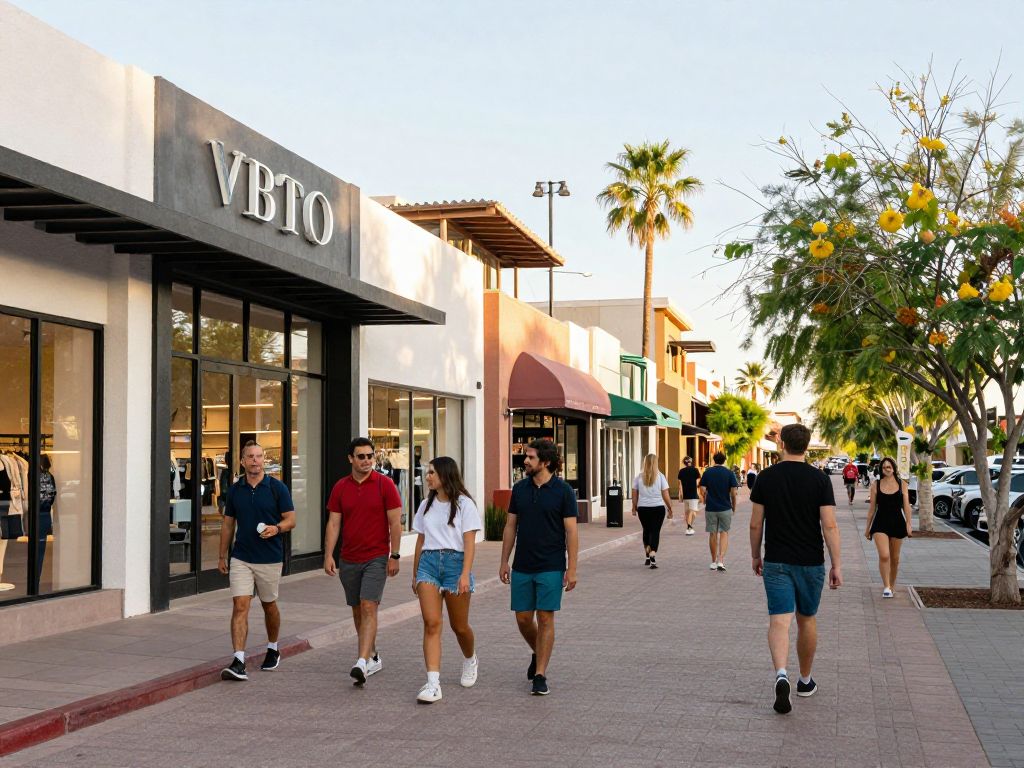
Phoenix’s retail sector is flourishing amidst economic uncertainty, showcasing entrepreneurial resilience and adaptability. With strong consumer demand and significant investments, local businesses are redefining the shopping experience. Following the pandemic, retail space demand outpaces supply, leading to low vacancy rates and rising rental costs. The integration of physical and digital retail enhances customer experiences, while the growth of private labels and retail media networks signals a transformative retail landscape in Phoenix.
Phoenix Retail Thrives: Local Innovation Defies Predictions
Phoenix, Arizona – In an economic landscape often dominated by discussions of digital disruption, the enduring strength and innovative spirit of brick-and-mortar retail in Phoenix stand out as a testament to entrepreneurial resilience and strategic adaptation. Despite past predictions of decline, physical stores are not just surviving; they are flourishing, particularly in the dynamic Phoenix AZ business environment. This robust performance is driven by a blend of strong consumer demand, thoughtful private investment, and a business-friendly atmosphere that fosters growth and innovation among Arizona AZ entrepreneurs.
The success story of Phoenix’s retail sector underscores a vital truth: when local businesses are empowered, and market forces are allowed to operate with limited regulatory burdens, communities experience significant economic vitality. This article explores how local leaders and innovative Phoenix small business owners are actively shaping a vibrant retail future, blending traditional commerce with modern strategies to create a truly integrated shopping experience.
Phoenix’s Resilient Retail Landscape
The Metro Phoenix retail sector has experienced a remarkable recovery following the pandemic, with demand outstripping available space. The region is emerging as a leading national market, often viewed as a bellwether for retail real estate across the U.S.. Over the past year, more than one million square feet of new retail space has been delivered, with an additional 2.7 million square feet currently under construction. This development activity is a clear indicator of confidence in the market.
Vacancy rates reflect this healthy demand. In the fourth quarter of 2023, the Metro Phoenix retail direct vacancy rate stood at 4.9%, marginally increasing to 5.2% in the first quarter of 2024 due to the introduction of new construction. This vacancy rate represents the lowest observed by some retail brokers in over two decades. This positive trend is supported by consistent consumer demand, substantial population growth, and significant expansion in the technology industry, particularly in chip manufacturing, which collectively bolster the Phoenix economy.
Rental Rate Growth Reflects Strong Demand
The robust demand has also translated into increased rental rates. The average rent saw an 8.8% increase year-over-year in the first quarter of 2023. Looking further back, rents grew by a substantial 23.9% between the first quarter of 2021 and the first quarter of 2024. This upward trajectory in leasing costs, alongside a positive absorption of 4.2 million square feet over the past year, bringing vacancy rates to a record low of 4.5% according to CoStar, highlights the market’s fundamental strength and its appeal to retailers. While the metro Phoenix retail market did record negative net absorption of 1,664 square feet during the first quarter of 2024, this slight dip is often attributed to the delivery of new, unabsorbed space and specific large retailer closures, rather than a systemic downturn.
The Symbiotic Relationship: Physical and Digital Retail
The narrative suggesting that e-commerce would entirely supplant physical retail has proven to be inaccurate. Instead, a powerful, mutually beneficial relationship has emerged between online and offline shopping experiences. Nationwide data indicates that growth in brick-and-mortar retail has outpaced that of e-commerce. In fact, nearly 70% of all retail sales nationwide still occur in physical stores. This phenomenon, often described as a “halo effect,” demonstrates that physical stores significantly boost digital engagement.
Enhancing Brand Presence Across Channels
When a new physical store opens, the associated brand experiences an average increase of 37% in web traffic within the subsequent quarter. For emerging retailers, this boost can be even higher, at 45%, while established retailers see a 36% jump. This shows that rather than competing, these channels work in tandem to foster brand recognition and customer relationships. Consumers today expect a seamless and engaging experience across all touchpoints, whether online or in a physical store.
This integration is evident in what is known as “phygital” retail, where physical and digital shopping experiences are seamlessly blended. Imagine a customer in a store scanning a QR code to access detailed product information, customer reviews, and personalized offers, all while enjoying the physical ambiance of the shop. This approach leverages the strengths of both realms, creating a more comprehensive and satisfying customer journey. The financial impact is also noteworthy: a $100 online transaction often leads to an additional $131 in-store spending within 15 days, and a $100 in-store purchase can generate an extra $167 in online spending within the same period.
The Growth of Private Labels and Retail Media Networks
Another significant trend shaping the retail landscape is the ascendance of private label brands and the rise of retail media networks. These innovations offer retailers greater control over their product offerings and new avenues for revenue generation.
Driving Foot Traffic and Profit Margins
Retailers are increasingly investing in their private label portfolios, which include store brands. These products are not only becoming more popular with consumers but also prove highly advantageous for retailers, yielding gross margins 25-30% higher than manufacturer brands. This increased profitability, combined with rising consumer trust in store brands, drives more foot traffic to physical locations. Nationwide, private label sales reached a record high in 2024, showing a nearly 4% increase from the previous year. In the U.S., private label products now account for over 20% of total retail sales, with their unit share approaching 23%.
Expanding Advertising Opportunities
Concurrently, retail media networks are rapidly becoming one of the fastest-growing segments in digital advertising nationwide. These networks allow brands to advertise directly to consumers within a retailer’s own digital and physical ecosystems. The U.S. retail media networks market generated $6,062.0 million in revenue in 2024 and is projected to reach $10,374.8 million by 2030, with a compound annual growth rate (CAGR) of 10.4% from 2025 to 2030. Major national retailers are already leveraging these networks, providing significant new revenue streams and opportunities for targeted advertising.
Fueling Growth: Entrepreneurship and Investment in Phoenix
Phoenix’s sustained economic growth is not merely a product of national trends but is also significantly bolstered by vibrant local entrepreneurship and strategic private investment, supported by a favorable business climate. The city is recognized as one of the most attractive in the U.S. for retail development due to its rapid population growth, expanding infrastructure, and robust job market.
A Hub for Small Business Success
Small businesses are the backbone of the Phoenix economy, embodying innovation and adaptability. Initiatives like Retail Therapy AZ in downtown Phoenix exemplify this, offering a platform for nearly 80 different small businesses to showcase and sell their locally made products. This collective approach provides valuable exposure and support for Arizona AZ entrepreneurs. An economic impact report from the Black Chamber of Arizona further highlights this success, noting that its members collectively experienced a $1.5 million increase in sales and contributed to over 500 new jobs statewide between 2024 and 2025.
The array of successful Phoenix small business ventures spans diverse sectors, from unique entertainment spots like Electric Bat Arcade and inviting coffee houses such as Copper Star Coffee, to cultural hubs like Changing Hands Bookstore, and local craft breweries like AZ Wilderness Brewing Co.. These businesses contribute to the unique character and economic fabric of Phoenix.
Strategic Private Capital and Pro-Business Policies
Private investment continues to flow into the Phoenix retail sector. For instance, Cohen & Steers Income Opportunities REIT, Inc. acquired the Deer Valley Towne Center, a community shopping center north of Phoenix, anticipating continued benefits from rising demand for retail space and sustained consumer traffic in open-air shopping centers. The city itself is actively seeking private party and developer interest in numerous city-owned parcels, particularly for development opportunities near Phoenix Sky Harbor International Airport.
Phoenix’s commitment to a pro-business environment, characterized by policies that encourage entrepreneurship and investment, including tax incentives and streamlined permitting processes, plays a crucial role in attracting and retaining businesses. Arizona’s status as one of the lowest-tax states further enhances its appeal to developers and investors. This combination of strong local innovation, targeted investment, and supportive governance creates an optimistic outlook for the Phoenix small business community and the broader retail sector.
Conclusion
Phoenix’s brick-and-mortar retail sector has not only defied pessimistic forecasts but has emerged as a vibrant and innovative segment of the local economy. Through the determination of Arizona AZ entrepreneurs, the strategic infusion of private investment, and a supportive business environment, physical retail continues to adapt and thrive. The symbiotic relationship with digital platforms, the strategic adoption of private labels, and the emergence of retail media networks are all contributing factors to this success.
As Phoenix continues its trajectory of economic growth and population expansion, the resilience and dynamism of its retail businesses will remain a cornerstone of the community. We encourage readers to explore and support the diverse array of local Phoenix AZ businesses, thereby contributing to the continued prosperity and unique character of our city. Staying engaged with Phoenix’s economic future means recognizing the vital role these enterprises play in creating jobs, fostering innovation, and enriching our neighborhoods.
Frequently Asked Questions
How has brick-and-mortar retail performed in Phoenix recently?
The Metro Phoenix retail sector has experienced a spectacular recovery since the pandemic, with demand surpassing availability. More than one million square feet of new retail space has been delivered in the last year, with an additional 2.7 million square feet under construction. The metro Phoenix retail direct vacancy rate was 4.9% in Q4 2023, rising slightly to 5.2% in Q1 2024, which is among the lowest observed in decades.
What role does social media play in the success of physical stores?
Social media and physical retail have developed a symbiotic relationship. A brand’s web traffic and online sales performance are heavily influenced by the presence of a physical store. When a single physical store opens, web traffic increases 37% on average in the quarter following the opening of the store.
Are private label brands impacting brick-and-mortar retail?
Yes, private label brands are significantly impacting brick-and-mortar retail. Retailers earn 25–30% higher gross margins on private labels compared to manufacturer brands. Private label sales hit a record high in 2024, increasing nearly 4% from the previous year nationwide. More than half of American consumers visit a specific retailer’s store to purchase a private label product nationwide.
What are retail media networks and how are they growing?
Retail media networks are rapidly growing digital advertising platforms. The U.S. retail media networks market generated $6,062.0 million in revenue in 2024 and is expected to reach $10,374.8 million by 2030, growing at a CAGR of 10.4% from 2025 to 2030. These networks allow companies to access previously unreachable digital spaces within e-commerce websites and introduce sponsored ads.
How is Phoenix attracting new retail development and investment?
Phoenix is considered one of the most attractive cities in the U.S. for retail development, benefiting from rapid population growth, expanding infrastructure, and a bustling job market. The city is also seeking private party/developer interest in city-owned parcels, and government support including incentives and tax breaks are anticipated to foster a thriving retail sector.
Key Features of Phoenix’s Thriving Retail Sector
| Feature | Description | Scope |
|---|---|---|
| Retail Growth & Recovery | Metro Phoenix retail sector has seen a spectacular recovery since the pandemic, with demand surpassing availability. Over 1 million sq ft of new space delivered in the last year; 2.7 million sq ft under construction. | State-level |
| Low Vacancy Rates | Metro Phoenix retail direct vacancy rate was 4.9% in Q4 2023, rising to 5.2% in Q1 2024 due to new construction. This is the lowest observed by some retail brokers in 21 years. Overall vacancy rate at 4.8%. | State-level |
| Rental Rate Increases | Average rent increased by 8.8% year-over-year in Q1 2023. Rent grew 23.9% from Q1 2021 to Q1 2024. | State-level |
| Digital & Physical Symbiosis | Brick-and-mortar stores drive digital engagement. Web traffic increases 37% on average when a single physical store opens. Consumers spend an additional $131 in-store after a $100 online transaction, and $167 online after a $100 in-store purchase within 15 days. | Nationwide |
| Growth in Private Labels | Retailers earn 25–30% higher gross margins on private labels. Private label sales hit a record high in 2024, increasing nearly 4% from the previous year. Over 20% of total retail sales nationwide are private label products. | Nationwide |
| Rise of Retail Media Networks | U.S. retail media networks market generated $6,062.0 million in 2024, projected to reach $10,374.8 million by 2030 (CAGR 10.4% from 2025-2030). Retail media networks reached $53.7 billion in advertising revenue in 2024. | Nationwide |
| Entrepreneurial Support | Retail Therapy AZ in downtown Phoenix features nearly 80 small businesses. Black Chamber of Arizona members saw a $1.5 million sales increase and created over 500 new jobs statewide (2024-2025). | State-level |
| Favorable Business Climate | Phoenix is one of the most attractive cities in the U.S. for retail development due to rapid population growth, infrastructure, and job market. Arizona is the fourth lowest-tax state. Phoenix has business-friendly policies, including tax incentives and streamlined permitting. | State-level |
| Private Investment | Cohen & Steers Income Opportunities REIT, Inc. acquired Deer Valley Towne Center. City of Phoenix is seeking private party/developer interest in 188 city-owned parcels for development. | State-level |
Deeper Dive: News & Info About This Topic
HERE Resources
Sun Devils Host Kansas in Key Big 12 Showdown
Chandler Fashion Center Set for Transformative Redevelopment
Phoenix Logistics Adapts Amid GNC Warehouse Closure
Revving Up Scottsdale: Barrett-Jackson Returns
Phoenix’s Collector Car Market Thrives Amidst Economic Shifts
Phoenix Industrial Market Thrives: Baron Properties’ $46.7M Sale Highlights Robust Sector
Arizona GymCats Compete in Tri-Meet Against Denver and TWU
Aggies to Play Grand Canyon in Historic Matchup
Phoenix’s Pet Care Boom: Entrepreneurs Meet Local Needs
Phoenix Shoppers Confront Rising Grocery Costs Amidst Evolving Economic Landscape