

Phoenix, January 10, 2026
Arizona is enhancing its economic landscape with advanced tradeport logistics hubs, particularly in the Phoenix business community. These projects aim to improve supply chain efficiency, foster innovation, and create substantial job opportunities statewide. Phoenix’s strategic location and infrastructure, combined with a pro-business environment, make it a vital center for logistics and commerce, attracting investment and supporting local entrepreneurs.
Phoenix
Arizona’s Logistics Hubs: Catalysts for Economic Growth
Arizona is strategically transforming its economic landscape through the development of advanced tradeport logistics hubs, positioning the state, and particularly the Phoenix AZ business community, as a vital center for national and international commerce. These ambitious projects are poised to enhance supply chain efficiency, foster entrepreneurial innovation, and create significant job opportunities across the state.
The vision for Arizona’s future involves leveraging its prime geographic location to establish state-of-the-art logistics infrastructure. This proactive approach aims to attract private investment and cultivate a business environment where small enterprises can thrive, contributing to robust economic growth. By focusing on streamlined operations and strategic connectivity, Arizona is building a resilient foundation for sustained prosperity, benefiting Arizona AZ entrepreneurs and communities alike.
The Rise of Tradeport Logistics Hubs in Arizona
Tradeport logistics hubs are large-scale, integrated facilities designed to streamline the movement, storage, and distribution of goods, often incorporating intermodal transportation, warehousing, and value-added services. These hubs serve as critical nodes in global supply chains, optimizing efficiency and reducing costs for businesses. Nationwide, the effectiveness and performance of such logistics hubs are consistently analyzed through various research efforts, including systematic reviews of port economics, policy, and management studies, which examine academic papers published over extended periods like 2009-2020. This type of analysis helps to understand the structures of research communities and the evolving themes in port and logistics research.
The establishment of free trade zones, a concept often related to these hubs, has been observed in various global contexts, aiming to motivate new investment and improve local economic indicators. However, the actual consequences can vary, with some analyses showing that while designed to attract investment, such policies might lead to outcomes like increased imports and diminished exports in specific cases. The unique regulatory frameworks of some free trade ports, including zero tariffs and trade liberalization measures, can also present challenges in balancing innovative policies with existing international trade obligations.
Phoenix’s Strategic Advantage and Connectivity
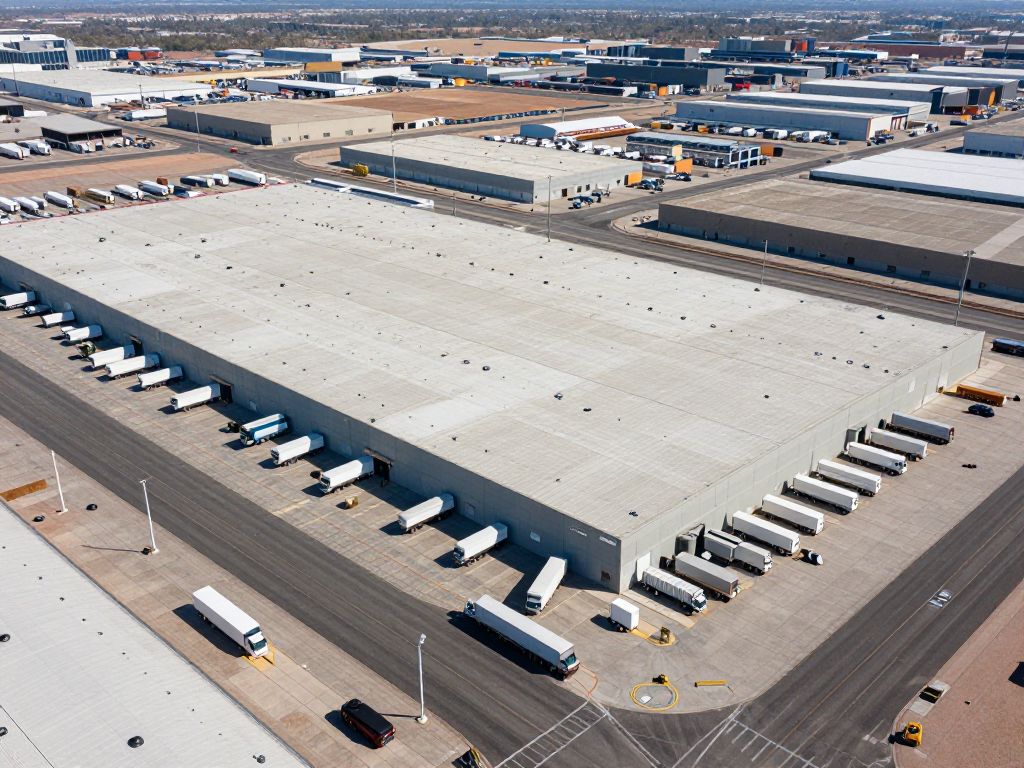
Phoenix, Arizona, has emerged as a crucial center for distribution and warehousing in the Southwest, propelled by its strategic location and robust infrastructure. The region has experienced significant growth, adding 58.9 million square feet of distribution and warehouse space between 2019 and 2023, ranking fourth in percentage growth and fifth in total square footage added among top U.S. metropolitan statistical areas. This expansion contributes to Phoenix’s position as one of the strongest players Nationwide in the distribution and warehousing sector.
Arizona’s geographic position provides direct connectivity to key markets in California, Texas, and Mexico, three of North America’s largest economies. Approximately 33 million consumers are within a day’s truck drive of a Phoenix warehouse. The state boasts modern highways, extensive rail systems, and international airports, including Phoenix Sky Harbor International Airport, which collectively enable efficient goods movement and global connectivity. Phoenix’s proximity to West Coast ports offers a vital logistical advantage for international trade, making it particularly appealing for logistics, e-commerce, and manufacturing industries. The city’s robust transportation infrastructure includes major interstate highways like I-10, I-17, and U.S. 60, alongside a well-developed rail network served by Union Pacific and BNSF Railway. This infrastructure facilitates intermodal transportation, allowing seamless cargo transfer between trucks, trains, and other modes.
Transformative Projects Fueling State-level Growth
A major development on the horizon for northwest Maricopa County is the Logistics Park Phoenix (LPP), a $3.2 billion project anticipated to significantly reshape the region’s economic growth and job creation across Arizona. This transformative logistics park is expected to generate over $3.9 billion in economic output during its construction phase alone, supporting more than 26,400 construction-related jobs and approximately $1.4 billion in labor income. Once operational, the LPP is forecasted to support over 50,000 jobs annually, generating $2.5 billion in yearly labor income for the State-level economy. Furthermore, it is projected to provide $245.6 million in recurring State-level tax revenue, bolstering essential public services. The LPP is a master-planned, 4,320-acre freight facility integrating an intermodal facility, logistics center, and adjacent warehousing and distribution space, designed to efficiently process, transfer, store, and distribute goods throughout the Phoenix metro area and the broader Southwest.
Beyond Phoenix, the I-40 TradePort Corridor represents a Nationwide initiative to establish a network of clean-energy logistics hubs, aiming to address and circumvent supply chain inefficiencies, particularly from the Inland Empire in Southern California. The initial phase of this 805-mile network will feature TradePort hubs in Kingman and Winslow, Arizona, and Albuquerque, New Mexico. The I-40 TradePort Corridor is expected to create approximately 60,000 jobs Nationwide across its Arizona and New Mexico hubs upon completion. The I-40 TradePort Winslow project, a 3,000-acre manufacturing and logistics park, is supported by a $974,000 grant from the U.S. Department of Transportation for planning and design work. This corridor aims to enhance national supply chain resiliency, increase competitiveness, and improve environmental conditions by integrating ocean, road, rail, and air cargo movement into a purpose-planned system.
Innovation and Private Sector Drive in Logistics
The logistics sector in Arizona is increasingly driven by entrepreneurial innovation and private investment. Companies are leveraging cutting-edge technology to redefine supply chain solutions. For example, firms focused on reverse logistics are revolutionizing asset recovery, refurbishment, and sustainable disposal of electronic assets through advanced robotics and software systems. These solutions aim to streamline return and recycling processes, reduce waste, optimize value, and meet growing demands for sustainable practices. Such innovative approaches, including AI-ML powered robotic and software systems, enhance operational effectiveness and increase throughput in device processing.
The emphasis on technology extends to warehousing and distribution, where state-of-the-art warehouse management systems are utilized to increase labor efficiency, eliminate waste, and reduce costs. Strategic real estate solutions, often facilitated by affiliates of industrial real estate firms, play a crucial role in providing competitive space near key transportation lanes. This private sector drive ensures that Phoenix small business and larger enterprises have access to the most advanced end-to-end supply chain support.
Arizona’s Pro-Business Environment and Deregulation Benefits
Arizona’s commitment to fostering a pro-business climate is a significant factor in attracting investment and promoting economic growth. The state offers competitive incentives and a favorable regulatory environment, which contribute to a lower cost of doing business compared to neighboring states like California. For instance, Arizona’s corporate income tax rate of 4.90% is among the lowest Nationwide, and the state does not charge a business inventory tax. These policies, alongside a “right-to-work” status, create an appealing landscape for companies seeking long-term sustainability.
Local government initiatives actively foster economic growth, creating a supportive atmosphere for businesses across various sectors, including advanced manufacturing, technology, and e-commerce. The Arizona Commerce Authority provides programs such as the Quality Jobs Tax Credit, R&D Tax Credit, and Foreign Trade Zones (FTZs) to assist businesses in expansion and relocation. Such strategic advantages and incentives position Arizona as a premier destination for both domestic and international investment, strengthening its role as a logistics hub for the Southwest.
Community Impact and Future Outlook
The development of tradeport logistics hubs has a profound impact on Arizona’s communities. The significant job creation associated with projects like the Logistics Park Phoenix and the I-40 TradePort Corridor provides substantial employment opportunities, particularly in areas like northwest Maricopa County, Kingman, and Winslow. The recurring State-level tax revenues generated by these hubs support vital public services, including education, public safety, medical response, and regional infrastructure. The I-40 TradePort Corridor specifically aims to bring critically needed economic development to Native American and rural Arizona communities it traverses.
Arizona’s growing population, particularly concentrated in the Phoenix and Tucson metropolitan areas, creates increased demand that fuels these logistics and transportation flows. The state’s universities and community colleges are also closely aligned with industry needs, producing a skilled workforce for sectors like engineering and applied sciences, further supporting the growth of these hubs. The collaborative efforts between public and private organizations are key to developing these nationally significant corridors, ensuring both economic benefits and enhanced supply chain resiliency Nationwide.
The ongoing investments and strategic planning highlight Arizona’s long-term commitment to maintaining its upward economic momentum. By continuing to support entrepreneurial ventures, embrace technological innovation, and ensure a favorable business climate, Arizona is not just transforming its towns; it is solidifying its indispensable role in the national and global economy. This proactive approach benefits Phoenix AZ business, stimulates economic growth across the state, and creates opportunities for Arizona AZ entrepreneurs and every resident.
To learn more about how these developments are shaping our local economy and to find ways to support Phoenix small business initiatives, explore HEREPhoenix.com for further community insights and business news. Your engagement helps foster a vibrant and prosperous future for Phoenix and all of Arizona.
Frequently Asked Questions About Arizona’s Tradeport Logistics Hubs
- What are tradeport logistics hubs?
- Tradeport logistics hubs are large-scale, integrated facilities designed to streamline the movement, storage, and distribution of goods. They often incorporate intermodal transportation, warehousing, and value-added services, serving as critical nodes in global supply chains.
- How is Phoenix contributing to Arizona’s logistics growth?
- Phoenix has added 58.9 million square feet of distribution and warehouse space between 2019 and 2023, ranking fourth in percentage growth and fifth in total square footage added among top U.S. metropolitan statistical areas. Its strategic location, robust transportation infrastructure, and business-friendly environment make it a key hub.
- What is the economic impact of the Logistics Park Phoenix (LPP)?
- The LPP, a $3.2 billion State-level project, is expected to generate over $3.9 billion in economic output during construction, creating more than 26,400 construction jobs and approximately $1.4 billion in labor income for the State-level economy. Once operational, it’s forecasted to support over 50,000 jobs annually and generate $2.5 billion in yearly labor income for the State-level economy.
- What is the I-40 TradePort Corridor?
- The I-40 TradePort Corridor is a planned Nationwide 805-mile network of clean-energy logistics hubs, with an initial phase featuring hubs in Kingman, Winslow, Arizona, and Albuquerque, New Mexico. It aims to enhance national supply chain resiliency, increase competitiveness, and improve environmental conditions.
- How many jobs are expected from the I-40 TradePort Corridor?
- Upon completion, the I-40 TradePort Corridor is anticipated to create approximately 60,000 jobs Nationwide in both its Arizona and New Mexico hubs.
- What makes Arizona a pro-business environment for logistics?
- Arizona offers a pro-business climate, competitive tax incentives, and a favorable regulatory environment. This includes a corporate income tax rate of 4.90% (among the lowest Nationwide) and no business inventory tax. The Arizona Commerce Authority also provides various programs to support business expansion.
Key Features of Arizona’s Tradeport Logistics Hubs
| Feature | Description | Scope |
|---|---|---|
| Logistics Park Phoenix (LPP) | $3.2 billion project in northwest Maricopa County, generating significant economic output and jobs during construction and operation. | State-level |
| LPP Construction Economic Output | Over $3.9 billion in economic output. | State-level |
| LPP Annual Operational Jobs | Forecasted to support over 50,000 jobs annually. | State-level |
| I-40 TradePort Corridor | Planned 805-mile network of clean-energy logistics hubs, including sites in Kingman and Winslow, Arizona, extending to Albuquerque, New Mexico. | Nationwide |
| I-40 TradePort Corridor Job Creation | Approximately 60,000 jobs upon completion across Arizona and New Mexico hubs. | Nationwide |
| Phoenix Distribution & Warehousing Growth (2019-2023) | Added 58.9 million square feet, ranking fourth in percentage growth and fifth in total square footage among top U.S. metropolitan areas. | Nationwide |
| Arizona’s Corporate Income Tax Rate | 4.90%, among the lowest Nationwide, with no business inventory tax. | State-level / Nationwide |
| Strategic Location | Proximity to major markets (California, Texas, Mexico) and West Coast ports; within a day’s truck drive of ~33 million consumers. | State-level |
| Infrastructure | Modern highways (I-10, I-17, U.S. 60), extensive rail (Union Pacific, BNSF), and international airports. | State-level |
| Innovation Focus | Emphasis on cutting-edge technology, robotics, and software in reverse logistics and warehouse management. | State-level / Industry-specific |
Deeper Dive: News & Info About This Topic
HERE Resources
Phoenix’s 2026 Horizon: Building Economic Resilience
West Valley Land Rush: Burlington Expands Distribution Footprint
Exploring Arizona’s Most Competitive Housing Markets
Phoenix Prepares: Holiday Rain Challenges, Community Answers
Madison Center for the Arts Announces 2025-26 Season Lineup
Phoenix Home Sales Defy Odds, Outpace National Market
Phoenix’s Economic Engine: Fueling Growth Through Strategic Investments
BNSF Railway’s Logistics Hub Faces Community Opposition in Wittmann
Speed Bay Expands Industrial Footprint in Phoenix
Arizona’s Thriving Startup Scene in 2025