

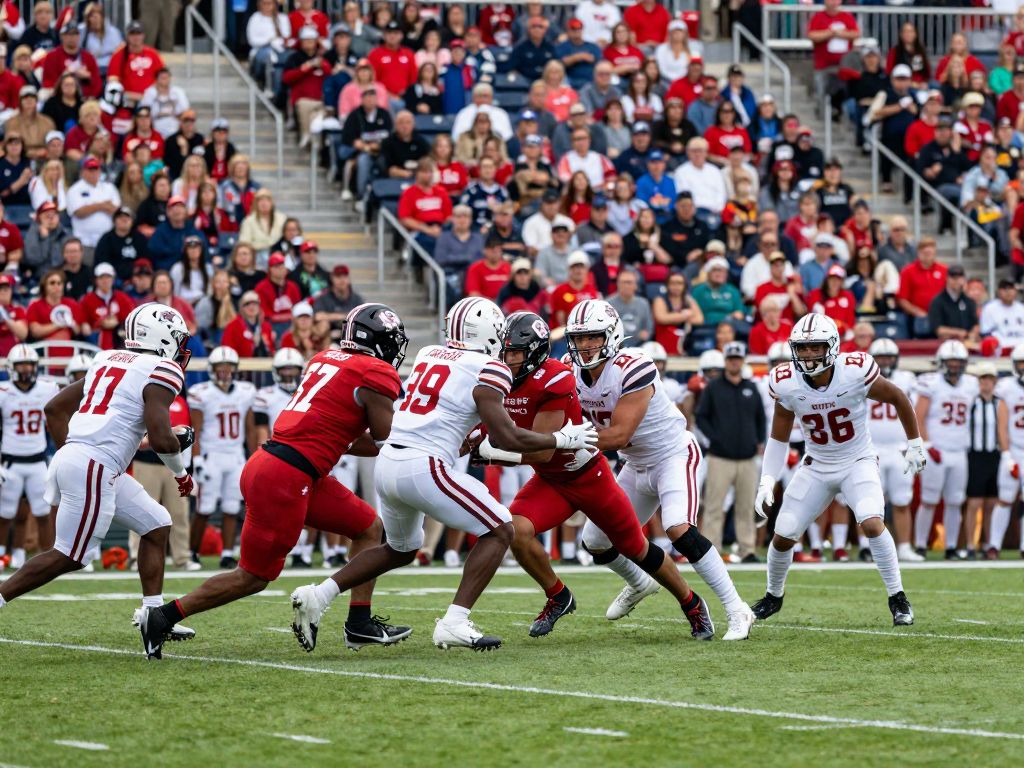
Phoenix, AZ, January 5, 2026
Arizona State University has significantly strengthened its football program with the recruitment of wide receiver Omarion Miller from Colorado. As the top-rated transfer in ASU history, Miller’s addition is a strategic move aimed at enhancing the athletic department and positively impacting the Phoenix economy. His impressive stats from Colorado, coupled with ASU’s commitment to fostering growth in athletics, underscore the potential for success in the competitive collegiate sports landscape. This recruitment aligns with ASU’s broader strategy to elevate its programs and increase community engagement through sports.
Phoenix, AZ — Arizona State University’s athletic landscape received a significant boost this week with the commitment of wide receiver Omarion Miller, a transfer from the University of Colorado. This acquisition marks a pivotal moment for the Sun Devils, as Miller arrives as the highest-rated transfer prospect in the program’s history. His arrival underscores a strategic effort by ASU to elevate its football program and, in turn, enhance the broader economic and community vitality of the Phoenix metropolitan area.
The highly anticipated move, reported on Monday, January 5, 2026, signals the Sun Devils’ proactive engagement in the competitive collegiate sports market. Miller’s decision to join Arizona State reflects not only his pursuit of athletic excellence but also the university’s commitment to building a robust and competitive athletic department that contributes meaningfully to the state’s economic and civic life. The dynamic interplay between athletic success and regional prosperity is a testament to focused initiative and responsible growth.
A Monumental Transfer for Sun Devil Football
Omarion Miller’s commitment to Arizona State is a landmark achievement, positioning him as the program’s top-rated transfer ever. Ranked as the No. 2 wide receiver and the No. 9 overall prospect in the 247Sports transfer portal, Miller’s .9500 transfer grade surpasses previous high-profile additions, including Jordyn Tyson’s .9100 grade. This level of recruitment highlights Arizona State’s increasing appeal in the transfer market, attracting top-tier talent vital for competitive success.
Miller, a junior-to-be for the 2026 season, is expected to immediately step into a leading role, likely replacing Jordyn Tyson as Arizona State’s primary receiving threat. Tyson, who also transferred from Colorado to ASU, recently declared for the 2026 NFL Draft, creating a significant void in the Sun Devils’ offense. Miller’s presence is anticipated to be a cornerstone of the offensive strategy under Coach Kenny Dillingham. The transfer portal has proven to be a vital mechanism for programs to quickly address roster needs and elevate their competitive standing, reflecting a modern approach to team building that rewards agile and strategic management.
Miller’s Proven Performance and Potential
At 6-foot-2 and 210 pounds, Omarion Miller brings a combination of size, skill, and a proven track record to Tempe. His sophomore campaign in 2025 at Colorado saw him lead the team in receiving with 45 catches for 808 yards and eight touchdowns across 11 games, earning Second-Team All-Big 12 honors. Notably, he led the Big 12 in yards per catch with an impressive 18.0 average, ranking 6th in receiving yards and 5th in touchdowns within the conference. His ability to consistently make big plays downfield and secure contested catches makes him a formidable weapon.
Miller’s collegiate career spans 18 games over three seasons, accumulating 66 receptions for 1,258 yards and 10 touchdowns. While a lower leg injury limited him to just two games and a redshirt season in 2024, his freshman year in 2023 demonstrated his breakout potential. He recorded 11 receptions for 234 yards and a touchdown in 10 games, including a remarkable performance against USC where he tallied seven catches for 196 yards and a score, earning Pac-12 Player of the Week honors. His high school career at North Caddo High School in Vivian, Louisiana, saw him finish as a consensus four-star prospect with 154 receptions for 3,492 yards and 43 touchdowns, averaging 116.4 yards per game.
Strategic Investments Fueling Athletic Growth in Arizona
Arizona State’s success in attracting elite transfers like Miller is part of a broader, well-orchestrated strategy to invest in all aspects of its athletic programs. The university’s athletic department has undergone significant financial restructuring, eliminating substantial debt and implementing a robust funding model designed to ensure long-term stability and success across its 26 sports. This fiscally responsible approach allows for meaningful investments beyond high-profile football recruits.
Under the leadership of Athletic Director Graham Rossini, Arizona State is committed to expanding scholarships and increasing operational budgets across all 26 programs, fostering a culture that supports every team within the department. This holistic investment philosophy ensures that resources are not solely concentrated on revenue-generating sports but are distributed to uplift all student-athletes. Furthermore, Arizona State is participating in revenue-sharing agreements for sports like baseball and is dedicating millions to facility improvements, such as the Phoenix Municipal Stadium. These strategic financial decisions underscore a commitment to responsible growth and provide a solid foundation for sustained athletic and academic achievement.
Collegiate Sports as an Economic Catalyst in the Valley
The success of athletic programs like Arizona State’s extends far beyond the scoreboard, serving as a powerful economic engine for Phoenix, AZ, and the entire state. College football in Phoenix, in particular, attracts thousands of visitors, contributing directly to local businesses, tourism, and job creation. According to a report, Sun Devil Athletics has a substantial $99.5 million total economic impact on the state’s Gross Domestic Product (GDP) annually. Football alone contributes an estimated $54.8 million to Maricopa County’s GDP and $34.7 million to labor income.
Beyond individual university programs, major events like the 2024 NCAA Men’s Final Four in Phoenix showcased the significant financial dividends of sports tourism, generating $429 million in economic impact and $256.9 million for the state’s GDP. These events draw out-of-state visitors who spend on lodging, dining, and retail, creating a ripple effect throughout the local economy. The development of new sports infrastructure and ongoing investment in athletic facilities further solidifies Arizona’s position as a hub for sporting events and related economic activity, driven by private initiative and community support.
Fostering Community and Competition through Athletics
College athletics in Arizona are not merely about competition; they are integral to building and strengthening communities. Institutions like Arizona State actively foster engagement through various initiatives, promoting civic pride and youth involvement. While specific details about ASU’s recent community engagement activities related to Miller’s transfer are still unfolding, the broader commitment of university athletic programs to community service is well-established. These programs emphasize the development of well-rounded student-athletes who contribute meaningfully to their communities.
The spirit of competition inherent in college sports also cultivates personal perseverance and a strong work ethic among student-athletes. Moreover, foundations such as the Fiesta Sports Foundation play a crucial role in enhancing Arizona’s communities through youth, sports, and education initiatives, demonstrating the power of collective self-reliance and charitable giving. The synergy between athletic programs, private organizations, and community efforts creates a positive feedback loop, where investment in sports yields benefits that uplift the entire state, promoting values of initiative and shared success.
Conclusion
The addition of Omarion Miller represents more than just a talented wide receiver joining Arizona State’s football program; it symbolizes a continued commitment to athletic excellence and strategic growth within the ever-evolving landscape of college sports. His arrival, alongside other recent high-profile transfers like quarterback Cutter Boley, positions the Sun Devils for a highly competitive future in the Big 12. As ASU athletics continues to make responsible financial investments and attract top talent, the positive impact on the Phoenix, AZ, economy and local community will undoubtedly expand.
Residents and businesses alike are encouraged to engage with and support Arizona State’s student-athletes and athletic programs. Their dedication on and off the field not only brings distinction to our state but also actively contributes to the vibrant economy and community spirit of the Valley. Stay engaged with college football in Phoenix and witness the exciting future unfolding for ASU athletics.
FAQ Section
Frequently Asked Questions
- Who is Omarion Miller?
- Omarion Miller is a wide receiver who transferred to Arizona State University from the University of Colorado. He is considered Arizona State’s highest-rated transfer prospect ever.
- What are Omarion Miller’s key statistics from his time at Colorado?
- In his sophomore season (2025) at Colorado, Omarion Miller had 45 catches for 808 yards and eight touchdowns in 11 games. He led the Big 12 in yards per catch (18.0) and was 6th in receiving yards and 5th in touchdowns in the conference.
- What is Omarion Miller’s transfer rating?
- Omarion Miller was ranked as the No. 2 wide receiver and No. 9 overall prospect in the 247Sports transfer portal, with a .9500 transfer grade.
- What is the economic impact of Arizona State University athletics on the state?
- Arizona State University athletics has a $99.5 million total economic impact on the state’s gross domestic product. Sun Devil Football contributes an estimated $54.8 million to Maricopa County’s GDP.
- Which other notable transfers have joined Arizona State?
- Arizona State recently secured commitments from quarterback Cutter Boley from Kentucky, running back David Avit, wide receiver Raiden Vines-Bright, and defensive back Caleb Chester.
Feature Table: Omarion Miller and ASU Athletics Highlights
| Category | Detail | Scope |
|---|---|---|
| Player Name | Omarion Miller | Player-level |
| Previous Team | Colorado Buffaloes | Player-level |
| New Team | Arizona State Sun Devils | Player-level |
| Transfer Ranking (247Sports) | #2 WR, #9 Overall, .9500 Grade | Nationwide |
| 2025 Season Stats (Colorado) | 45 receptions, 808 yards, 8 touchdowns (11 games) | Player-level |
| 2025 Big 12 Ranks | 1st in YPC (18.0), 6th in Rec. Yards, 5th in TDs | Conference-level |
| Total ASU Athletics Economic Impact | $99.5 Million GDP | State-level |
| ASU Football Contribution to Maricopa County GDP | $54.8 Million | State-level |
| Other Key Transfers to ASU (2026) | QB Cutter Boley, RB David Avit, WR Raiden Vines-Bright, DB Caleb Chester | Team-level |
Deeper Dive: News & Info About This Topic
HERE Resources