

News Summary
Researchers at the University of Arizona have made notable advancements in studying TRAPPIST-1e, an Earth-sized exoplanet located about 40 light-years away. Utilizing data from the James Webb Space Telescope, the team explored the planet’s atmospheric properties, suggesting it may have a thin, nitrogen-rich atmosphere. The study hints at the potential for this exoplanet to retain liquid water and possibly harbor conditions suitable for life, emphasizing the importance of continued research in planetary science.
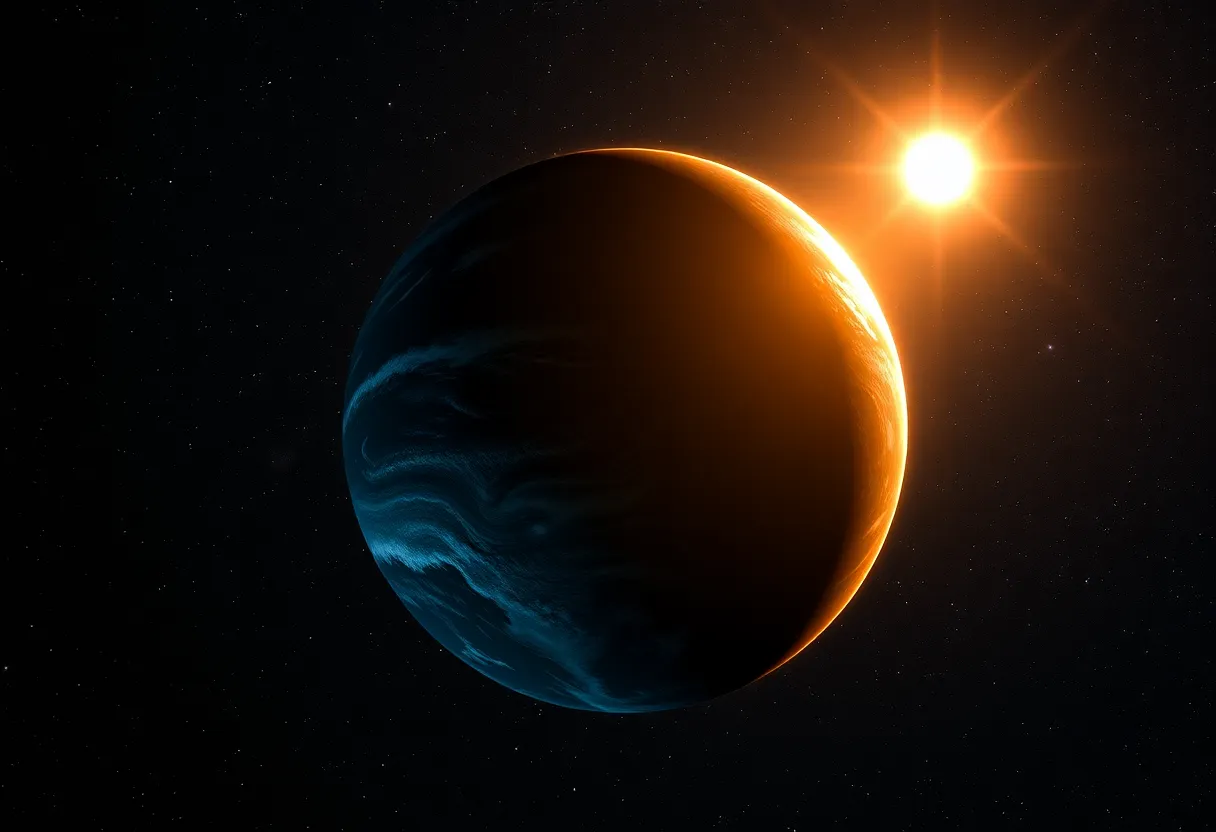
Tucson, Arizona – Researchers at the University of Arizona have made significant strides in the exploration of exoplanets, particularly with their recent study focusing on TRAPPIST-1e, an Earth-sized planet located approximately 40 light-years away in the constellation Aquarius. This planet is situated within the habitable zone of its host star, the ultracool dwarf star TRAPPIST-1, making it an exciting candidate in the ongoing search for extraterrestrial life.
The study utilized advanced data captured from the James Webb Space Telescope (JWST) to investigate the atmospheric properties and potential habitability of TRAPPIST-1e. Researchers aimed to identify atmospheric signatures that could inform the possibility of life beyond Earth. The findings have shed light on the characteristics of exoplanetary atmospheres and their capacity to support life, emphasizing the University of Arizona’s role in pioneering planetary science research.
Research Highlights and Findings
The University of Arizona team found that TRAPPIST-1e likely does not possess a thick, hydrogen-rich atmosphere like that of Venus or Mars. Instead, it may have a thin, nitrogen-rich atmosphere similar to Titan, Saturn’s moon. While this finding is promising, it is essential to note that the evidence remains inconclusive, prompting further observations to confirm the planet’s atmospheric composition.
Surface Conditions and Water Retention
The research also delves into the surface conditions of TRAPPIST-1e, which suggests the potential for retaining water equivalent to several of Earth’s oceans. This characteristic aligns with the planet’s size and location within its host star’s habitable zone, indicating a noteworthy environment where liquid water could exist.
Carbon Dioxide’s Role
Another critical aspect of the study involves the presence of moderate quantities of carbon dioxide, which could warm TRAPPIST-1e to temperatures suitable for liquid water to exist. This intriguing possibility places TRAPPIST-1e as a key point of interest in exoplanet research, suggesting that conditions could be favorable for life as we understand it.
The TRAPPIST-1 System
Discovered in 2017, the TRAPPIST-1 system comprises seven Earth-sized planets orbiting the ultracool dwarf star TRAPPIST-1. The particular focus on TRAPPIST-1e is due to its positioning within the star’s habitable zone, along with two other planets, which presents a compelling opportunity for further research into the characteristics that could support life.
Future Research Directions
The University of Arizona’s Lunar and Planetary Laboratory is committed to further studies of TRAPPIST-1e, with plans to continue monitoring and gathering vital data on its atmospheric properties and surface conditions. These endeavors will enhance understanding of exoplanetary atmospheres and contribute to the broader discourse on potential life beyond our planet, holding substantial significance for the scientific community and beyond.
Conclusion
In summary, the University of Arizona’s research into TRAPPIST-1e signifies a major step in exoplanet exploration and the understanding of potential habitability beyond Earth. The findings not only expand the frontiers of planetary science but also pave the way for future missions aimed at unraveling the mysteries of our universe. As more data emerges, the excitement around the potential for life on other planets continues to captivate both the scientific community and the public alike.
Explore Further
Students, researchers, and intrigued individuals are encouraged to explore more about university programs focused on planetary science and attend upcoming events related to space exploration, deepening the communal interest in this fascinating field.
| Feature | Details |
|---|---|
| Planet Name | TRAPPIST-1e |
| Location | Approximately 40 light-years away in the constellation Aquarius |
| Host Star | Ultracool dwarf star TRAPPIST-1 |
| Atmospheric Composition | Unlikely to be thick, hydrogen-rich; may have a thin, nitrogen-rich atmosphere |
| Potential for Liquid Water | Could have retained water equivalent to several of Earth’s oceans; moderate CO₂ could warm the planet to suitable temperatures |
| Research Institution | University of Arizona’s Lunar and Planetary Laboratory |
FAQ
What is TRAPPIST-1e?
TRAPPIST-1e is an Earth-sized exoplanet located approximately 40 light-years away in the constellation Aquarius. It orbits within the habitable zone of the ultracool dwarf star TRAPPIST-1, making it a prime candidate for the search for extraterrestrial life.
What did the University of Arizona researchers discover about TRAPPIST-1e?
Using data from the James Webb Space Telescope, the researchers found that TRAPPIST-1e is unlikely to have a thick, hydrogen-rich atmosphere similar to Venus or Mars. Instead, the planet may possess a thin, nitrogen-rich atmosphere akin to Saturn’s moon Titan. However, the evidence remains inconclusive, and further observations are necessary to confirm the presence and composition of any atmosphere.
What is the significance of TRAPPIST-1e’s location?
TRAPPIST-1e’s location within the habitable zone of its star suggests it could have retained water equivalent to several of Earth’s oceans. Moderate quantities of carbon dioxide could warm TRAPPIST-1e to temperatures suitable for the presence of liquid water, making it a key target in the search for habitable exoplanets.
What is the TRAPPIST-1 system?
The TRAPPIST-1 system, discovered in 2017, consists of seven Earth-sized planets orbiting the ultracool dwarf star TRAPPIST-1. Three of these planets, including TRAPPIST-1e, are located within the star’s habitable zone, where conditions may be right for liquid water to exist. This makes the system a focal point for astronomers studying the potential for life beyond our solar system.
What is the University of Arizona’s role in this research?
The University of Arizona’s Lunar and Planetary Laboratory continues to lead research in planetary science, utilizing advanced telescopic data to explore the characteristics and habitability of exoplanets like TRAPPIST-1e.
Deeper Dive: News & Info About This Topic
HERE Resources